Displaying results : dignity
Presentation Packs
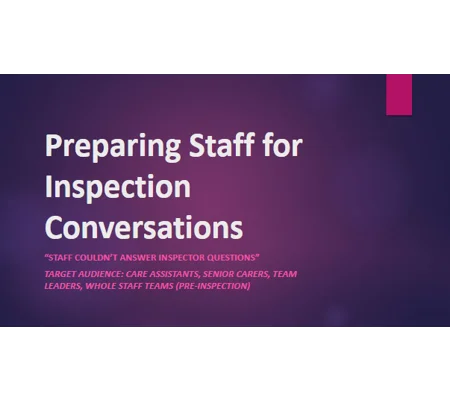
Preparing Staff for Inspection Conversations Training ResourcesPreparing Staff for Inspection Conversations Staff couldn t answer inspector questions " Target Audience: Care Assistants, Senior Carers, Team Leaders, Whole Staff Teams (Pre-Inspection) Presentation, Handouts and Learning Activities. All files editable. Overall Aim: To increase staff confidence and competence in responding to inspection conversations by enabling them to clearly, calmly and professionally explain their everyday practice in line with regulatory expectations. Learning Objectives: Identify how inspectors typically phrase inspection questions. Recognise how questions link to Safe, Effective, Caring, Responsive and Well-Led themes. Structure clear and confident answers using a simple response model. Demonstrate how to avoid over-talking, guessing or defensive responses. Explain their reporting and escalation responsibilities appropriate to their role. Respond appropriately when unsure of an answer while maintaining professional confidence. Presentation (34 Slides) Aim of...
Presentation Packs
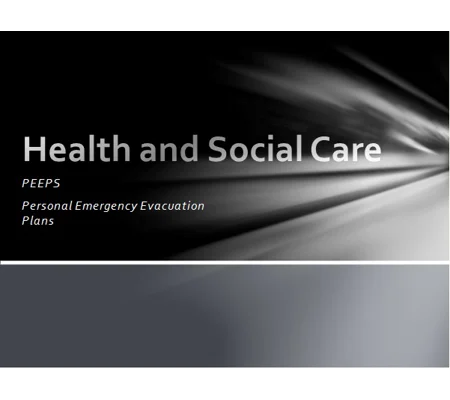
Personal Emergency Evacuation Plans PEEPS Training ResourcesPersonal Emergency Evacuation Plans (PEEPS) (Fire & Emergency) PowerPoint presentation (laid out in sections, easy to follow and understand) and Word documents (printable from the CD). Includes printable hand-outs and example questionnaire and standard PEEP plan template and printable information booklet (Word documents). Presentation - PEEPS Personal Emergency Evacuation Plans (93 Slides) Slide Titles: Aims and Objectives Introduction Legislation Underpinning PEEPS Initiating a PEEP Planning for Evacuation What is a PEEP? Principles of Preparation Principles of Implementation Communication and Training INDIVIDUAL PEEP PLANS FOR EMPLOYEES AND REGULAR VISITORS Individual PEEP Plans Things to Consider Standard PEEP Plans Unknown or Uncontrolled Visitors Individual PEEPs Preparation Writing an Individual PEEP Individual PEEPS Assisted Evacuation Review and Updating of PEEPS Practicing Evacuation Building Features Doors Open Risers and Stair Enclosures Stair Enclosure Fire Compartmentat...

Care Certificate Support
Care Certificate Standard 5 - Working in a Person Centred Way Training ResourcesCare Certificate Standard 5 - Working in a Person Centred Way (147 Slides, in sections) To support delivery of the Care Certificate. Includes Interactive Discussion Questions, Scenarios and Quizzes 10 Word Documents are also included (detailed below). (All files editable) If you only want the presentation - this is available in the 'Single Presentations' category of my website). Aims and Objectives: Overall Aim: To enable learners to confidently apply person-centred values and approaches in their daily practice, ensuring care is tailored to each individual s needs, preferences and wellbeing. Learning Objectives: Understand person-centred values Explore ways of working in a person-centred way Identify and address discomfort/distress in the environment Support individuals to minimise pain/discomfort Promote identity and self-esteem Person-centred values in practice Presentation (147 Slides) Aims and Objectives Welcome Overview of the Session Why This Standard Matters Discussion/Reflec...
Presentation Packs
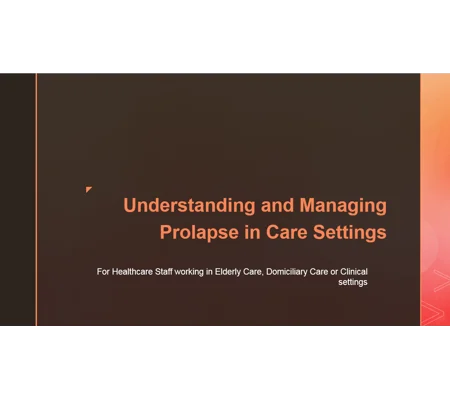
Prolapse Awareness & Management Care Settings Training ResourcesUnderstanding and Managing Prolapse in Care Settings Bespoke Training Resources for a 4 hour training day - all editable (should you need to edit). Presentations, Learning Activities and Handouts. Target Audience: Healthcare staff working in elderly care, domiciliary care, or clinical settings Learning Objectives: Define prolapse and understand its types. Identify risk factors and symptoms associated with prolapse. Gain knowledge on the impact of prolapse on patients' quality of life. Learn preventive measures and appropriate interventions. Understand care strategies for patients with prolapse, including communication and comfort techniques. Session 1: Introduction to Prolapse Objective: Provide a comprehensive understanding of what prolapse is and its different types. Activity: Group discussion on common prolapse cases seen in care settings and their implications. Presentation Aims and Objectives Introduction to Prolapse Prevalence Pelvic Organs (Pictorial) Common Symptoms Types of...
Team Meeting / Toolbox Talks
End-of-Life and Palliative Care – 10 Toolbox Talks for Domiciliary Care Staff Pack CEnd-of-Life and Palliative Care 10 Toolbox Talks for Domiciliary Care Staff Pack C Word Document (54 Pages) - 10 Toolbox Talks Fully editable. This End-of-Life and Palliative Care Toolbox Talks Pack contains 10 ready-to-use Toolbox Talks designed specifically for trainers delivering short, practical learning sessions to Domiciliary Care Staff. The pack provides an easy way to deliver focused refresher training, team learning and practice-based discussions around supporting people who are living with serious or life-limiting illness or approaching the end of their life. Rather than providing a full-length training course, these Toolbox Talks are designed to support short, focused learning sessions of approximately 10 15 minutes, making them suitable for use during team meetings, staff meetings, supervision, refresher training or other opportunities for bite-sized learning. Who is this pack for? This resource is designed for trainers, training providers, care managers and organisation...
Team Meeting / Toolbox Talks
End-of-Life and Palliative Care – 10 Toolbox Talks for Domiciliary Care Staff Pack BEnd-of-Life and Palliative Care 10 Toolbox Talks for Domiciliary Care Staff Pack B Word Document (54 Pages) - 10 Toolbox Talks Fully editable. This End-of-Life and Palliative Care Toolbox Talks Pack contains 10 ready-to-use Toolbox Talks designed specifically for trainers delivering short, practical learning sessions to Domiciliary Care Staff. The pack provides an easy way to deliver focused refresher training, team learning and practice-based discussions around supporting people who are living with serious or life-limiting illness or approaching the end of their life. Rather than providing a full-length training course, these Toolbox Talks are designed to support short, focused learning sessions of approximately 10 15 minutes, making them suitable for use during team meetings, staff meetings, supervision, refresher training or other opportunities for bite-sized learning. Who is this pack for? This resource is designed for trainers, training providers, care managers and organisation...
Presentation Packs
Safety and Environmental Support Awareness Residential Care Training ResourcesResidential Care - Safety and Environmental Support Awareness This pack introduces 'safety and environmental support' for learners and staff new to the role of care work. It details what this support is and key aspects to be considered for each individual receiving care. Presentation (which includes a quiz), Handout, and End of Session Assessment (Multiple Choice). Aims and Objectives: Overall Aim: To help new care staff understand how to keep residents safe by ensuring their living environment is clean, hazard-free and supportive, while following relevant policies and working as part of the care team. Learning Objectives: Identify at least two common environmental hazards in a residential care home. Explain why following policies and procedures helps keep residents safe. Name at least two safety aids and describe how they support resident safety. Presentation (46 Slides) Aims and Objectives Introduction Maintaining Dignity, Comfort and Wellbeing for Residents What is Safety and Env...
Presentation Packs
Learning Disabilities - Severe or Profound and Multiple (PMLD) Training ResourcesSevere or Profound and Multiple Learning Disabilities (PMLD) Awareness Understanding What They Are and Supporting Complex Health Needs Awareness Presentation in sections, 11 Handouts, End of Session Assessment (mix of multiple choice, True/False and short answer Questions), Trainer Aide Answer Key. All files editable. Aims and Objectives: Overall Aim: To help care workers understand PMLD and learn how to support individuals with complex health needs in a safe, respectful and person-centred way. Learning Objectives: Understand what PMLD means. Recognise common complex health needs. Know how to support individuals in daily care. Improve communication and person-centred practice. Presentation (91 Slides) Aims and Objectives Welcome and Objectives Section - Understanding What They Are What Does PMLD Mean? What Is a Severe Learning Disability? What Is a Profound Learning Disability? Differences Between Severe and Profound Learning Disabilities Common Characteristics of PMLD What Causes P...
Presentation Packs
Learning Disabilities Moderate - Building Daily Living Skills Training ResourcesLearning Disabilities (Moderate) - Building Daily Living Skills A Guide for Care Workers and Support Workers A Learning Disability-Focused Approach for Health and Social Care staff Presentation in sections (with interactive learning activity case studies and reflective questions), 10 Handouts, End of Session Assessment (mix of multiple choice, True/False and short answer Questions), Trainer Aide Answer Key. All files editable. Learning Objectives: Understand the challenges individuals with moderate learning disabilities may face with daily living skills Learn practical approaches to support development in cooking, shopping and laundry Promote independence, dignity and choice Enhance communication and person-centred support Presentation (98 slides) Aims and Objectives Welcome Learning Outcomes Section - Moderate Learning Disabilities Moderate Learning Disabilities Common Cognitive Challenges Common Social Challenges Common Emotional Challenges Examples of Daily Living Difficulties Ev...

Presentation Packs
Leukaemia and Lymphoma Awareness Residential and Domiciliary Care Training ResourcesLeukaemia and Lymphoma Awareness - Residential and Domiciliary Care Presentation, Handout, End of Session Assessment (mix of Multiple Choice, True/False and Short Answer questions), Trainer Aide Answer Key. All files editable. Aims and Objectives Overall Aim: To increase awareness and understanding of leukaemia and lymphoma among care workers to improve early recognition, reporting and supportive care in adult residential and domiciliary settings. Learning Objectives: Recognise the basic signs and symptoms of leukaemia and lymphoma relevant to adults in care. Understand the care worker s role in supporting clients with blood cancer, including communication, infection control and emotional support. Identify trusted resources, referral pathways and when to escalate concerns appropriately. Presentation (43 Slides) Aims and Objectives Welcome Introduction Importance of Awareness for Care Workers Basic Blood and Immune System Overview Role of White Blood Cells in Immune Defence How Blood...
Presentation Packs
Learning Disabilities - PMLD Seizure Management and Epilepsy Awareness Training ResourcesLearning Disabilities - PMLD Seizure Management and Epilepsy Awareness - All Settings (residential, domiciliary, day services, schools, hospitals, healthcare) An Awareness session suitable for any care setting. Presentation in sections (includes short interactive quiz), 3 Handouts, 3 End of Session Assessments (mix of multiple choice, True/False Questions), 3 Trainer Aide Answer Key. All files editable. Aims and Objectives: Presentation in sections, 11 Handouts, End of Session Assessment (mix of multiple choice, True/False and short answer Questions), Trainer Aide Answer Key. All files editable. Aims and Objectives Overall aim: To equip staff working across diverse settings with the knowledge, skills and confidence to recognise, respond to and support individuals with PMLD who experience seizures or epilepsy, ensuring safe, person-centred care. Learning Objectives: Understand PMLD and epilepsy/seizures Recognise seizure types and appropriate responses Tailor approaches based on sett...
Presentation Packs
Disability Empowerment Awareness Training ResourcesDisability Empowerment - All Services - Training Resources Presentation, split into sections, plus handout. Overall Aim: To provide a comprehensive overview of disability empowerment, including its principles, components and the importance of personalised care, to inspire a deeper understanding of how to support and empower individuals with disabilities. Learning Objectives: Gain a clear understanding of disability empowerment, its core principles and the significance of tailoring support to individuals' unique needs, preferences and goals in care services. Recognise the importance of informed decision-making as a means to promote autonomy. Explore the concept of self-determination and its role in actively engaging individuals in care planning and goal-setting, to enhance their sense of control and self-direction. Understand the critical role of advocacy in disability empowerment. Appreciate the significance of skill-building in empowering individuals with disabilities by equipping ...
Presentation Packs
Bladder Health Awareness Training ResourcesBladder Health Awareness - A Guide for Residential Care Staff Health and Social Care Training Resources All fully editable. Presentation in sections you can choose which sections to use. Aims and Objectives included if you want to use the presentation as it has been written. Comes with 6 Handouts and 4 multiple choice end of session assessments. Overall Aim: To give an overview of the importance of bladder health in residential care and the connection between overall well-being and bladder health Objectives: Understand bladder anatomy Learn how the bladder functions Recognise common bladder-related issues Emphasise the importance of proper hydration Presentation (87 Slides) Aims and Objectives Introduction SECTION - THE IMPORTANCE OF BLADDER HEALTH MANAGEMENT - Connection between overall well-being and bladder health (holistic wellness, psychological impact, physical comfort, social and lifestyle factors) - Importance of Awareness among health and social care staff (early interventi...

Presentation Packs
Nutritional Support Awareness Residential Care Training ResourcesResidential Care - Nutritional Support Awareness This pack introduces 'nutritional support' for learners and staff new to the role of care work. It details what nutritional support is and key aspects to be considered for each individual receiving care. The presentation is in sections - the first section is for all staff. Presentation, Handouts x 3, End of session multiple choice assessments x 3 All files editable. Overall Aim: This awareness session aims to ensure all residential care staff understand their role in supporting residents nutritional needs, maintaining mealtime safety and promoting well-being through good nutrition and hydration Learning Objectives: Identify the importance of nutrition and hydration in maintaining residents health and well-being. Recognise the roles and responsibilities of care staff, kitchen teams and floor workers in supporting residents dietary needs and mealtime safety Demonstrate knowledge of best practices in meal preparation, assistance and envi...
Presentation Packs
Safeguarding Adults Legal and Regulatory Framework Training ResourcesSafeguarding Adults - Legal and Regulatory Framework Health and Social Care Training Resources Aims: 1. To provide participants with a comprehensive understanding of the legal and regulatory framework related to safeguarding adults. 2. To familiarise participants with the key legislation and regulations that are essential for effective safeguarding of vulnerable adults. 3. To emphasise the importance of compliance with relevant legislation and regulations in promoting the welfare and protection of vulnerable adults. Learning Objectives: By the end of the training session, participants should be able to: 1. Identify and explain the key legislation and regulations relevant to safeguarding adults: a. The Care Act 2014 and its implications for safeguarding adults. b. Mental Capacity Act 2005 and its role in protecting adults lacking capacity. c. Human Rights Act 1998 and its application to safeguarding vulnerable adults. d. Mental Health Act 1983 and its provisions related to safeguardi...
Presentation Packs
Male Catheterisation Awareness Level 2 Training ResourcesMale Catheterisation Awareness for Care and Support Staff This pack explains what male catheterisation is, who is authorised to perform it and how care staff safely support individuals with catheter care without carrying out the clinical procedure. All files editable, so you can tailor it as required Male catheterisation is not the same as Conveens - conveens are one option for urinary management in men, but they are not catheterisation. Overall aim To build clear, confident understanding of male catheterisation so staff can recognise safe practice, support clinical procedures appropriately, and identify risks that require escalation. Learning objectives Understand what male catheterisation is and when it is clinically required. Recognise the anatomy, risks, and infection prevention principles involved in male catheterisation. Identify the roles, responsibilities, and scope of practice for staff supporting catheter care. Know the correct steps of the clinical procedure and the ratio...

Presentation Packs
Safe Administration of Medicines to Children Level 1 Training ResourcesEditable Level 1 resource covering safe medication administration for children. Includes a 101 slide presentation, 10 handouts, 10 learning activities and 10 trainer aides. Ideal for induction, refresher training and CPD in children s services and care settings.

Presentation Packs
Male Urinary Catheterisation Clinical Awareness & Procedures Training ResourcesMale Urinary Catheterisation Clinical Awareness & Procedures Training Resources 2 Presentations (one of which is Step by Step Procedures), Handout (Summary), Knowledge Check Questions, Trainer Aide Answer Key, Clinical Based Scenario Based Judgements Tests, Trainer Aide Answer Sheet, Clinical Observation Aide All files editable - use what you need. Overall Aim of the Session To provide registered clinicians with the knowledge skill and clinical reasoning required to carry out safe male urethral catheterisation and manage complications effectively in any setting. Learning Objectives LO1 Understand Clinical Indications and Contraindications LO2 Apply Detailed Knowledge of Male Anatomy and Physiology LO3 Perform the Clinical Procedure Safely and Competently LO4 Identify and Manage Complications Promptly LO5 Provide Person Centred Clinical Care During and After the Procedure LO6 Document Clinical Actions Accurately and Lawfully LO7 Apply Clinical Skills Safely Across Different Care Sett...
Team Meeting / Toolbox Talks
End-of-Life and Palliative Care – 10 Toolbox Talks for Domiciliary Care Staff Pack DEnd-of-Life and Palliative Care 10 Toolbox Talks for Domiciliary Care Staff Pack C Word Document (43 Pages) - 10 Toolbox Talks Fully editable. This End-of-Life and Palliative Care Toolbox Talks Pack contains 10 ready-to-use Toolbox Talks designed specifically for trainers delivering short, practical learning sessions to Domiciliary Care Staff. The pack provides an easy way to deliver focused refresher training, team learning and practice-based discussions around supporting people who are living with serious or life-limiting illness or approaching the end of their life. Rather than providing a full-length training course, these Toolbox Talks are designed to support short, focused learning sessions of approximately 10 15 minutes, making them suitable for use during team meetings, staff meetings, supervision, refresher training or other opportunities for bite-sized learning. Who is this pack for? This resource is designed for trainers, training providers, care managers and organisation...
Presentation Packs
Positive Behaviour Support Lead Practitioner PBS Training ResourcesPositive Behaviour Support LEAD PRACTITIONER - Training Resources Enough resources for single sessions, single aspects or a two day course with workshops. All editable. These training resources are for LEAD Practioners or those training to be LEAD Practitioner. 37 Files in total (Presentation (in sections) , Handouts x 13, Learning Activity documents x 12 ( with a selection of case studies), 10 Trainer Aides (Model Answers etc.) and End of Session Multiple Choice Assessment. All editable - includes aims and objectives or you can adapt. Overall Aim : To provide staff with the knowledge and skills to implement Positive BehaviourSupport (PBS) in a person-centredmanner, fostering a culture of proactive care and support across all settings Learning Objectives: Understand the key principles and values of Positive Behaviour Support (PBS) Learn how to apply PBS strategies effectively in everyday care practice Explore the role of the Lead Practitioner in leading and embedding PBS within a te...

Presentation Packs
Safe Administration of Medication to Children Level 3 Training ResourcesSafe Administration of Medicines to Children - Level 3 Full training resource pack - presentation (in sections) each with its own Learning Activity, Trainer Aide and Handout. 43 files in total. All files editable. You can tailor for specific audiences. Aims and Objectives: Overall Aim: To equip care staff with the knowledge, skills and confidence to safely administer or assist with the administration of medicines to children in residential, domiciliary or similar care settings, in line with current legislation, best practice guidelines and organisationalpolicies, while promoting the rights, dignity and wellbeing of the child. Learning Objectives: Identify key legislation, regulatory guidance and organisational policies relating to the safe administration of medication to children. Recognise different types of medication, their common uses in childrens care and appropriate routes of administration. Describe procedures for the safe storage, handling and disposal of medicines, includin...

Care Certificate Support
Care Certificate Standard 6 - Communication Training ResourcesCare Certificate Standard 6 - Communication (140 Slides in Sections) To support delivery of the Care Certificate. Includes Interactive Discussion Questions, Scenarios and Quizzes 13 Word Documents are also included (detailed below). (All files editable) If you only want the presentation - this is available in the 'Single Presentations' category of my website). Aims and Objectives: To support delivery of the Care Certificate. Includes Interactive Discussion Questions, Scenarios and Quizzes 5 Word Documents are also included (detailed below). (All files editable) If you only want the presentation - this is available in the 'Single Presentations' category of my website). Aims and Objectives: Overall Aim: The aim of this session is to develop the knowledge, skills and confidence required to communicate effectively with individuals, colleagues and others in health and social care settings. Learning Objectives: Explain why effective communication is essential in delivering safe, person-ce...
Presentation Packs
Dementia Care Safeguarding Awareness Level 3 Training ResourcesDementia Care - Safeguarding Awareness Level 3 Presentation, 7 x Handouts, 6 x Case Studies/Learning Activities, 7 x Discussion/Reflection Questions plus Model Answers, End of Session Multiple Choice Assessment. Presentation is in sections - Presentation also includes Discussion/Reflection Questions. All files editable. Aims and Objectives: Overall Aim - To equip learners with an in-depth understanding of safeguarding principles in dementia care, enabling them to identify, respond to and prevent abuse or neglect while upholding legal and ethical responsibilities. Learning Objectives: Evaluate the key safeguarding risks specific to individuals with dementia and the impact of cognitive impairment on their vulnerability. Analyse the legal and ethical frameworks that govern safeguarding in dementia care, including the Mental Capacity Act and Deprivation of Liberty Safeguards. Develop appropriate responses to safeguarding concerns, including reporting procedures and multi-agency collabor...
Presentation Packs
Safeguarding Adults Responding to Disclosed or Suspected Abuse Residential Care Training ResourcesSafeguarding Adults - Responding to Suspected or Disclosed Abuse Health and Social Care Training Resources Aims: To equip care home staff with the knowledge and skills to respond effectively to suspected or disclosed abuse in residential care settings. To provide guidance on immediate actions to ensure the safety and well-being of individuals who may be experiencing abuse. To enhance communication skills to facilitate sensitive and empathetic interactions with residents and colleagues in abuse-related situations. To familiarise care home staff with reporting procedures, documentation requirements and the importance of maintaining confidentiality in abuse cases. To raise awareness of support networks and external agencies available to assist in responding to abuse and providing appropriate care and protection. Learning Objectives: A. Immediate actions to ensure safety and well-being 1. Identify immediate actions that should be taken to protect the safety and well-being of an individu...