Learning Disability
The Learning Disability Resources category provides a wide range of training materials designed for any setting that supports people with a learning disability.
Presentation Packs
Autism Awareness Training ResourcesA mixed generic pack. Suitable for trainers,training agencies, settings and for inclusion on part time and full time courses.Please scroll down the description to see all included. Presentation 1 Introduction to Autism (24 slides) Slide Titles: Aims and Objectives Introduction What is Autism? Asperger Syndrome How a Person with Autism Feels The Characteristics of Autism Social Interaction Social Communication Imagination Love of Routines Sensory Difficulties The Causes of Autism Diagnosis and Interventions References Presentation 2 Focus on Autism (21 slides) Slide Titles: Introduction Kanner Syndrome Further Studies Wing & Gould (1979) Asperger Syndrome Autism Prevalence Rate Prevalence Rates (Census,2001) Diagnosing Autism (Children) Diagnosing Autism (Adults) References Presentation 3 - Autism and Child Development/Education (41 slides) Slide Titles: Introduction Key points How Children Develop Development Autism and Development The Characteristics of Autism Social Interaction So...
Presentation Packs
Behaviour Support Plans Training ResourcesBehaviour Support Plans Awareness Presentation, Handout and End of Session Quiz Assessment (mix of multiple choice, true/false, short answer questions), Trainer Aide Answer Key. All files editable. Suitable for any care setting (adults and children). Aims and Objectives: Overall Aim: To equip staff with the knowledge and skills to understand, implement and consistently apply individual Behaviour Support Plans that promote positive outcomes Learning Objectives: Understand the purpose and components of a Behaviour Support Plan (BSP). Recognise the roles of professionals involved in developing BSPs. Learn how to consistently implement strategies such as reward systems and structured choices. Explore real-world scenarios and best practices. Presentation (31 Slides) Aims and Objectives Welcome What Is a Behaviour Support Plan (BSP)? Key Features and Purpose Who Are They For Why It Matters Common Misconceptions About Behaviour Who Develops a Behaviour Support Plan (BSP)? Psychologists and...
Presentation Packs
Breakaway Safe Strategies Training ResourcesBreakaway Awareness: Safe Strategies for Managing Physical Aggression - Presentation, 8 Handouts and End of Session Assessment. All editable to suit your training session and audience should you wish to edit. This presentation (81 slides in sections) equips health and social care staff with the knowledge, skills and confidence to safely manage and break away from physical aggression using effective, minimal-risk techniques, while maintaining the safety and dignity of all individuals involved. Trainers will need experience of demonstrating breakaway techniques to learners. There is a SEPARATE PACK available on Crisis Intervention. Aims and Objectives: Overall Aim: To equip health and social care staff with the knowledge, skills and confidence to safely manage and break away from physical aggression using effective, minimal-risk techniques, while maintaining the safety and dignity of all individuals involved. Learning Objectives: Recognise early signs of aggression and apply de-escala...
Presentation Packs
Caring for People at Risk of Choking Training ResourcesPowerPoint Presentation, PDF Handout and Word Document End of Session Assessment Sheet and Answer Sheet Caring for People at Risk of Choking Awareness (50 Slides) - Slide Titles: Slide Titles Aims and Objectives Introduction What is Choking? Statistics Common Causes Vulnerable Groups Dysphagia - what it is Cancer and Choking Risks Stroke and Choking Risks MS and Choking Risks COPD and Choking Risks Older People and Choking Risks Hospitalised Older People and Choking Risks Learning Disability and Choking Risks Medication and Choking Risks Real Case Studies How is Risk Managed? Oral Assessment Risk Assessment Identifying the Risks Policies and Procedures What Should Staff be Extra Mindful of? The Five Rights SALT's IDDS IDDS Framework CQC (Registration) Regulations 2009: Regulation 18 CQC Prosecution First Aid Training - Things to be Mindful of Reducing the Risk of Choking in Care Settings Choking in Care Settings CQC Learning from Safety Incidents References Word Documents End of Ses...
Presentation Packs
Cerebral Palsy Awareness Training ResourcesPowerPoint presentation, Handout and End of Session Assessment. Suitable for any setting requiring an awareness of Cerebral Palsy. Presentation - Cerebral Palsy Awareness (42 slides) - slide titles: Target Audience Aims and Objectives Introduction What is Cerebral Palsy? Other Definitions Causes of Cerebral Palsy Risk Factors Impacts of Cerebral Palsy Types of Cerebral Palsy and Symptoms Overall Outcome Factors affecting Life Expectancy Complications Behavioural Difficulties Mental Health and Neurodevelopment Disorders Pain (adults and children) Summary References Word Documents Handout End of Session Assessment
Presentation Packs
Children With Learning Disabilities Basic Communication Skills Training ResourcesChildren With Learning Disabilities - Basic Communication Skills Awareness Suitable for all settings - Presentation, End of Session Quiz Assessment (mix of Multiple Choice, True/False, Short Answer Questions) and 11 Handouts. All files editable (should you need to edit). Presentation includes example scenarios for a variety of settings (see list of slide titles, with learner questions and follow up answers). Aims and Objectives: Overall Aim: To raise awareness and build foundational skills in using effective communication techniques with children who have learning disabilities. Learning Objectives: By the end of the session learners will be able to... Identify common communication challenges faced by children with learning disabilities. Demonstrate the use of simple, age-appropriate language tailored to individual needs. Apply active listening strategies and allow appropriate response time during interactions. Use techniques to check understanding and adapt communication approaches ...
Presentation Packs
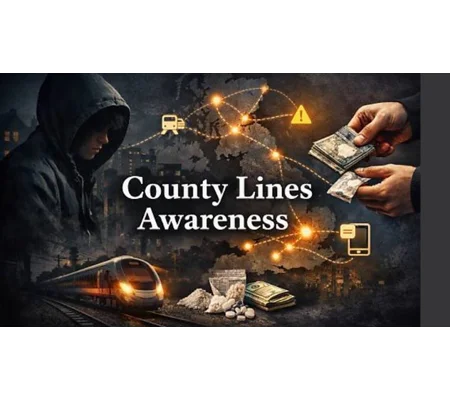
County Lines Awareness Training ResourcesCounty Lines Awareness Training Resources Presentation, Handout, Knowledge Check Questions, Trainer Aide Answer Key. All files editable. Learning Outcomes: 1. Understand what County Lines is 2. Who is targeted and why 3. Methods used to recruit and exploit individuals 4. Early warning signs and indicators of involvement 5. Risks and impacts of County Lines involvement 6. How and when to report concerns safely Presentation (52 Slides) - Slide Titles: Learning Objectives What County Lines Is How Organised Crime Groups Operate Movement of Drugs, Money and Exploitation Across Counties Why Children Are Targeted Vulnerable Adults How Children Are Recruited Grooming Stages Social Media and Online Contact Peer Recruitment Boyfriend Model Debt Bondage Promises of Money, Status, Protection Why Children Are Targeted Emotional Vulnerability History of Trauma Missing Episodes Desire for Belonging Lack of Stable Relationships Previous Exploitation Key Indicators of County Lines Exploitation Behav...
Presentation Packs
Crisis Intervention Training ResourcesCrisis Intervention Awareness Training Resources - For All Types of Care Settings (presentation, Handout and End of Session Assessment). All editable to suit your training session and audience). This presentation (131 slides in sections) on crisis intervention training equips participants with the knowledge and skills necessary to effectively respond to crisis situations, ensuring the safety of both individuals in crisis and staff. It emphasizes key principles of crisis intervention, including the importance of a non-confrontational approach, early identification of distress signs, and potential ligature risks in high-risk environments. De-escalation techniques, legal and ethical considerations, and effective communication skills are highlighted as critical components. The presentation aims to foster a comprehensive understanding of crisis intervention, enabling individuals to respond effectively and compassionately in challenging circumstances. Aims and Objectives: (You can adapt) ...
Presentation Packs
Down's Syndrome Awareness Training ResourcesPowerPoint Presentation and Word Documents (handout and Generic End of Session Assessment) Presentation - Down's Syndrome Awareness (59 slides) - Slide Titles: Aims and Objectives Introduction (Down's Syndrome Act) Support Needed Development of Guidance (UK Government) What is Down's Syndrome? 'DNA' and the Extra Chromosome Is Down's Syndrome a Disease? What Causes Down's Syndrome? Some Physical Features Associated Medical Conditions and Disabilities Describing Down's Syndrome Language to Use Down's Syndrome and Learning Disability The Heart and Down's Syndrome Relationship of Heart Conditions to the Lungs Heart Surgery Obesity and Down's Syndrome Leukaemia and Down's Syndrome Stomach/Bowel Problems and Down's Syndrome Alzheimer's/Dementia and Down's Syndrome Hearing Problems and Down's Syndrome Sight Problems and Down's Syndrome Speech Problems and Down's Syndrome Summary References Word Documents Handout (12 pages) End of session assessment PDF Version of presentation also included.

Presentation Packs
Edwards' Syndrome Awareness Training ResourcesPowerPoint Presentation and Word Documents (handout and Generic End of Session Assessment) Presentation - Edwards' Syndrome Awareness (38 slides) - Slide Titles: Aims and Objectives Introduction What Causes Edwards' Syndrome? Edwards' Syndrome and Life Expectancy Types of Edwards' Syndrome Full, Mosaic, Partial Edwards' Syndrome Characteristics Health Issues Babies' Needs Health Major Impacts Heart Defects - VSD, ASD, PVA, Dextrocardia Living with Edwards' Syndrome child Development Other Severe Symptoms Kidney Disease Breathing Abnormalities Gastrointestinal and Abdominal Hernias Scoliosis Treatment Outlook Language Matters References

Presentation Packs
Grooming Awareness Training ResourcesSafeguarding - Grooming Awareness - Training Resources Presentation (in Sections), 8 Handouts, End of Session Multiple Choice Assessment Overall Aim: The aim of this session is to educate the audience about the signs and dangers of grooming, empowering them to recognise and respond to potential cases of exploitation and abuse. Learning Objectives: Understand the definition of grooming and its various stages. Identify common signs and indicators of grooming in vulnerable individuals, especially children. Creating a safe and supportive environment for open communication about grooming concerns. Reporting suspected grooming or child sexual abuse Presentation (76 slides) Aims and Objectives Introduction What is Grooming? Stages of Grooming Section - TARGETING Section - BUILDING TRUST Section - ESTABLISHING A RELATIONSHIP Section - ISOLATING THE VICTIM Section - SECRECY AND MANIPULATION Section - EXPLOITATION Section - RECOGNISING THE SIGNS OF GROOMING Section - PREVENTION & INTERVENTION...
Presentation Packs
Hidden Disabilities Awareness Training ResourcesHidden Disabilities Awareness (Adults) - A Guide for all Staff in All Health and Care Settings Presentation - all fully editable (should you wish to edit). Aims and Objectives included if you want to use the presentation as it has been written. Comes with a Handout and Multiple Choice End of Session Assessment. Aims and Objectives: Overall Aim: To enhance awareness and understanding among Health and Social Care staff of hidden disabilities in adults, enabling them to provide more effective and empathetic care across all adult care settings. Learning Objectives: Identify common types of hidden disabilities in adults and describe their impact on daily life. Apply communication strategies to effectively interact with adults who have hidden disabilities in a variety of care settings. Understand legal and ethical considerations related to supporting adults with hidden disabilities in health and social care settings. Presentation (30 Slides) Aims and Objectives Introduction Hidden Disabil...
Presentation Packs
Incident Debriefing Awareness for Managers and Facilitators Training ResourcesIncident Debriefing Awareness for Managers and Facilitators Health and Social Care Teaching/Training Resources All fully editable (should you wish to edit). Presentation in sections you can choose which sections to use. Aims and Objectives included if you want to use the presentation as it has been written. Comes with a 9 Page Awareness Handout plus a 12 Page Facilitating an Incident Debriefing Meeting Handout, 2 Multiple Choice End of Session Assessments and 3 Learning Activities (one each for Nursing, Residential Care and Domiciliary Care). NOTE - the first 37 slides are 'awareness' slides (these are contained in the Incident Debriefing Awareness pack for staff). Aims and Objectives: Overall Aim: To enhance awareness and understanding of incident debriefing procedures for nurses and social care workers in both residential and domiciliary settings in the UK. Learning Objectives: Understand the importance of incident debriefing in nursing and social care. Know the key components of ...
Presentation Packs
Incident Debriefing Awareness for Nurses & Social Care Workers Training ResourcesIncident Debriefing Awareness for UK Nurses and Social Care Workers Health and Social Care Teaching/Training Resources All fully editable (should you wish to edit). Presentation in sections you can choose which sections to use. Aims and Objectives included if you want to use the presentation as it has been written. Comes with a 9 Page Handout and a Multiple Choice End of Session Assessment. Aims and Objectives: Overall Aim: To enhance awareness and understanding of incident debriefing procedures for nurses and social care workers in both residential and domiciliary settings in the UK. Overall Aim: To enhance awareness and understanding of incident debriefing procedures for nurses and social care workers in both residential and domiciliary settings in the UK. Presentation (40 Slides) Aims and Objectives Introduction SECTION - Importance of Incident Debriefing Definition of Incident Debriefing Importance of Incident Debriefing SECTION - Types of Incidents Common Types of Incidents in ...
Presentation Packs
Learning Disabilities - PMLD Seizure Management and Epilepsy Awareness Training ResourcesLearning Disabilities - PMLD Seizure Management and Epilepsy Awareness - All Settings (residential, domiciliary, day services, schools, hospitals, healthcare) An Awareness session suitable for any care setting. Presentation in sections (includes short interactive quiz), 3 Handouts, 3 End of Session Assessments (mix of multiple choice, True/False Questions), 3 Trainer Aide Answer Key. All files editable. Aims and Objectives: Presentation in sections, 11 Handouts, End of Session Assessment (mix of multiple choice, True/False and short answer Questions), Trainer Aide Answer Key. All files editable. Aims and Objectives Overall aim: To equip staff working across diverse settings with the knowledge, skills and confidence to recognise, respond to and support individuals with PMLD who experience seizures or epilepsy, ensuring safe, person-centred care. Learning Objectives: Understand PMLD and epilepsy/seizures Recognise seizure types and appropriate responses Tailor approaches based on sett...
Presentation Packs
Learning Disabilities - Equality Diversity and Rights Training ResourcesLearning Disabilities - Equality Diversity and Rights - All Settings Presentation (with interactive case studies and questions included), Handout and End of Session Assessment, Trainer Aide Answer Key. All files editable. Aims and Objectives: Overall Aim: To increase awareness and understanding of learning disabilities, promoting inclusive, rights-based support in health and social care settings. Learning Objectives: Understand what learning disabilities are and how they differ from learning difficulties. Recognise the importance of equality, diversity and human rights when supporting people with learning disabilities. Identify practical ways to provide inclusive, person-centred care that meets individual needs. Presentation (44 Slides) Aims and Objectives Welcome and Introduction Why This Training Matters What Is a Learning Disability? Learning Disabilities vs. Learning Difficulties Common Causes of Learning Disabilities Types and Examples Challenging Stereotypes and Outdated Views...
Presentation Packs
Learning Disabilities - Mental Capacity Act and Best Interests Decisions Training ResourcesLearning Disabilities - Mental Capacity Act and Best Interests Decisions - All Settings A Learning Disability-Focused Approach for Health and Social Care Professionals Presentation (with interactive case studies and questions included), 6 x Handouts, Case Studies, End of Session Assessment, Trainer Aide Answer Key. All files editable. Aims and Objectives: Overall Aim: To equip health and social care staff with the knowledge and skills to apply the Mental Capacity Act 2005 effectively when supporting people with learning disabilities. Learning Objectives: Understand the key principles of the Mental Capacity Act and how they apply to people with learning disabilities. Learn how to support individuals to make decisions and when to make Best Interests decisions. Recognise the importance of clear communication, accessible information and advocacy in decision-making. Presentation (48 Slides) Welcome Learning Outcomes Section - Mental Capacity Act What is the Mental Capacity Act (2005)? Fo...
Presentation Packs
Learning Disabilities - Severe or Profound and Multiple (PMLD) Training ResourcesSevere or Profound and Multiple Learning Disabilities (PMLD) Awareness Understanding What They Are and Supporting Complex Health Needs Awareness Presentation in sections, 11 Handouts, End of Session Assessment (mix of multiple choice, True/False and short answer Questions), Trainer Aide Answer Key. All files editable. Aims and Objectives: Overall Aim: To help care workers understand PMLD and learn how to support individuals with complex health needs in a safe, respectful and person-centred way. Learning Objectives: Understand what PMLD means. Recognise common complex health needs. Know how to support individuals in daily care. Improve communication and person-centred practice. Presentation (91 Slides) Aims and Objectives Welcome and Objectives Section - Understanding What They Are What Does PMLD Mean? What Is a Severe Learning Disability? What Is a Profound Learning Disability? Differences Between Severe and Profound Learning Disabilities Common Characteristics of PMLD What Causes P...
Presentation Packs
Learning Disabilities Mild - Building Social Skills and Relationships Training ResourcesLearning Disabilities - Building Social Skills and Relationships General Awareness Presentation (with interactive case studies and questions included), Handout and End of Session Assessment, Trainer Aide Answer Key. All files editable. Aims and Objectives: Overall Aim: To help Key Workers and support staff support people with mild learning disabilities to build positive social skills and relationships. Learning Objectives: To understand how mild learning disabilities can affect communication and relationships. To learn ways to support the development of social skills in everyday settings. To gain confidence in helping people build and maintain friendships and positive connections. Presentation (31 Slides) Aims and Objectives Welcome and Introduction Why This Topic Matters What is a Mild Learning Disability? How It Can Affect Communication, Behaviour and Social Interaction Social Skills Importance of Social Skills for Wellbeing Common Challenges in Building Relationships Examples fro...
Presentation Packs
Learning Disabilities Mild – Promoting Self-Advocacy and Empowerment Training ResourcesLearning Disabilities Promoting Self-Advocacy and Empowerment A Guide for Care Workers and Support Workers A Learning Disability-Focused Approach for Health and Social Care staff Presentation (with discussion prompts), Handout, End of Session Assessment, Trainer Aide Answer Key. All files editable. Aims and Objectives: Overall Aim: To raise awareness and understanding of mild learning disabilities and equip care workers and support staff with practical knowledge and tools to support self-advocacy and empowerment. Learning Objectives: Define mild learning disabilities and recognise common characteristics and challenges individuals may face. Understand the importance of promoting self-advocacy in those with mild learning disabilities. Identify practical strategies and communication techniques to support empowerment in everyday care settings. Presentation (55 Slides) Aims and Objectives Welcome What Is a Mild Learning Disability? Recognising Signs and Characteristics Lived Experiences ...
Presentation Packs
Learning Disabilities Mild - Supporting Work - Support Staff & Key Workers Training ResourcesSupporting People with Mild Learning Disabilities into Work - A Practical Guide for Key Workers A Learning Disability-Focused Approach for Health and Social Care Professionals Presentation (with interactive case studies and questions included), Handout, Case Studies, End of Session Assessment, Trainer Aide Answer Key. All files editable. Aims and Objectives: Overall Aim: To equip Key Workers with the practical knowledge, tools and confidence to support individuals with mild learning disabilities in preparing for, finding and sustaining employment. Learning Objectives Recognise how mild learning disabilities can affect an individual s experience of work and job-seeking. Have effective, strengths-based conversations about employment with service users. Support individuals to identify their skills, interests and support needs related to work. Help service users access realistic job-related opportunities and provide ongoing support in partnership with employers and specialist services. ...
Presentation Packs
Learning Disabilities Moderate - Building Daily Living Skills Training ResourcesLearning Disabilities (Moderate) - Building Daily Living Skills A Guide for Care Workers and Support Workers A Learning Disability-Focused Approach for Health and Social Care staff Presentation in sections (with interactive learning activity case studies and reflective questions), 10 Handouts, End of Session Assessment (mix of multiple choice, True/False and short answer Questions), Trainer Aide Answer Key. All files editable. Learning Objectives: Understand the challenges individuals with moderate learning disabilities may face with daily living skills Learn practical approaches to support development in cooking, shopping and laundry Promote independence, dignity and choice Enhance communication and person-centred support Presentation (98 slides) Aims and Objectives Welcome Learning Outcomes Section - Moderate Learning Disabilities Moderate Learning Disabilities Common Cognitive Challenges Common Social Challenges Common Emotional Challenges Examples of Daily Living Difficulties Ev...
Presentation Packs
Learning Disabilities Moderate - Developing Functional Communication Strategies Training ResourcesMLD Learning Disabilities (Moderate) Developing Functional Communication Strategies A Guide for Care Workers and Support Workers A Learning Disability-Focused Approach for Health and Social Care staff Presentation (with interactive learning activityscenario and case study), Handout, End of Session Assessment, Trainer Aide Answer Key. All files editable. Aims and Objectives: Overall Aim:To equip staff and learners with practical knowledge and tools to enhance functional communication in individuals with moderate learning disabilities. Learning Objectives: Understand the characteristics and communication challenges associated with moderate learning disabilities. Identify and apply a range of person-centred, functional communication strategies in everyday support contexts. Reflect on and adapt communication approaches through practical case scenarios and collaborative discussion Presentation (66 Slides) Aims and Objectives Welcome and Session Overview Learning Objectives Icebreaker - W...
Presentation Packs
Learning Disabilities Moderate - Supporting Personal Care and Hygiene Training ResourcesLearning Disabilities (Moderate) - Supporting Personal Care and Hygiene Level 2 A Guide for Care Workers and Support Workers A Learning Disability-Focused Approach for Health and Social Care staff Presentation in sections, 11 Handouts, End of Session Assessment (mix of multiple choice, True/False and short answer Questions), Trainer Aide Answer Key. All files editable. Aims and Objectives: Overall Aim: To equip carers with the knowledge and skills needed to support individuals with moderate learning disabilities in maintaining personal care and hygiene with dignity, respect and independence. Learning Objectives: Understand the personal care and hygiene needs of individuals with moderate learning disabilities Develop respectful, person-centred support strategies Promote independence, dignity and choice Ensure safety, hygiene and safeguarding best practices Presentation (74 Slides) Aims and Objectives Welcome Section - Moderate Learning Disabilities What Are Moderate Learning Disabili...