Displaying results : dignity
Team Meeting / Toolbox Talks
End-of-Life and Palliative Care – 10 Toolbox Talks for Domiciliary Care Staff Pack AEnd-of-Life and Palliative Care 10 Toolbox Talks for Domiciliary Care Staff Pack A Fully editable Word Document (43 Pages). This End-of-Life and Palliative Care Toolbox Talks Pack contains 10 ready-to-use Toolbox Talks designed specifically for trainers delivering short, practical learning sessions to Domiciliary Care Staff. The pack provides an easy way to deliver focused refresher training, team learning and practice-based discussions around supporting people who are living with serious or life-limiting illness or approaching the end of their life. Rather than providing a full-length training course, these Toolbox Talks are designed to support short, focused learning sessions of approximately 10 15 minutes, making them suitable for use during team meetings, staff meetings, supervision, refresher training or other opportunities for bite-sized learning. Who is this pack for? This resource is designed for trainers, training providers, care managers and organisations delivering traini...
Presentation Packs
Breakaway Safe Strategies Training ResourcesBreakaway Awareness: Safe Strategies for Managing Physical Aggression - Presentation, 8 Handouts and End of Session Assessment. All editable to suit your training session and audience should you wish to edit. This presentation (81 slides in sections) equips health and social care staff with the knowledge, skills and confidence to safely manage and break away from physical aggression using effective, minimal-risk techniques, while maintaining the safety and dignity of all individuals involved. Trainers will need experience of demonstrating breakaway techniques to learners. There is a SEPARATE PACK available on Crisis Intervention. Aims and Objectives: Overall Aim: To equip health and social care staff with the knowledge, skills and confidence to safely manage and break away from physical aggression using effective, minimal-risk techniques, while maintaining the safety and dignity of all individuals involved. Learning Objectives: Recognise early signs of aggression and apply de-escala...
Presentation Packs
Dementia Care Safeguarding Awareness Level 2 Training ResourcesDementia Care - Safeguarding Awareness Level 2 Presentation, 9 x Handouts, 9 x Case Studies/Learning Activities, End of Session Multiple Choice Assessment. Presentation is in sections - Presentation also includes Discussion/Reflection Questions. All files editable. Aims and Objectives: Overall Aim - To develop an understanding of safeguarding principles in dementia care, enabling staff to recognise, respond to and prevent abuse or neglect. Learning Objectives: Identify the signs and types of abuse and neglect in individuals with dementia. Understand the legal and organisational safeguarding responsibilities in dementia care. Demonstrate appropriate actions to take when concerns about safeguarding arise Presentation (129 Slides) Aims and Objectives Welcome and Introduction Importance of Safeguarding in Dementia Care SECTION - Understanding Dementia and Vulnerability What is Dementia? Common Types of Dementia Key Symptoms of Dementia Impact on Vulnerability to Abuse and Neglect How De...

Presentation Packs
Nutritional Support Domiciliary Care Training ResourcesDomiciliary Care - Nutritional Support Awareness This pack introduces 'nutitional support' for learners and staff new to the role of care work. It details what nutritional support is and key aspects to be considered for each individual receiving care. Presentation, Handout, End of session multiple choice assessment, All files editable. Overall Aim: To provide domiciliary care staff with a basic understanding of nutritional support and its importance in maintaining the health and well-being of individuals receiving care. Learning Objectives: Understand why balanced and healthy eating is important for individuals receiving domiciliary care. Identify ways to assist individuals with eating, drinking and maintaining good hydration. Recognise the importance of monitoring dietary needs and adapting support to individual preferences and requirements. Presentation (47 slides) Aims and Objectives Introduction The Role of a Domiciliary Care Worker in Supporting Nutrition Understanding Balanced...

Scenario Bank
End of Life Care Level 1 (50 Scenarios) Care Worker ScenariosEnd of Life Care Level 1 (50 Scenarios) Care Worker Scenarios Editable Word document (21 pages) This practical training resource provides a collection of 50 realistic end of life care scenarios designed to help care workers apply Level 1 principles when supporting people in the final stages of life. Each scenario encourages discussion reflection and confident decision making when faced with situations where compassion clear communication and safe person centred practice are essential. The document provides trainer guidance scenario prompts and model responses that support understanding of key responsibilities recognising end of life needs offering comfort maintaining dignity recording care accurately reporting concerns and working in line with individual wishes and agreed plans. Ideal for induction refresher training and CPD, this pack helps staff understand what good end of life care looks like how to respond sensitively how to support families and how to reinforce safe respectful ...

Presentation Packs
HIV and AIDS Awareness Training ResourcesHIV and AIDS Awareness - Residential and Domiciliary Care Settings (Level 2) Presentation, Handout, End of Session Assessment (mix of multiple choice, true/false and short answer questions), Trainer Aide Answer Key End of Session Assessment. All editable. Presentation (34 Slides) Aims and Objectives Welcome Why HIV/AIDS Awareness Matters in Adult Care What is HIV? (Human Immunodeficiency Virus) What is AIDS? (Acquired Immunodeficiency Syndrome) How HIV Affects the Immune System How is HIV Transmitted? Body Fluids That Can Carry HIV What Does Not Transmit HIV? Myths and Misconceptions Relevance to Residential and Domiciliary Care Risks and Precautions in Adult Care Confidentiality & Stigma Use of Personal Protective Equipment (PPE) Safe Handling and Disposal of Sharps and Waste Bloodborne Pathogen Protocols Hand Hygiene: Your First Line of Defence Respect and Dignity in Care Addressing Stigma and Discrimination Encouraging Adherence to Treatment Promoting Mental Health and Wellbeing ...
Presentation Packs
Fluids and Nutrition Residential Care Level 1 Training ResourcesFluids and Nutrition Residential Care Level 1 Training Resources Presentation, Handout, Knowledge Check Questions, Trainer Aide Answer Key. All files editable. Overall aim: To develop staff awareness of the importance of fluids and nutrition and how they can support people living in residential care to maintain hydration, eat well and have their individual dietary needs respected. Learning outcomes: Why eating and drinking are important. Why people need enough fluids. Ways to support people to eat and drink. Know that people have different food and drink needs. When there may be a concern about eating or drinking. Who to tell if there is a concern. Presentation (34 Slides) - Slide Titles: Aim and Objectives Introduction Why Are Fluids and Nutrition Important? What Do We Mean by Nutrition and Hydration? What Happens When We Do Not Get Enough to Eat or Drink? Good Hydration and Nutrition Why Do We Need Fluids? Dehydration Possible Signs of Dehydration Supporting People to Drink Why Is...
Presentation Packs
End of Life Care Introduction to EOLC Training ResourcesIntroduction to End of Life Care Health and Social Care Training Resources - this is a general introduction to Safeguarding. Aim : Definition and Scope of End-of-Life Care Learning Objectives: 1. Define "end-of-life care" and explain its scope, including the specific stages and conditions it encompasses. 2. Differentiate between palliative care and end-of-life care 3. Identify the key principles and goals of end-of-life care 4. Understand the importance of a multidisciplinary approach in providing comprehensive end-of-life care PowerPoint Presentation (72 slides) Word Documents - Handout, End of Session Multiple Choice Assessment, , Slide Titles: Aims and Objectives Introduction SECTION HEADER Definition and Scope of End of Life Care Definition What Does EOLC Address? Multidisciplinary Support Is End of Life Care Palliative Care? The Approach to End of Life Care Conclusion SECTION HEADER Specific Stages Introduction Pre-Active Dying Phase Active Dying Phase Terminal Restlessness End...
Presentation Packs
Rheumatoid Arthritis Awareness Training ResourcesRheumatoid Arthritis Awareness - Residential and Domiciliary Care Settings (level 2) Presentation, Handout, End of Session Short Assessment (mix of multiple choice, true/false and short answer questions), Trainer Aide Answer Key End of Session Assessment. All editable. Aims and Objectives Overall Aim: To help care workers understand what Rheumatoid Arthritis is and how they can support people with the condition in their day-to-day care. Learning Objectives: Know what Rheumatoid Arthritis is and be able to spot common signs and symptoms. Understand how Rheumatoid Arthritis can affect a person s daily life and how care workers can help. Be able to give safe and supportive care that meets the needs of people living with Rheumatoid Arthritis. Presentation (50 Slides) Aims and Objectives Welcome What is Rheumatoid Arthritis? RA - An Autoimmune Condition RA vs Osteoarthritis - What's the Difference? Which Joints and Systems are Affected? How Common is RA? What Causes RA? Genetic Risk Envi...
Scenario Bank
End of Life Care Level 3 (50 Scenarios) Care Worker ScenariosEnd of Life Care Level 3 (50 Scenarios) Care Worker Scenarios Editable Word document (24 pages) This practical training resource provides a collection of 50 realistic end of life care scenarios designed to help care workers apply Level 3 principles when supporting people in the final stages of life. Each scenario encourages discussion reflection and confident decision making when faced with situations where compassion clear communication and safe person centred practice are essential. The document provides trainer guidance, scenario prompts and model responses that support understanding of key responsibilities recognising end of life needs offering comfort maintaining dignity recording care accurately reporting concerns and working in line with individual wishes and agreed plans. Ideal for induction, refresher training and CPD, this pack helps staff understand what good end of life care looks like how to respond sensitively how to support families and how to reinforce safe respectfu...
Learning Activities
Understand Own Role HEALTH & SAFETY Responsibilities HospiceScenario Based Learning Activity: Understand Own Role (Responsibilities) HEALTH AND SAFETY This learning activity presents a scenario to a newly appointed healthcare worker in Hospice Care regarding a patient and health and safety. The 4 page WORD DOCUMENT includes: - Scenario - Questions for Analysis: Why is it important to maintain a safe and secure environment in a hospice setting? Identify three potential health and safety hazards that can be present in a hospice facility. How would you adhere to health and safety policies and procedures in a hospice setting? Explain the importance of infection control measures in a hospice environment. What specific measures would you promote? How would you identify and address potential hazards or risks in the hospice facility? Describe the procedure for reporting health and safety concerns in a hospice setting. Who would you report to and how would you document the report? Discuss the role of teamwork in maintaining a safe and secure environm...
Presentation Packs
Hypertension Awareness Residential and Domiciliary Care Training ResourcesHypertension Awareness - Residential and Domiciliary Care Presentation, Handouts, Case Studies, End of Session Assessment (multiple Choice questions), Trainer Aide Answer key All files editable. Aims and Objectives Overall Aim: To increase care workers understanding of hypertension and equip them with practical skills to support adults with high blood pressure in residential and domiciliary care settings. Learning Objectives: Recognise the key risk factors and potential symptoms of hypertension in adults. Understand how to accurately monitor blood pressure and identify when to escalate concerns. Support residents and clients in managing hypertension through lifestyle advice and medication adherence. Presentation (31 Slides) Aims and Objectives Welcome What is Hypertension? Hypertension Causes and Risk Factors Recognising Symptoms (When Present) Monitoring Blood Pressure Managing Hypertension Section - Role of the Care Worker Observing and Reporting Symptoms and Changes Supporting He...
Scenario Bank
End of Life Care Level 2 (50 Scenarios) Care Worker ScenariosEnd of Life Care Level 2 (50 Scenarios) Care Worker Scenarios Editable Word document (22 pages) This practical training resource provides a collection of 50 realistic end of life care scenarios designed to help care workers apply Level 2 principles when supporting people in the final stages of life. Each scenario encourages discussion reflection and confident decision making when faced with situations where compassion clear communication and safe person centred practice are essential. The document provides trainer guidance, scenario prompts and model responses that support understanding of key responsibilities recognising end of life needs offering comfort maintaining dignity recording care accurately reporting concerns and working in line with individual wishes and agreed plans. Ideal for induction, refresher training and CPD, this pack helps staff understand what good end of life care looks like how to respond sensitively how to support families and how to reinforce safe respectfu...
Presentation Packs
Mobility Support Residential Care Training ResourcesResidential Care - Mobility Support Awareness This pack looks at mobility support' for learners and staff in residential care settings. Presentation, Handout, End of session multiple choice assessment, All files editable. Overall Aim: To provide staff in adult residential care settings with a foundational understanding of mobility support, enabling them to promote safe, dignified and person-centred movement for residents. Learning Objectives: Recognise the importance of mobility support in enhancing residents' independence, dignity and well-being. Identify key factors affecting mobility, including physical, cognitive and environmental influences. Understand the role of care staff in supporting safe and effective mobility within a residential care setting Presentation (40 slides) Aims and Objectives Introduction to Mobility Support Why Mobility Matters The Impact of Reduced Mobility Understanding Individual Needs Factors Affecting Mobility Encouraging Independence and Confidence Comm...
Learning Activities
Person Centred Care Residential Care Learning ActivityCase Study-Based Learning Activity: Person Centred Care in Residential Care (Word Document). Editable document (should you need to adapt). Objective: To enhance the understanding and implementation of person-centred care among residential care staff, ensuring residents receive care that is respectful of and responsive to their individual preferences, needs and values. This structured activity aims to provide a concise yet impactful understanding of person-centred care. Through case studies, discussions and reflections, staff will gain practical insights and strategies to enhance the quality of care they provide. Ready made learning activity with full instructions and case study scenario examples x 5 - time needed: 1 - 2 hours (depending on how many groups). Materials Needed: Printed case studies Flip charts Markers and pens Instructions: Introduction (15 minutes) Explanation of the Learning Activity and Objectives (5 minutes) Group Work on Case Studies (30 minutes) Group Presentatio...
Presentation Packs
Supporting People with Challenging Behaviour Residential Care Level 1 Training ResourcesSupporting People with Challenging Behaviour Residential Care Level 1 Training Resources Presentation, Handout, Knowledge Check Questions, Trainer Aide Answer Key. All files editable. Overall Learning Aim: To develop awareness of challenging behaviour and how to support people safely, calmly and with dignity. Learning outcomes: Know what challenging behaviour is. Know what can cause challenging behaviour. Know how to respond calmly. Know how to keep people safe. Know when to ask for help. Presentation (36 Slides) - Slide Titles: Aim and Objectives Introduction Presentation (33 Slides) - Slide Titles: Aim and Objectives Introduction What is Challenging Behaviour? Why Might Someone Behave This Way? What Is A Trigger? Common Triggers May Include Recognising Early Signs Look For Changes Such As Helping To Prevent Challenging Behaviour Staying Calm De-Escalation Keeping Everyone Safe What Should Staff Avoid? Supporting The Person After An Incident Reporting and Recording When Should I As...
Presentation Packs
Learning Disabilities - Equality Diversity and Rights Training ResourcesLearning Disabilities - Equality Diversity and Rights - All Settings Presentation (with interactive case studies and questions included), Handout and End of Session Assessment, Trainer Aide Answer Key. All files editable. Aims and Objectives: Overall Aim: To increase awareness and understanding of learning disabilities, promoting inclusive, rights-based support in health and social care settings. Learning Objectives: Understand what learning disabilities are and how they differ from learning difficulties. Recognise the importance of equality, diversity and human rights when supporting people with learning disabilities. Identify practical ways to provide inclusive, person-centred care that meets individual needs. Presentation (44 Slides) Aims and Objectives Welcome and Introduction Why This Training Matters What Is a Learning Disability? Learning Disabilities vs. Learning Difficulties Common Causes of Learning Disabilities Types and Examples Challenging Stereotypes and Outdated Views...
Presentation Packs
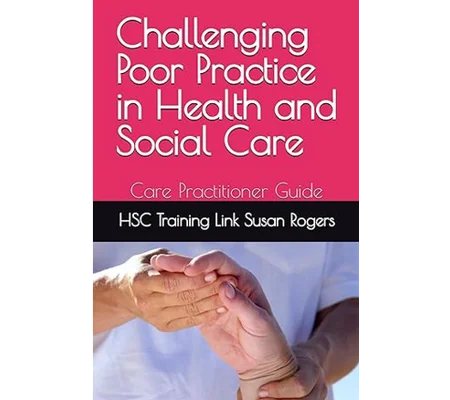
BOOK - Challenging Poor PracticeChallenging Poor Practice in Health and Social Care and Nursing: Care Practitioner Guide (Health and Social Care Training Resources) Paperback 26 Sept. 2023 In the ever-evolving landscape of healthcare and social care, the quality of care provided to individuals is of paramount importance. "Challenging Poor Practice in Health and Social Care and Nursing: A Care Practitioner Guide" is a comprehensive and indispensable resource designed to empower care practitioners, nurses, and healthcare professionals to champion excellence in care delivery. Written with the experience and expertise of both seasoned practitioners and dedicated scholars, this guide delves deep into the critical issues surrounding poor practice within the healthcare and social care sectors. It offers practical insights, real-world scenarios, and actionable strategies for addressing and rectifying poor practices that may compromise patient safety, dignity, and well-being. Key Features: Understanding Poor Practice: Expl...
Presentation Packs
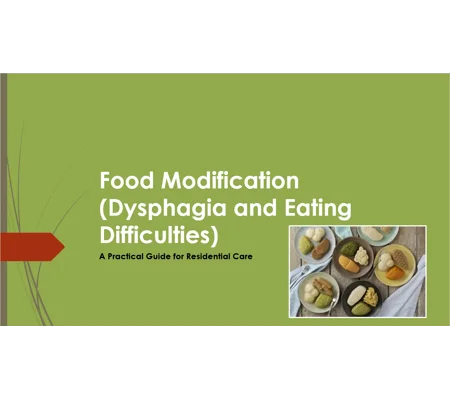
Food Modification for Eating Difficulties Training ResourcesFood Modification (Dysphagia and Eating Difficulties) - A Practical Guide for Residential Care Health ad Social Care Teaching/Training Resources All fully editable. Presentation in sections you can choose which sections to use. Aims and Objectives included if you want to use the presentation as it has been written. Comes with a 26 Page Master Handout, 8 Handouts of the Sections covered and a Multiple Choice End of Session Assessment. Aims and Objectives: Overall Aim: To enhance awareness and provide practical knowledge for Residential Care and Kitchen Staff on food preparation and design for individuals with swallowing difficulties. Learning Objectives: Understand the challenges faced by individuals with swallowing difficulties in food consumption. Identify appropriate food adaptations and design considerations for individuals with swallowing difficulties. Learn techniques and strategies for food preparation tailored to individuals with swallowing difficulties. Demonstrate proficien...

Presentation Packs
Fluids and Nutrition Domiciliary Care Level 1 Training ResourcesFluids and Nutrition Domiciliary Care Level 1 Training Resources Presentation, Handout, Knowledge Check Questions, Trainer Aide Answer Key. All files editable. Overall aim: To understand why fluids and nutrition are important and how care staff can support people to eat and drink safely in their own homes. Learning outcomes: Why eating and drinking are important. Why people need enough fluids. Ways to support people to eat and drink. Know that people have different food and drink needs. When there may be a concern about eating or drinking. Who to tell if there is a concern. Presentation (38 Slides) - Slide Titles: Aim and Objectives Introduction Why Are Fluids and Nutrition Important? What Do We Mean by Nutrition and Hydration? What Happens When We Do Not Get Enough to Eat or Drink? Good Hydration and Nutrition Why Do We Need Fluids? Dehydration Possible Signs of Dehydration Supporting People to Drink Why Is Good Nutrition Important Supporting People to Eat at Home Why Is Good Nutri...
Presentation Packs
BAME Cultural Beliefs about Health Illness Ageing Disability Training ResourcesCultural - BAME Cultural Beliefs about Health, Illness, Ageing and Disability Awareness Supporting Older Adults from Black, Asian and Minority Ethnic (BAME) Communities Cultural Beliefs about Health, Illness, Ageing and Disability Awareness Training - Health and Social Care Staff Presentation, Handout, Case Studies and Questions Activities, Trainer Aide and Answer Case Studies and Questions, End of Session Knowledge Check Questions (multiple choice), Trainer Aide Answer key. All files editable. Overall Aim: To improve culturally responsive, respectful and safe care for older people from diverse ethnic backgrounds. Learning Objectives: Learn how cultural beliefs can influence perceptions of health, illness, ageing, disability and help-seeking behaviours in older adults from BAME communities. Recognise common barriers faced by older people from minority ethnic backgrounds when accessing health and social care services in the UK. Identify key equality, human rights and care standards t...
Presentation Packs
Eye Care Awareness Training ResourcesEye Care PowerPoint presentations and Word documents. This pack covers procedures for safe administration of eye care and also the chain of infection. A third presentation looks at Domiciliary Eye Care Provision (i.e. eye tests etc. within a care setting and eye information that should be obtained prior to admittance to care, updating of care records etc.) Suitable for any setting where eye care is administered (residential and nursing homes, domiciliary and homecare, day centres etc.)Suitable for workers, care settings, trainers, training agencies, lecturers etc. Presentation 1 Eye Care Awareness (33 slides) Slide Titles: Aims and Objectives Introduction Eye care Hand washing Eye area cleaning Special precautions Artificial eyes - cleaning Equipment needed Eye care procedures Instilling eye drops Instilling eye ointment Safety Eye medication user groups Refrigeration needs Admittance of a resident Labelling of eye medicines General warnings Finally References Presentation 2 Chain o...
Presentation Packs
GORD (GERD) Awareness Training ResourcesGORD Awareness - Residential and Domiciliary Care (Gastro-Oesophageal Reflux Disease) Presentation, Handout, End of Session Assessment (mix of Multiple Choice, True/False and Short Answer questions), Trainer Aide Answer Key. All files editable. Aims and Objectives Overall Aim: To raise awareness and understanding of GORD to support the recognition, reporting and day-to-day care of individuals living with the condition in adult residential and domiciliary settings. Learning Objectives: Recognise the common signs, symptoms and potential impact of GORD in adults receiving care. Understand the general factors that can contribute to or worsen GORD in care settings. Identify simple care strategies and when to report concerns to help manage GORD effectively. Presentation (53 Slides) Aims and Objectives Welcome Introduction to GORD Why Staff Need an Awareness of GORD Section - Causes and Risk Factors of GORD Common Causes of GORD Risk Factors Common in Adults in Care What is the LES? Releva...
Presentation Packs
PICA - Introduction to PICA Training ResourcesIntroduction to PICA Health and Social Care Training Resources - this is a general introduction to PICA. Learning Objectives: By the end of the session, participants will be able to: 1. Define PICA and explain its characteristics and prevalence in various care settings. 2. Understand the impact of PICA on individuals, families and care providers. 3. Identify common myths and misconceptions associated with PICA and address them with accurate information. 4. Recognise the importance of raising awareness and understanding of PICA among care workers. 5. Appreciate the need for a non-judgmental and compassionate approach when supporting individuals with PICA. 6. Demonstrate an understanding of the potential challenges and complexities of managing PICA behaviour in care settings. 7. Understand the importance of collaboration and communication with healthcare professionals and multidisciplinary teams in addressing PICA effectively. PowerPoint Presentation (45 slides) Word Documents - Hando...