Children's Care
The children’s care training resources support staff working with children and young people in residential, community and family‑based settings.

Presentation Packs
Grooming Awareness Training ResourcesSafeguarding - Grooming Awareness - Training Resources Presentation (in Sections), 8 Handouts, End of Session Multiple Choice Assessment Overall Aim: The aim of this session is to educate the audience about the signs and dangers of grooming, empowering them to recognise and respond to potential cases of exploitation and abuse. Learning Objectives: Understand the definition of grooming and its various stages. Identify common signs and indicators of grooming in vulnerable individuals, especially children. Creating a safe and supportive environment for open communication about grooming concerns. Reporting suspected grooming or child sexual abuse Presentation (76 slides) Aims and Objectives Introduction What is Grooming? Stages of Grooming Section - TARGETING Section - BUILDING TRUST Section - ESTABLISHING A RELATIONSHIP Section - ISOLATING THE VICTIM Section - SECRECY AND MANIPULATION Section - EXPLOITATION Section - RECOGNISING THE SIGNS OF GROOMING Section - PREVENTION & INTERVENTION...
Presentation Packs
Health Related Fixations Supporting Children and Young People Training ResourcesSupporting Young People and Children with Health Related Fixations Health Related Anxiety or Somatic Symptom Fixation Awareness, Tools and Strategies for Support Workers Enough resources for full sessions, single aspects or a one day course with workshops. All editable. 14 Files in total (Presentation (in sections) , Handouts x 4, Learning Activity documents x 7 and End of Session Assessment with Trainer Aide Answer Key. Aims and Objectives: Overall Aim: To equip support workers with the knowledge and skills to respond effectively and compassionately to young people who hold inaccurate beliefs about their health, while promoting emotional well-being and psychological flexibility. Learning Objectives: Understand why children/young people may believe they have medical conditions they don't have Learn how to respond empathetically without reinforcing false beliefs Gain practical strategies to support emotional regulation and resilience Know when and how to involve clinical professional...
Presentation Packs
Incident Debriefing Awareness for Managers and Facilitators Training ResourcesIncident Debriefing Awareness for Managers and Facilitators Health and Social Care Teaching/Training Resources All fully editable (should you wish to edit). Presentation in sections you can choose which sections to use. Aims and Objectives included if you want to use the presentation as it has been written. Comes with a 9 Page Awareness Handout plus a 12 Page Facilitating an Incident Debriefing Meeting Handout, 2 Multiple Choice End of Session Assessments and 3 Learning Activities (one each for Nursing, Residential Care and Domiciliary Care). NOTE - the first 37 slides are 'awareness' slides (these are contained in the Incident Debriefing Awareness pack for staff). Aims and Objectives: Overall Aim: To enhance awareness and understanding of incident debriefing procedures for nurses and social care workers in both residential and domiciliary settings in the UK. Learning Objectives: Understand the importance of incident debriefing in nursing and social care. Know the key components of ...
Presentation Packs
Incident Debriefing Awareness for Nurses & Social Care Workers Training ResourcesIncident Debriefing Awareness for UK Nurses and Social Care Workers Health and Social Care Teaching/Training Resources All fully editable (should you wish to edit). Presentation in sections you can choose which sections to use. Aims and Objectives included if you want to use the presentation as it has been written. Comes with a 9 Page Handout and a Multiple Choice End of Session Assessment. Aims and Objectives: Overall Aim: To enhance awareness and understanding of incident debriefing procedures for nurses and social care workers in both residential and domiciliary settings in the UK. Overall Aim: To enhance awareness and understanding of incident debriefing procedures for nurses and social care workers in both residential and domiciliary settings in the UK. Presentation (40 Slides) Aims and Objectives Introduction SECTION - Importance of Incident Debriefing Definition of Incident Debriefing Importance of Incident Debriefing SECTION - Types of Incidents Common Types of Incidents in ...
Presentation Packs
Key Worker Childrens Residential Care Introduction to Roles & Responsibilities Training ResourcesIntroduction to Key Worker Skills (Role and Responsibilities). Suitable for Looked After Children Residential Care Enough resources for single sessions, single aspects or a one day course with workshops. All editable. 21 Files in total (Presentation (in section) , Handouts x 8, Case Studies x 25, Learning Activity documents x 5 and End of Session Multiple Choice Assessments x 5). Each learning activity file has 5 case studies (for those wishing to run workshops). Overall Aim: To equip key workers with the essential skills and knowledge required to effectively support vulnerable young people in residential settings, adhering to legislative frameworks and promoting best practices in care provision Learning Objectives: Understand the role and responsibilities of a key worker within a residential setting. Comprehend the importance of maintaining professional boundaries and ethical conduct in key worker interactions. Develop skills in conducting early help analysis, planning and review p...
Presentation Packs
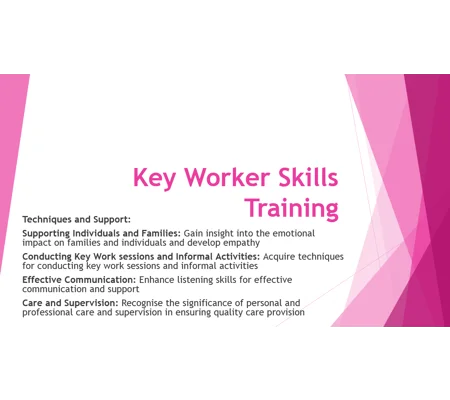
Key Worker Children's Residential Care Techniques & Support Training ResourcesKey Worker Skills (Techniques and Support). Suitable for Looked After Children Residential Care Enough resources for single sessions, single aspects or a one day course with workshops. All editable. 13 Files in total (Presentation (in section) , Handouts x 3, Case Studies x 20, Learning Activity documents x 4 and End of Session Multiple Choice Assessments x 4). Each learning activity file has 5 case studies (for those wishing to run workshops). Overall Aim: To equip participants with the knowledge, skills and understanding necessary to foster a supportive and empathetic environment in residential care settings, ensuring the emotional well-being of both families and workers while maintaining high standards of care provision Learning Objectives: Gain insight into the emotional impact on families and individuals and develop empathy. Acquire techniques for conducting key work sessions and informal activities. Enhance listening skills for effective communication and support. Recognise th...
Presentation Packs
Lesch Nyhan Syndrome Awareness Training ResourcesLesch Nhyan Syndrome Awareness Presentation and Handout. Presentation (23 Slides) Introduction The First Cases Research by Lesch and Nhyan Typical of the Syndrome Background Information Intellectual Disability Resistance to Treatment Dental Literature Review Physical Restraint and Studies Self-Injury Behaviour Behaviour Repititions Forms of Physical Self Injury Emotional and Aggressive Behaviours Treatment Summary References Word Document Handout HSC Training Link Training Resources for Health and Social Care Supplying training resources for the health and social care sector since 2004. Resources purchased are emailed to you via Zip Folder attachment. All packs are written in a generic style and can easily be adapted to suit your own specific training delivery. Resources are Microsoft Office based. Secure payments via PayPal Merchant Commerce Platform. You do not need a PayPal account to use this payment gateway. Debit and credit card payments accepted.
Presentation Packs
Ligatures Awareness Training ResourcesLigature Awareness - Health and Social Care Training Resources Presentation, Handouts, Learning Activity Suggestions, End of Session Assessments (all editable). Contains all underpinning knowledge. and is presented in SECTIONS. Overall Aim: To raise awareness and provide comprehensive knowledge about ligature risks and prevention strategies in UK care settings, fostering a safer environment. Learning Objectives: Identify Ligature Risks: By the end of this session, participants will be able to recognise potential ligature risks in care settings, considering both common and less obvious items. Conduct Effective Risk Assessments: Participants will learn how to conduct thorough ligature risk assessments, including the evaluation of risk factors and the identification of high-risk areas. Implement Preventive Measures: After the session, learners will have the knowledge to implement ligature prevention strategies, including securing ligature points, staff training and patient/family engag...
Presentation Packs
Looked After Children (LRC) Framework Awareness Training ResourcesLooked After Children (LRC) Framework Awareness Overview of the framework. Written in easy to understand terms. Presentation, Handout, End of Session Quiz Assessment (mixture of multiple choice, True/False and Short Question Answers). Editable, should you want to tailor it for your own audience. Aims and Objectives: Overall Aim: To raise awareness and provide a basic understanding of the care and support provided to looked after children, including the different types of care settings, their rights and the key people involved in their care. Learning Objectives: Define who looked after children are and recognise the key reasons why children may be looked after. Learn about the roles and responsibilities of key people involved in the care of looked after children and understand their rights. Recognise the importance of stability and routine in the lives of looked after children. Presentation (31 Slides) Aims and Objectives What is Children's Care? What Does Looked After Children Mean?...
Presentation Packs
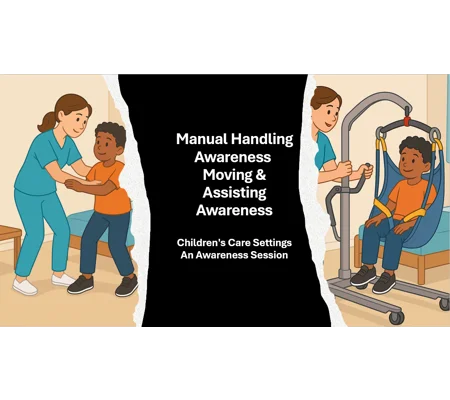
Manual Handling, Moving and Assistance Awareness - Childrens Care SettingsManual Handling, Moving and Assistance Awareness - Children's Care Settings Presentation, Handouts, End of Session Quiz (mix of Multiple Choice, True/False, Short Answer Questions). All files editable. This is a general awareness session to accompany mandatory practical training and competency assessment. Aims and Objectives Overall Aim: To raise awareness of safe, respectful and effective manual handling and assisting practices when supporting children in care settings. Learning Objectives: Understand the key risks and responsibilities involved in manual handling and assisting children. Recognise the importance of communication, planning and teamwork in supporting safe movement. Identify appropriate handling techniques and the correct use of equipment in different care scenarios. Develop awareness of legal, ethical and safeguarding considerations when moving and assisting children. Presentation (46 Slides) Aims and Objectives Welcome Introduction What is Manual Handling? Importance...
Presentation Packs
Mental Capacity and Best Interests Awareness Children's Residential Care Training ResourcesMental Capacity and Best Interests Awareness in Childrens Residential Care Settings All editable documents. This is the FIRST pack of a set of resources for Childrens Residential Care on this topic. This pack introduces the principles and basic underpinning knowledge for care staff, along with interactive case studies for general situations that care staff will come across. The SECOND pack focuses on more challenging aspects of mental capacity and best interests (e.g. mobile phones and internet usage) and is available separately. Both packs together would enable trainers to put together a one day or one and a half day training session. This pack has 10 Files in total (Presentation (in section) , Handouts x 5, Case Studies x 10 for interactive learning and End of Session Multiple Choice Assessments x 4 (one for each learning objective. Overall Aim: To provide participants with a comprehensive understanding of how the Mental Capacity Act (MCA) and Deprivation of Liberty Safeguards (Do...
Presentation Packs
Missing From Care Awareness Children's Settings Level 2 Training ResourcesMissing From Care Awareness Level 2 Training Resources Who needs it in children s residential care settings: All Direct Care Staff (Support Workers, Residential Care Workers, Waking Night Staff) These staff are the front line and therefore need the most practical, scenario based training. They must be trained to: Understand what missing , absent , and unauthorised absence mean under local police definitions Recognise push/pull factors and early warning signs Carry out proactive prevention work Record and report concerns immediately Follow the home s Missing From Care procedure step by step Complete risk assessments and dynamic risk updates Communicate with police, managers, and on call Support the child on return including basic Return Home Conversation prompts Maintain professional curiosity and challenge unsafe narratives Keep accurate, defensible records that meet Ofsted expectations Why they need it:: They are the people most likely to notice changes in behaviour, spot grooming ...

Presentation Packs
Mobile Phones & Relationships Children's Residential Care Training ResourcesMental Capacity and Best Interests Awareness (Specific Situations) in Children's Residential Care Settings All editable documents. This is the SECOND pack of a set of resources for Children's Residential Care on this topic. This pack looks at specific situations for care staff mobile phones, the internet and relationships with friends, families and external contacts. Both packs together would enable trainers to put together a one day or one and a half day training session. This pack has 14 Files in total (Presentation (in section), Handouts x 7, Case Studies x 31 and End of Session Multiple Choice Assessments x 3 (one for each learning objective). Overall Aim: To equip residential care staff with the knowledge and skills necessary to navigate complex ethical and practical challenges in children's homes, ensuring the well-being and safety of residents while promoting their autonomy and rights. Learning Objectives: Understand the legal and ethical principles underlying decision-making...

Presentation Packs
PACE Exploring Shield of Shame & Two Hands of Parenting Training ResourcesPACE - Exploring Shield of Shame and Two Hands of Parenting This is the SECOND PACE pack - the first one is Introduction to PACE (Playfulness, Acceptance, Curiosity, Empathy) Suitable for All Settings Training Resources - use the search bar if you wish to buy the other pack. All editable documents. (Presentation (in section) ,Handouts x 2, Case Studies and Scranarios , Learning Activity and End of Session Multiple Choice Assessments x 2. Overall Aim: To equip participants with an understanding of Shield of Shame and Two Hands of Parenting concepts and how they relate to fostering healthy parent-child relationships through the principles of PACE (Playfulness, Acceptance, Curiosity and Empathy). Learning Objectives: Gain insight into the concept of Shield of Shame and its impact on parent-child relationships. Understand the Two Hands of Parenting model and its significance in nurturing positive parent-child dynamics. Explore how PACE principles (Playfulness, Acceptance, Curiosity and ...
Presentation Packs
PACE Introduction to PACE Playfulness Acceptance Curiosity Empathy All Settings Training ResourcesIntroduction to PACE (Playfulness, Acceptance, Curiosity, Empathy) Suitable for All Settings Training Resources. Enough resources for single sessions, single aspects or a one/two day course. All editable. 51 Files in total (Presentation (in section) ,Handouts x 14, Case Studies x 12, Learning Activities x 16 and End of Session Multiple Choice Assessments x 4). Overall Aim: Introduce participants to the PACE Framework, exploring its pillars (Playfulness, Acceptance, Curiosity and Empathy) and delving into their applications in caregiving. Learning Objectives: Understand the core principles of the PACE Framework and its significance in enhancing relationships. Recognise the pivotal role of relational attunement in effective caregiving and relationship-building. Explore the practical applications of each PACE pillar in the context of caregiving. Examine the historical development of the PACE Framework by Dan Hughes and its evolution. Presentation (67 slides) Aims and Objectives Introdu...
Presentation Packs
Pathway Planning - Communication, Participation and Empowerment Training ResourcesCommunication, Participation and Empowerment - Pathway Planning Presentation, Handout, Knowledge Check Questions, Trainer Aide Answer Key All files editable. Overall Aim: To equip staff with the skills, confidence and approaches needed to ensure young people are fully informed, actively involved and genuinely empowered throughout every stage of Pathway Planning. Learning Objectives: Learners will understand the importance of meaningful communication and active participation in supporting young people s engagement in their Pathway Plan. Learners will be able to apply strengths-based, person-centred and culturally competent approaches that promote inclusion and respect for individuality. Learners will recognise how to encourage the young person s voice in decision-making and facilitate effective advocacy through internal and external support networks. Presentation (39 Slides) Overall Aim Learning Objectives Introduction Why Communication and Participation Matter Features of Meaningful...
Presentation Packs
Pathway Planning - DfE Guidance Overview Training ResourcesDfE Guidance Overview - Pathway Planning Presentation, Handout, Knowledge Check Questions, Trainer Aide Answer Key All files editable. Overall Aim: To provide staff with an understanding of the core principles contained in the DfE (2011) guidance on planning transitions to adulthood, ensuring care leavers receive consistent, structured and person- centred support. Learning Objectives: Explain the purpose and key principles of the DfE guidance for supporting care leavers Identify the key areas that should be assessed and included in a Pathway Plan to support successful transitions. Learn about the key topics included in the guidance. Presentation (53 Slides) Overall Aim Learning Objectives What is Pathway Planning? DfE Guidance (2011): Planning Transition to Adulthood for Care Leavers DfE Guidance - Early and Individualised Planning Why It Matters DfE Guidance - Focus on Independence Skills Why It Matters DfE Guidance - Person Centred Pathway Plans Why It Matters DfE Guidance - Multi...
Presentation Packs
Pathway Planning - Key Components of a Pathway Plan Training ResourcesKey Components of a Pathway Plan - Pathway Planning Presentation, Handout, Knowledge Check Questions, Trainer Aide Answer Key All files editable. Overall Aim: To provide staff with a clear understanding of the essential components of a Pathway Plan and how each part supports effective, person-centred transition planning for care leavers. Learning Objectives: Learners will be able to identify the core sections of a statutory Pathway Plan and explain their purpose in supporting the young person s transition to adulthood. Learners will understand how information relating to health, education, accommodation, relationships, finances and independence skills is assessed and recorded within the Pathway Plan. Learners will recognise their role in contributing accurate, person-centred information to the Pathway Plan and ensuring the young person s voice is central to all planning. Presentation (36 Slides) Overall Aim Learning Objectives Introduction Assessing Needs and Aspirations Core Sectio...
Presentation Packs
Pathway Planning - Legislation Overview and DutiesLegislation Overview and Duties - Pathway Planning Presentation, Handout, Knowledge Check Questions, Trainer Aide Answer Key All files editable. Overall Aim: To develop an understanding of the key legislation and statutory duties that govern Pathway Planning for looked-after children and care leavers in England. Learning Objectives: Identify the main legal frameworks that outline responsibilities towards looked-after children and care leavers, including the Children Act 1989 and subsequent amendments. Explain the duties and requirements set out in the Care Leavers (England) Regulations 2010 and Children and Social Work Act 2017 in relation to Pathway Plans and Personal Adviser support. Describe how the Children s Homes (England) Regulations 2015 and associated Quality Standards promote education, leadership and independence in supporting young people s transition to adulthood. Presentation (36 Slides) Overall Aim Learning Objectives Introduction Children Act 1989 Duties towards Look...
Presentation Packs
Pathway Planning - Local Authority Policies and The Role of Specific Services Training ResourcesLocal Authority Policies and The Role of Specific Services - Pathway Planning Presentation, Handout, Knowledge Check Questions, Trainer Aide Answer Key All files editable. Overall Aim: To enable staff to understand how local authority policies and key services support care-experienced young people in planning and achieving a safe, gradual transition to independence. Learning Objectives: Learn about the purpose of local authority leaving care policies and how they guide pathway planning. Identify the roles of the Virtual School, Leaving Care Teams and Information, Advice and Guidance (IAG) services in supporting care leavers. Recognise how staff can work effectively with these services to empower young people and coordinate multi-agency support. Presentation (53 Slides) Overall Aim Learning Objectives Introduction Local Authority Policies Purpose of Local Authority Leaving Care Policies How They Guide Pathway Planning Why It Matters The Role of The Virtual School Key Practice Element...
Presentation Packs
Pathway Planning - Promoting Independence Skills Training ResourcesPromoting Independence Skills - Pathway Planning Presentation, Handout, Knowledge Check Questions, Trainer Aide Answer Key All files editable. Overall Aim: To provide staff with the knowledge and confidence to effectively promote, assess and support young people s independence skills as an essential part of statutory Pathway Planning Learning Objectives: Learners will be able to explain why independence skills are vital for preparing young people for adulthood and successful transitions. Learners will be able to identify key areas of independence development and how these are assessed and recorded within the Pathway Plan. Learners will recognise their role in supporting, teaching and reviewing independence skills in a person-centred, empowering and developmentally appropriate way. Presentation (36 Slides) Overall Aim Learning Objectives Introduction Why Independence Skills Matter Why Independence Skills Are Especially Important for Care-Experienced Young People Links to Pathway Plan...
Presentation Packs
Pathway Planning - Purpose and Principles of Pathway Planning Training ResourcesPurpose and Principles of Pathway Planning Presentation, Handout, Knowledge Check Questions, Trainer Aide Answer Key All files editable. Overall Aim: To provide staff with a clear understanding of the purpose, principles and practice of Pathway Planning in supporting care-experienced young people to achieve a safe and successful transition to adulthood. Learning Objectives: Describe what Pathway Planning is and explain why it is essential for preparing young people in care for independence. Identify the core principles of participation, empowerment, inclusion and rights-based practice within the Pathway Planning process. Recognise the roles and responsibilities of corporate parents and residential staff in promoting gradual, supported independence for young people. Presentation (40 Slides) Overall Aim Learning Objectives What is Pathway Planning? Why Does Pathway Planning Matter? Aims of Pathway Planning Principles of Pathway Planning Principle of Participation Principle of Particip...
Presentation Packs
Pathway Planning - Risk Assessment and Safeguarding in Transition Training ResourcesRisk Assessment and Safeguarding in Transition - Pathway Planning Presentation, Handout, Knowledge Check Questions, Trainer Aide Answer Key All files editable. Overall Aim: To equip staff with the knowledge, skills and confidence to identify, assess and manage risks during transition while promoting safe, positive independence for young people. Learning Objectives: Learners will understand the key vulnerabilities young people may face during transition and how these can impact safety and wellbeing. Learners will be able to apply the principles of positive risk-taking to balance independence, opportunity and safety. Learners will recognise how to develop collaborative, person-centred safety plans and respond appropriately when concerns need to be escalated. Presentation (38 Slides) Overall Aim Learning Objectives Understanding Vulnerability During Transition Why Transitions Increase Risk Risk of Homelessness Risk of Exploitation Mental Health Vulnerabilities Risk Related to Independe...
Presentation Packs
Pathway Planning - Supporting Emotional Readiness and Resilience Training ResourcesSupporting Emotional Readiness and Resilience - Pathway Planning Presentation, Handout, Knowledge Check Questions, Trainer Aide Answer Key All files editable. Overall Aim: To equip staff with the understanding and practical skills needed to support care-experienced young people s emotional readiness, resilience and wellbeing as part of effective Pathway Planning. Learning Objectives: Learners will understand how attachment, trauma and past experiences influence a young person s emotional development and readiness for independence. Learners will be able to identify and apply strategies that support emotional literacy, coping skills, resilience and self-esteem in daily practice. Learners will recognise how their role as consistent, trusted adults helps young people manage anxiety, fear of change and the emotional challenges involved in transition planning. Presentation (27 Slides) Overall Aim Learning Objectives Introduction Why Attachment and Trauma Matter in Pathway Planning Attachm...