Residential Care
Residential Care training resources - These materials are designed for trainers, agencies, care providers and learning organisations who need ready‑to‑use content that meets inspection standards and strengthens staff understanding of complex care‑home responsibilities. As with all of my resources, all are editable.
Presentation Packs
Safeguarding Introduction to Safeguarding Adults Residential Care Training ResourcesIntroduction to Safeguarding Health and Social Care Training Resources - this is a general introduction to Safeguarding. Aims; To provide an understanding of the concept of safeguarding adults in residential care To familiarise care home staff with the importance of safeguarding adults and their role in ensuring the safety and well-being of residents. To enhance awareness of different types of abuse and neglect and their potential impact on individuals and the care home setting. To establish a clear understanding of the duty of care and the specific responsibilities of care home staff in safeguarding adults. Learning Objectives: A. Definition and importance of safeguarding adults Define safeguarding adults in the context of residential care. Explain the significance of safeguarding adults in promoting well-being and protecting vulnerable individuals. Understand the legal and ethical implications associated with safeguarding adults. B. Types of abuse and neglect Identify and describe...
Presentation Packs
Safeguarding Residential, Domiciliary and Dementia Settings Level 5 Training ResourcesSafeguarding Level 5 - Residential, Domiciliary and Dementia Settings Presentation, 15 x Handouts, 17 x Case Study Based Learning Activities (Group and Individual), 16 x Post Activity Trainer Aide (Answers), Presentation is in Sections. All files editable. Aims and Objectives: Overall Aim: To equip senior health and social care professionals with the knowledge, skills and confidence to lead safeguarding practices effectively across a range of adult care settings, ensuring compliance, safety and person-centred care. Learning Objectives: Understand the legal and regulatory framework underpinning safeguarding in adult social care. Develop strategic approaches to identifying, managing and responding to safeguarding concerns in complex care environments. Strengthen multi-agency collaboration and leadership in safeguarding within and across care settings. Presentation (150 Slides) Aims and Objectives Introduction to Level 5 Safeguarding Key Focus Areas Strengthening Leadership Section - T...

Presentation Packs
Safeguarding Responding to Allegations & Evidencing for CQC Training ResourcesResponding to Safeguarding Allegations - Evidencing for CQC - Safe Actions, Recording and Evidence This is not basic safeguarding awareness training it is inspection-focused training for decision-makers Presentations x 2 (second presentation is a case study scenario and learning activities), Handouts x 3, Learning Activities x 5, Sample Templates x 5) All files editable. Main presentation is in sections. Enough resources for either a training session or workshop. Target Audience: This course is aimed at staff with management, supervisory or safeguarding responsibilities, including: Registered Managers Deputy / Assistant Managers Service or Area Managers Senior Care Staff / Team Leaders Named Safeguarding Leads or Champions Overall Aim: To ensure managers and senior staff can respond to safeguarding allegations against staff lawfully, proportionately and confidently. Demonstrating clear leadership, accountability and CQC- compliant decision-making. Learning Objectives: Explain the di...
Presentation Packs
Safety and Environmental Support Awareness Residential Care Training ResourcesResidential Care - Safety and Environmental Support Awareness This pack introduces 'safety and environmental support' for learners and staff new to the role of care work. It details what this support is and key aspects to be considered for each individual receiving care. Presentation (which includes a quiz), Handout, and End of Session Assessment (Multiple Choice). Aims and Objectives: Overall Aim: To help new care staff understand how to keep residents safe by ensuring their living environment is clean, hazard-free and supportive, while following relevant policies and working as part of the care team. Learning Objectives: Identify at least two common environmental hazards in a residential care home. Explain why following policies and procedures helps keep residents safe. Name at least two safety aids and describe how they support resident safety. Presentation (46 Slides) Aims and Objectives Introduction Maintaining Dignity, Comfort and Wellbeing for Residents What is Safety and Env...

Presentation Packs
SALT Speech and Language Therapy Awareness Training ResourcesSALT (Speech and Language Therapy) Awareness - A Guide for all Staff in All Health and Care Settings Presentation - all fully editable (should you wish to edit). Aims and Objectives included if you want to use the presentation as it has been written. Comes with a Handout and Multiple Choice End of Session Assessment. Aims and Objectives: Overall Aim: Increase awareness among Health and Social Care staff about the role and importance of Speech and Language Therapists (SALT) in improving communication and swallowing difficulties for adults in care settings. Learning Objectives: Understand the scope of practice and services provided by Speech and Language Therapists (SALT) for adults. Identify common communication and swallowing disorders that may benefit from SALT intervention in adult care. Learn how to effectively collaborate with SALT professionals to enhance care outcomes for adults with speech and language needs. Presentation (35 slides) Aims and Objectives Introduction SECTION -...
Presentation Packs
Scabies Awareness and Management Training ResourcesScabies Awareness and Management Suitable for clinical and non clinical staff - all files editable. Presentation, Handout, 2 x Knowledge Check Questions (Clinical and Non Clinical), 2 x Trainer Aide Answer Key (Clinical and Non Clinical). All files editable. Suitable for all staff in adult social care settings. Overall Aim: To increase awareness and provide a clear, coordinated framework for early detection, treatment, infection control and outbreak management of scabies in communal residential settings in accordance with UKHSA guidance. Learning Objectives: Recognise the signs and symptoms of scabies. Understand how scabies spreads and how to prevent transmission. Know the correct steps for treatment and environmental cleaning. Follow infection prevention and control procedures to manage cases safely. Presentation (49 Slides) Aims and Objectives Why Awareness and Management Matters What is Scabies? Classical vs. Crusted (Norwegian) Scabies Life Cycle of the Scabies Mite Transmissio...
Presentation Packs
Sepsis & NEWS2 Awareness Training Resources1) Sepsis Awareness, 2) NEWS 2 Awareness 3) Sepsis and NEWS2 Awareness for Residential Care Settings PowerPoint Presentations and Word Documents Presentation 1 Sepsis Awareness (25 Slides) Aims and Objectives: To gain an understanding of sepsis What sepsis is Prevalence of sepsis Clinical tools used Definition and causes of sepsis Risk factors and complications Slide Titles: Aims and Objectives Introduction Background Information What is Sepsis? Statistics Sepsis Survivors Hospital Admissions Clinical Tools All Party Parliamentary Group on Sepsis Definition of Sepsis Causes of Sepsis Risk Factors Prevalence of Sepsis Complications Red Flag Sepsis Tool Sepsis 6 Treatment Pathway References Presentation 2 NEWS2 Overview (20 Slides) Aims and Objectives: To gain an understanding of NEWS2 What NEWS2 is Why it is used The scoring system Using NEWS2 Slide Titles: Aims and Objectives Introduction Use of Tools National Early Warning Score (NEWS) NEWS2: Benefits of Standardisation National Ea...
Presentation Packs
Serious Incidents and Near Misses Learning from Them Training ResourcesRegistered Managers - Learning from Serious Incidents and Near Misses CQC Compliance Governance, Investigation & CQC Compliance for Registered Managers Enough resources for a one day workshop or use the resources for a training session. All files editable. Presentations x 2 (One in Sections, the other learning activities for each section), Word Document handout and 9 Word Document Learning Activities (one of which are reflection/discussion Questions). Overall Aim: To equip Registered Managers with the knowledge, skills and governance tools required to effectively manage serious incidents and near misses, embed a learning culture and demonstrate regulatory compliance and continuous improvement. Learning Objectives: By the end of the session, learners will be able to: Define serious incidents and near misses within adult social care. Explain their legal and regulatory responsibilities as a Registered Manager. Apply a structured approach to incident investigation. Conduct basic root ca...
Team Meeting / Toolbox Talks
Sexual Abuse - Care Team Talk Level 1Sexual Abuse - Care Team Talk Level 1 Audience: Care staff Level: Level 1 Awareness Duration: Approximately 15 minutes 15-Minute Care Team Talk - 12 Pages Short, practical and ready-to-use training resource designed to support regular staff learning, discussion and reflection within health and social care settings. Provides a simple, structured way for managers, team leaders and trainers to cover this important care topic (Sexual Abuse) with staff without the need for a lengthy training session. Team Talk includes: 1. Trainer Guide - A clear, easy-to-follow guide showing the trainer how to deliver the session within approximately 15 minutes, including the purpose, learning outcomes and suggested timings. 2. Short Scenario - A realistic care-based scenario to help staff think about how the topic may arise in everyday practice. 3. Discussion Questions - Simple, practical questions to encourage staff to think about the topic, share their understanding and consider how it applies to the...
Team Meeting / Toolbox Talks
Sexual Abuse - Care Team Talk Level 2Sexual Abuse - Care Team Talk Level 2 Audience: Care staff Level: Level 2 Awareness Duration: Approximately 15 minutes 15-Minute Care Team Talk - 14 Pages Short, practical and ready-to-use training resource designed to support regular staff learning, discussion and reflection within health and social care settings. Provides a simple, structured way for managers, team leaders and trainers to cover this important care topic (Sexual Abuse) with staff without the need for a lengthy training session. Team Talk includes: 1. Trainer Guide - A clear, easy-to-follow guide showing the trainer how to deliver the session within approximately 15 minutes, including the purpose, learning outcomes and suggested timings. 2. Short Scenario - A realistic care-based scenario to help staff think about how the topic may arise in everyday practice. 3. Discussion Questions - Simple, practical questions to encourage staff to think about the topic, share their understanding and consider how it applies to the...
Team Meeting / Toolbox Talks
Sexual Abuse - Care Team Talk Level 3Sexual Abuse - Care Team Talk Level 3 Audience: Care staff, senior care staff and team leaders Level: Level 3 Awareness Duration: Approximately 15 minutes 15-Minute Care Team Talk - 15 Pages Short, practical and ready-to-use training resource designed to support regular staff learning, discussion and reflection within health and social care settings. Provides a simple, structured way for managers, team leaders and trainers to cover this important care topic (Sexual Abuse) with staff without the need for a lengthy training session. Team Talk includes: 1. Trainer Guide - A clear, easy-to-follow guide showing the trainer how to deliver the session within approximately 15 minutes, including the purpose, learning outcomes and suggested timings. 2. Short Scenario - A realistic care-based scenario to help staff think about how the topic may arise in everyday practice. 3. Discussion Questions - Simple, practical questions to encourage staff to think about the topic, share their understandin...

Presentation Packs
Skin Integrity and Care Training ResourcesBariatric Care - Skin Integrity - A Complete Overview Health and Social Care Training Resources Presentation, Handouts and Multiple Choice End of Session Assessment (all editable). Presentation is sections, so you can use what you need, or edit to suit your own training session. Overall Aim: - To equip health and care professionals with knowledge and skills in managing skin integrity in bariatric patients. Learning Objectives: Understand the unique challenges and risk factors associated with skin breakdown in bariatric patients. Identify evidence-based strategies for maintaining and managing skin integrity. Presentation (56 Slides) Aims and Objectives Introduction Understanding the Unique Needs of Bariatric Patients SECTION - Skin Integrity - Physiological Changes Physiological Changes SECTION - Skin Integrity - Risk Factors Introduction Immobility, Excessive moisture Friction and Shear Forces, Skin Folds and Pressure Points Nutritional Factors Comorbidities, Medical Devices SECTION...
Presentation Packs
Sleep Apnoea - Understanding Sleep Apnoea Training ResourcesUnderstanding Sleep Apnoea - What it is, the effects and impacts on individuals - Presentation (50 slides, 2 end of session assessments, case study plus learning activity, handouts. Outline: This course is designed to provide nurses and carers in the United Kingdom with the knowledge and skills necessary to understand sleep apnoea Learning Objectives - By the end of the course, participants will be able to: Define sleep apnoea and differentiate between obstructive sleep apnoea (OSA) and central sleep apnoea (CSA) Understand the risk factors, pathophysiology and potential complications associated with sleep apnoea Understand why this knowledge is needed Presentation Aims and Objectives Welcome and Introduction Section Header Definition, Prevalence and Types Definition Prevalence Types Obstructive Sleep Apnoea Central Sleep Apnoea Mixed Sleep Apnoea Differentiating Different Types Recap Section Header - Impact on Health and Quality of Life Introduction Sleep Apnoea and Health Conseque...

Presentation Packs
Sleep Apnoea Pathophysiology, Mechanisms, Role of Obesity Training ResourcesSleep Apnoea - Understanding Pathophysiology - Mechanisms - Role of Obesity - Presentation (50 slides, 1 end of session assessment, case studies , handouts. Sleep Apnoea: Understanding Pathophysiology A. Definition and Types of Sleep Apnoea B. Mechanisms underlying Sleep Apnoea C. Role of Obesity in Sleep Apnoea Learning Objectives: Differentiate between obstructive sleep apnoea (OSA) and central sleep apnoea (CSA) Explain the mechanisms underlying sleep apnoea, including upper airway obstruction in OSA and lack of respiratory drive in CSA Understand the relationship between obesity and sleep apnoea Recognise the impact of weight loss on sleep apnoea management Presentation Aims and Objectives Welcome and Introduction Course Structure and Course Engagement Section Header - Pathophysiology of Sleep Apnoea Introduction Types of Sleep Apnoea PATHOPHYSIOLOGY OF OBSTRUCTIVE SLEEP APNOEA (OSA) PATHOPHYSIOLOGY OF CENTRAL SLEEP APNOEA (OSA) CENTRAL SLEEP APNOEA (CSA) Section Header - Case S...
Presentation Packs
Spinal Injury Awareness Training ResourcesSpinal Injuries Awareness - A Guide for Care Staff Health and Social Care Teaching Resources Presentation (90 slides, in Sections - editable) and 19 Page Handout (Editable). Aims and Objectives: Overall Aim: To gain awareness and understanding of spinal injuries among health and social care staff Learning Objectives: Understand the common causes of spinal cord injuries, including falls, accidents and medical conditions, to identify potential risks and preventive measures in care settings. Recognise the signs of a potential spinal injury and implement immediate response and emergency procedures, ensuring the safety and well-being of individuals in health and social care environments. Gain proficiency in assessing the mechanism of injury after falls or trauma, enabling health and social care staff to identify situations that may pose an increased risk of spinal injury and respond appropriately. Acquire knowledge and skills related to the proper techniques for transferring and transpor...
Presentation Packs
Staff Training & Competency Audits Awareness Residential Care Training ResourcesResidential Care - Staff Training and Competency Audits Awareness Presentation, Handout and Multiple Choice End of Session Assessment All files editable. The SEVENTH of a series of packs on Care Auditing in Adult Residential Care Homes Aims and Objectives: Overall Aim: To provide learners with the knowledge and skills to effectively conduct audits of staff training and competency to ensure compliance and enhance care quality. Learning Objectives: Understand the purpose and benefits of staff training and competency audits in maintaining high standards of care. Identify key areas to assess during audits, including mandatory training compliance and role-specific competencies. Develop actionable plans to address training gaps and improve staff knowledge and skills. Presentation (18 Slides) Aims and Objectives Introduction What is a Staff Training and Competency Audit? Purpose and Benefits of Auditing Staff Training and Competency Key Regulations and Standards for Staff Training in Socia...
Presentation Packs
Status Epilepticus Training ResourcesStatus Epilepticus Awareness - A Guide for Care Staff Presentation, Handout, End of Session Multiple Choice Assessment (all editable). Aims and Objectives Aim: The aim of this presentation is to enhance the knowledge and skills of UK residential care and domiciliary care staff in recognizing, responding to, and contributing effectively to the management of epilepsy, with a focus on status epilepticus. Learning Objectives: Understand the critical importance of timely medical attention in the management of status epilepticus and its potential life-threatening consequences. Familiarize oneself with the criteria for defining status epilepticus, enabling prompt recognition and appropriate intervention. Gain a basic insight into the available treatments for status epilepticus, including the administration of medications and the importance of early ambulance involvement. Develop an awareness of the role care staff can play in identifying and addressing underlying triggers or causes of epil...
Presentation Packs
Supervision and Support Training ResourcesSupervision and Support PowerPoint presentations and Word documents. Looking at various aspects of the supervision process. A complete 'How To' with templates for use in the supervision process. Also includes training material on Policies and Procedures. The pack also includes templates of records to use. Suitable for care managers and supervisors. Presentation 1 - Introduction to Supervision (18 slides) Slide Titles: Aims and Objectives Introduction Appropriate Setting Areas to Cover Observation Records Confidentiality Conclusion Relevant Legislation References Presentation 2 - Supervision (56 slides) Slide Titles: Aims and Objectives Introduction Definitions Relevant Legislation Golden Rules CQC Minimum Standards The Purpose of Supervision Informal Supervision Principles of Supervision Reflective Practice Supervision Outcomes For Staff Monitoring Documents Quality of Supervision Setting Objectives Objective Categories SMART Objectives Expressing Objectives Setting Up A Supervision...
Presentation Packs
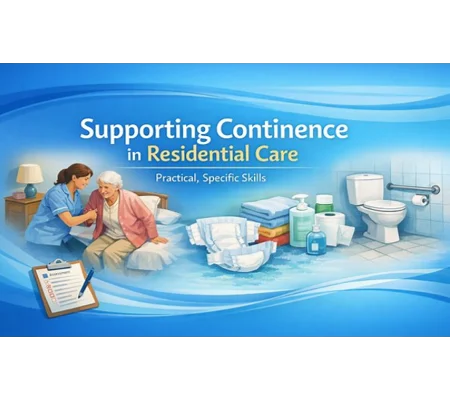
Supporting Continence Residential Care Training ResourcesSupporting Continence in Residential Care Awareness Presentation, Handout, Knowledge Check Questions, Trainer Aide Answer Key All files editable Overall Aim: To strengthen staff confidence and competence in supporting residents continence needs through practical, respectful and person centred care. Learning Objectives: Explain what continence means and why it matters in residential care Recognise factors that affect continence and early signs of change Apply practical techniques for safe, dignified toileting support Communicate effectively between floor and senior staff about continence care Maintain accurate records and uphold professional accountability Presentation (31 Slides) Overall Aim and Learning Objectives Introduction to Continence Support Understanding Continence and Incontinence Recognising Individual Needs and Preferences Assessment and Early Intervention Practical Skills for Daily Care Promoting Comfort, Privacy and Dignity Communication Between Floor and Senior Staff ...
Presentation Packs
Supporting People with Challenging Behaviour Residential Care Level 1 Training ResourcesSupporting People with Challenging Behaviour Residential Care Level 1 Training Resources Presentation, Handout, Knowledge Check Questions, Trainer Aide Answer Key. All files editable. Overall Learning Aim: To develop awareness of challenging behaviour and how to support people safely, calmly and with dignity. Learning outcomes: Know what challenging behaviour is. Know what can cause challenging behaviour. Know how to respond calmly. Know how to keep people safe. Know when to ask for help. Presentation (36 Slides) - Slide Titles: Aim and Objectives Introduction Presentation (33 Slides) - Slide Titles: Aim and Objectives Introduction What is Challenging Behaviour? Why Might Someone Behave This Way? What Is A Trigger? Common Triggers May Include Recognising Early Signs Look For Changes Such As Helping To Prevent Challenging Behaviour Staying Calm De-Escalation Keeping Everyone Safe What Should Staff Avoid? Supporting The Person After An Incident Reporting and Recording When Should I As...
Presentation Packs
Thyroid Disorders Awareness Residential and Domiciliary Care Training ResourcesThyroid Disorders Awareness - Residential and Domiciliary Care Settings (Level 2) 6 Files in total (Presentation, Handout, End of Session Assessment (mix of multiple choice, true/false and short answer questions), Case Study Scenario (with questions),Case Study Scenario Answers, Trainer Aide Answer Key End of Session Assessment. All editable. Aims and Objectives: Overall Aim: To increase care workers knowledge and confidence in recognising, supporting and reporting thyroid disorders in adults receiving residential or domiciliary care. Learning Objectives: Identify common thyroid disorders and their key symptoms relevant to adult care settings. Understand the impact of thyroid conditions on the physical and mental wellbeing of care recipients. Apply practical strategies to support individuals with thyroid disorders and communicate effectively with healthcare professionals. Presentation (46 Slides) Aims and Objectives Welcome Objectives of the Session Introduction to the Thyroid Gland...
Presentation Packs
Transdermal Patches Safe Use Of Training ResourcesPowerPoint presentation and Word Document Handout Latest guidance and best practice. Presentation - Using Transdermal Patches Safely (39 slides) - slide titles: Aims and Objectives Introduction Before Application Pharmacy Label Choosing the Application Site Preparing the Application Site Things Not to Do Things to Do Avoid During Application Multiple Patches Removal of Patches Disposal of Patches Cutting Patches Types of Patches Patches That Must Not Be Cut If a Patch Has Fallen Off Monitoring Omitted or Delayed Patch Application Switching Patches MRIs and Patches Transdermal Patches During an MRI Recording and Documenting Information to Record Transfer of Care Additional Monitoring Application Site Reactions MHRA Alerts References Word Document 9 page Handout
Presentation Packs
Translation Tools What's Safe and What's Not Safe Training ResourcesTranslation Tools, What's Safe and What's Not Safe Health and Care Settings What UK Guidance Says Risks, Limits and When Professional Interpreters are Required Awareness for all health and care staff including Care Staff, Nurses, Seniors and Managers. Presentation, Handout, General End of Session Knowledge Checks Questions (multiple choice), Trainer Aide Answer Key. All files editable Overall Aim: To increase staff awareness of how translation tools can and cannot be used safely in UK health and social care, in line with guidance, patient safety and professional responsibilities. Learning Objectives: Describe what UK health and social care guidance says about the use of translation tools and professional interpreters. Recognise the risks to patient safety, consent and confidentiality when translation tools are used inappropriately. Identify situations where translation tools may be used safely and situations where they must not be used. Understand their own responsibility to seek ap...
Presentation Packs
Trauma Informed Care Approaches All Care Settings Training ResourcesTrauma Informed Care Approaches. Suitable for any care setting. Enough resources for single sessions, single aspects or a one day course with workshops. All editable. 20 Files in total (Presentation (in section) , Handouts x 9, Learning Activity documents x 6 (many with a selection of case studies) and End of Session Multiple Choice Assessments x 4). Overall Aim : To equip professionals in the UK with the knowledge and skills necessary to implement trauma-informed practices in their respective settings, fostering a supportive and healing environment for individuals impacted by trauma Learning Objectives: Understand the principles and significance of trauma-informed care within the context of UK healthcare and social services. Identify different types of trauma and their potential impacts on individuals across the lifespan, including children and adults accessing mental health services. Apply practical strategies for implementing trauma-informed practices, including creating safe env...