Presentation Packs
This category lists editable training resources that include more than a presentation.
Are these training packs editable? Yes, every resource is fully editable so you can adapt it to your service, training style and policies.
Do these packs include lesson plans? No - these are not courses, they are resources for use in your own sessions.

Presentation Packs
HIV and AIDS Awareness Training ResourcesHIV and AIDS Awareness - Residential and Domiciliary Care Settings (Level 2) Presentation, Handout, End of Session Assessment (mix of multiple choice, true/false and short answer questions), Trainer Aide Answer Key End of Session Assessment. All editable. Presentation (34 Slides) Aims and Objectives Welcome Why HIV/AIDS Awareness Matters in Adult Care What is HIV? (Human Immunodeficiency Virus) What is AIDS? (Acquired Immunodeficiency Syndrome) How HIV Affects the Immune System How is HIV Transmitted? Body Fluids That Can Carry HIV What Does Not Transmit HIV? Myths and Misconceptions Relevance to Residential and Domiciliary Care Risks and Precautions in Adult Care Confidentiality & Stigma Use of Personal Protective Equipment (PPE) Safe Handling and Disposal of Sharps and Waste Bloodborne Pathogen Protocols Hand Hygiene: Your First Line of Defence Respect and Dignity in Care Addressing Stigma and Discrimination Encouraging Adherence to Treatment Promoting Mental Health and Wellbeing ...
Presentation Packs
Hoarder Behaviour Awareness Training ResourcesHoarder Behaviour Awareness - Guide for Social Workers and Community Support Workers All Types Health and Social Care Training Resources All fully editable. Presentation in sections you can choose which sections to use. Aims and Objectives included if you want to use the presentation as it has been written. Comes with a 13 Page Handout, Aide Memoir, Suggested Learning Activities and a Multiple Choice End of Session Assessment. Overall Aim: To equip staff with the knowledge and skills to effectively identify, understand and support individuals who display hoarding behaviour. Learning Objectives: Understand the nature and characteristics of hoarding behaviour. Recognise the impact of hoarding on individuals and communities. Identify signs and symptoms of hoarding behaviour in clients. Learn effective intervention strategies for working with individuals who hoard. Understand legal and ethical considerations in supporting hoarders. Familiarise with available resources and support servic...
Presentation Packs
Huntington's Disease Awareness Training ResourcesHuntington's Disease Awareness - Health and Social Care Training Resources Presentation and Handout Presentation (11 slides) Aims and Objectives Introduction Genetic Cause Inheritance Symptoms Progression Diagnosis Treatment Diagnosis Support Disease Progression References and Further Information Word Document 3 page Handout
Presentation Packs
Hyoscine Hydrobromide (Scopotamine) Dementia and Palliative Care Training ResourcesHyoscine Hydrobromide (Scopolamine) in Adult Care Settings Safe Use, Observation and Person-Centred Care (For Nurses and Care Staff Working on the Floor) - Palliative Care and Dementia Care Presentation, Handouts x 4, Knowledge Check Questions x 4, Trainer Aide Answer Key for All Knowledge Check Questions All files editable. Presentation in sections and includes a case study and action to take. Overall Aim: To enable nurses and care staff to safely support people receiving hyoscine hydrobromide by understanding its purpose, benefits and risks, recognising side effects early and working together to provide safe, person-centred care particularly in palliative care and for people living with dementia. . Learning Objectives: Explain what hyoscine is and what it is used for . Recognise when it is commonly used in palliative care . Understand risks when used in people with dementia . Identify side effects and red flags . Know what care staff must observe and report . Understand nurse resp...

Presentation Packs
Hypertension Awareness Residential and Domiciliary Care Training ResourcesHypertension Awareness - Residential and Domiciliary Care Presentation, Handouts, Case Studies, End of Session Assessment (multiple Choice questions), Trainer Aide Answer key All files editable. Aims and Objectives Overall Aim: To increase care workers understanding of hypertension and equip them with practical skills to support adults with high blood pressure in residential and domiciliary care settings. Learning Objectives: Recognise the key risk factors and potential symptoms of hypertension in adults. Understand how to accurately monitor blood pressure and identify when to escalate concerns. Support residents and clients in managing hypertension through lifestyle advice and medication adherence. Presentation (31 Slides) Aims and Objectives Welcome What is Hypertension? Hypertension Causes and Risk Factors Recognising Symptoms (When Present) Monitoring Blood Pressure Managing Hypertension Section - Role of the Care Worker Observing and Reporting Symptoms and Changes Supporting He...
Presentation Packs
Hypothermia Awareness Training ResourcesPowerPoint presentation, PDF version for handout and Word Document Generic End of Session Assessment. Hypothermia Awareness - 60 slides - slide titles: Aims and Objectives Introduction Important Causes of Hypothermia Older Adults Definition and Stages of Hypothermia Recognising Stages of Hypothermia Mild Hypothermia Moderate Hypothermia Severe Hypothermia The Human Body and Body Temperature The Four Processes The Human Body - Maintaining Normal Core Body Temperature How the Body Stimulates Heat Production What Happens When the Body Cools Clinical Signs of Mild Hypothermia Clinical Signs of Moderate Hypothermia Clinical Signs of Severe Hypothermia Guidance and Legislation The Cold Weather Plan The Cold Weather Alert Service Cold Weather Alert Levels Cold Weather Alert Level 0 - Provider Organisations Cold Weather Alert Level 0 - Frontline Staff Cold Weather Alert Level 0 - Community and Voluntary Sector Cold Weather Alert Level 1 - Provider Organisations Cold Weather Alert Level 1 -...
Presentation Packs
Incident Debriefing Awareness for Managers and Facilitators Training ResourcesIncident Debriefing Awareness for Managers and Facilitators Health and Social Care Teaching/Training Resources All fully editable (should you wish to edit). Presentation in sections you can choose which sections to use. Aims and Objectives included if you want to use the presentation as it has been written. Comes with a 9 Page Awareness Handout plus a 12 Page Facilitating an Incident Debriefing Meeting Handout, 2 Multiple Choice End of Session Assessments and 3 Learning Activities (one each for Nursing, Residential Care and Domiciliary Care). NOTE - the first 37 slides are 'awareness' slides (these are contained in the Incident Debriefing Awareness pack for staff). Aims and Objectives: Overall Aim: To enhance awareness and understanding of incident debriefing procedures for nurses and social care workers in both residential and domiciliary settings in the UK. Learning Objectives: Understand the importance of incident debriefing in nursing and social care. Know the key components of ...
Presentation Packs
Incident Debriefing Awareness for Nurses & Social Care Workers Training ResourcesIncident Debriefing Awareness for UK Nurses and Social Care Workers Health and Social Care Teaching/Training Resources All fully editable (should you wish to edit). Presentation in sections you can choose which sections to use. Aims and Objectives included if you want to use the presentation as it has been written. Comes with a 9 Page Handout and a Multiple Choice End of Session Assessment. Aims and Objectives: Overall Aim: To enhance awareness and understanding of incident debriefing procedures for nurses and social care workers in both residential and domiciliary settings in the UK. Overall Aim: To enhance awareness and understanding of incident debriefing procedures for nurses and social care workers in both residential and domiciliary settings in the UK. Presentation (40 Slides) Aims and Objectives Introduction SECTION - Importance of Incident Debriefing Definition of Incident Debriefing Importance of Incident Debriefing SECTION - Types of Incidents Common Types of Incidents in ...
Presentation Packs
Infection Control Audits Residential Care Training ResourcesResidential Care - Infection Control Audits Awareness Presentation, Handout and Multiple Choice End of Session Assessment All files editable. The FIFTH of a series of packs on Care Auditing in Adult Residential Care Homes Aims and Objectives: Overall Aim: To equip learners with the knowledge and skills to conduct infection control audits that promote hygiene and safety in care settings. Learning Objectives: Understand the purpose and importance of infection control audits in preventing the spread of infection. Identify key areas and practices to evaluate during an infection control audit, including PPE use, hygiene and cleaning standards. Develop action plans and recommendations to address gaps and enhance infection prevention measures. Presentation (21 Slides) Aims and Objectives Introduction Infection Control The Purpose and Benefits of Infection Control Audits Key Regulations and Standards for Infection Control Auditing Preparation for an Infection Control Audit Areas to Focus On...
Presentation Packs
Infection Control Multi Resistant Organisms MDRO Training ResourcesMDRO Awareness All Care Settings Overview of UK Government Guidance on Infection prevention and control for multidrug-resistant organisms in adult social care settings. This is not a replacement for full infection control training - it is additional based on new guidance on the topic of MDRO's. Presentation, Handout x 3, Knowledge Check End of Session Questions x 3, Trainer Aide Answer Key x 3 All files editable. This is an awareness session, not clinical training Overall Aim: To equip adult social care staff and managers with essential knowledge, skills and practical procedures to prevent and control the spread of multidrug-resistant organisms (MDROs), ensuring safe, dignified and inclusive care for all individuals. Learning Objectives: Explain what multidrug-resistant organisms (MDROs) are and why they matter in adult social care. Describe how MDROs spread in care settings and the risks they pose. Apply key infection prevention and control (IPC) principles to everyday care activit...
Presentation Packs
Infection Control Universal Standard Precautions Training ResourcesInfection Control - Universal Standard Procedures Includes Sharps and Personal Protective Equipment Awareness Covers all aspects of Universal Standard Infection Control Procedures (including Sharps and Personal Protective Equipment). Presentation 1 Infectious Agents (with built in speaker notes and activities) Slide Titles: Aims Introduction Chain of Infection Infectious Agents Reservoirs Portals of Exit Modes of Transmission Portals of Entry Susceptible Hosts Summary References Presentation 2 Introduction to Universal Precautions (with built in activities) - Slide Titles: Introduction Breaking the Chain of Infection Duties and Responsibilities of Settings Introducing the Themes of Universal Precautions Hand Washing Drying Hands Summary Presentation 3 Personal Protective Equipment (with built in activities) Slide Titles: Introduction Breaking the Chain of Infection Health and Social Care Settings Universal Precautions Gloves (Sterile and Non-Sterile) Aprons Eye Protection Summary Pr...
Presentation Packs
Infection Prevention & Control Domiciliary Care Level 1 Training ResourcesInfection Prevention & Control Domiciliary Care Level 1 Training Resources Presentation, Handout, Knowledge Check Questions, Trainer Aide Answer Key. All files editable. Overall Learning Aim: To understand how good hygiene and hand hygiene can help prevent the spread of illness when providing care in people's homes. Learning outcomes: What infection prevention and control means. Why good hygiene matters. When to clean your hands. How good hand hygiene helps stop infections spreading. What you can do to help keep the people you support safe. Presentation (40 Slides) - Slide Titles: Aim and Objectives Introduction What Is Infection Prevention and Control? What Is an Infection? How Can Infections Spread? Why Is Infection Prevention Important in Domiciliary Care? Good Personal Hygiene Hand Hygiene: Why Is It So Important? When Should You Clean Your Hands? How Do We Clean Our Hands? Using Hand Sanitiser Using Gloves Safely Coughs, Sneezes and Respiratory Hygiene Keeping the Care Environm...
Presentation Packs
Infection Prevention & Control Residential Care Level 1 Training ResourcesInfection Prevention & Control Domiciliary Care Level 1 Training Resources Presentation, Handout, Knowledge Check Questions, Trainer Aide Answer Key. All files editable. Overall Learning Aim: To understand how good hygiene and hand hygiene can help prevent the spread of illness in residential care. Learning outcomes: What infection prevention and control means. Why good hygiene matters. When to clean your hands. How good hand hygiene helps stop infections spreading. What you can do to help keep residents safe. Presentation (40 Slides) - Slide Titles: Aim and Objectives Introduction What Is Infection Prevention and Control? What Is an Infection? How Can Infections Spread? Why Is Infection Prevention Important in Residential Care? Good Personal Hygiene Hand Hygiene: Why Is It So Important? When Should You Clean Your Hands? How Do We Clean Our Hands? Using Hand Sanitiser Using Gloves Safely Coughs, Sneezes and Respiratory Hygiene Keeping the Care Environment Clean Preventing the Spread...
Presentation Packs
Insulin Awareness Guide for Care Staff Training ResourcesInsulin Awareness - Guide for Care Staff (Residential and Domiciliary) Presentation, Handout, End of Session Assessment Aims and Objectives Overall Aim: To equip residential and domiciliary care staff with the knowledge and skills necessary to provide safe and effective care for individuals with diabetes and insulin requirements Learning Objectives: Understand the role of insulin in blood sugar regulation and its significance in diabetes management, ensuring accurate knowledge of its function and importance. Gain an awareness of insulin administration, storage and handling procedures to maintain insulin's efficacy and ensure the safety of individuals with diabetes. Recognise the signs and symptoms of hypoglycaemia and hyperglycaemia and know how to take appropriate, timely action in managing these critical blood sugar episodes. Comprehend the legal and ethical considerations related to insulin care, including informed consent, confidentiality and adherence to safety protocols, to pr...
Presentation Packs
Insulin in Diabetes Care Clinical Training ResourcesInsulin in Diabetes Care: A Comprehensive Guide for UK Nurses Presentation (in sections) and handout (all editable). Aims and Objectives (editable) Overall Aim: To equip nurses and delegated care staff with the knowledge and skills necessary to provide safe and effective care for individuals with diabetes and insulin requirements Learning Objectives: Understand the role of insulin in blood sugar regulation and its significance in diabetes management, ensuring accurate knowledge of its function and importance. Gain an awareness of insulin administration, storage and handling procedures to maintain insulin's efficacy and ensure the safety of individuals with diabetes. Recognise the signs and symptoms of hypoglycaemia and hyperglycaemia and know how to take appropriate, timely action in managing these critical blood sugar episodes. Comprehend the legal and ethical considerations related to insulin care, including informed consent, confidentiality and adherence to safety protocols, to p...

Presentation Packs
Intramuscular Injections Technique & Steps to Take Training ResourcesIM Intramuscular Injections Technique, Steps to Take and Underpinning Knowledge Training Resources All fully editable. Presentation in sections you can choose which sections to use. Aims and Objectives included if you want to use the presentation as it has been written. Comes with an 11 page handout containing the information in the presentation. Overall aim: To educate healthcare professionals on the proper technique for intramuscular (IM) injections, emphasising safety, accuracy and patient comfort Learning Objectives: Understand the importance of thorough site preparation, including cleaning, to minimise infection risks during IM injections. Learn the proper technique for needle insertion, emphasising a quick and smooth motion to reduce patient discomfort and tissue trauma. Recognise the significance of aspiration to detect blood, enabling the safe repositioning of the needle if it contacts a blood vessel during injection. Comprehend the necessity of slow and steady medication in...
Presentation Packs
Introduction to Care Audits Domiciliary Care Training ResourcesDomiciliary Care - Introduction to Care Audits Presentation, Handout and Multiple Choice End of Session Assessment All files editable. Aims and Objectives: Overall Aim: To provide participants with an understanding of care auditing processes in domiciliary care, including the purpose, types and key components of effective audits. Learning Objectives: Understand the definition and purpose of care auditing in domiciliary care. Identify the key components of effective audits and their relevance to care quality. Recognise common challenges in care audits and discuss strategies for overcoming them. Presentation (21 Slides) Aims and Objectives Introduction Definition and Purpose of Care Auditing Types of Audit Documentation Audits Medication Management Audits Service User Outcome Audits Key Components of Effective Auditing Health and Care Excellence (NICE) Guidance Key Areas Audit Focus Points Auditing Consistency Between Care Plans and Care Delivered Auditing Evidence of Informed Consent...
Presentation Packs
Introduction to Care Audits Residential Care Training ResourcesResidential Care - Introduction to Care Audits Awareness Presentation, Handout and Multiple Choice End of Session Assessment All files editable. The first of a series of packs on Care Auditing in Adult Residential Care Homes Aims and Objectives: Overall Aim: To raise awareness of care auditing in adult residential care homes and how it helps improve care quality and meet regulatory standards. Learning Objectives: Understand what care auditing is and why it is important in adult residential care homes. Gain an awareness of the key steps involved in planning and carrying out a care audit. Learn how care audits help improve quality and meet regulatory requirements.. Presentation (22 Slides) Aims and Objectives Introduction Purpose and Scope of Care Auditing Regulatory Framework Audit Standards and Quality Indicators Types of Audits Internal vs. External The Role of Auditing in Quality Improvement Preparing for an Audit Audit Tools and Checklists Key Resources for Auditors Record Keepin...
Presentation Packs
Introduction to Safeguarding Adults Training ResourcesIntroduction to Safeguarding Health and Social Care Training Resources This is a general introduction to Safeguarding. Aims: To provide an understanding of the concept of safeguarding adults To familiarise learners with the importance of safeguarding adults and their role in ensuring the safety and well-being of individuals. To enhance awareness of different types of abuse and neglect and their potential impact on individuals and the care setting. To establish a clear understanding of the duty of care and the specific responsibilities of staff in safeguarding adults. Learning Objectives: A. Definition and importance of safeguarding adults B. Types of abuse and neglect C. Impact of abuse on individuals and the care setting D. Duty of care and responsibilities of staff PowerPoint Presentation (74 slides) Word Documents - 4 x Handout, End of Session Multiple Choice Assessment, , Suggested other learning activities. Slide Titles: Aims Objectives Welcome SECTION HEADER - Definition and I...
Presentation Packs
Irritable Bowel Syndrome IBS Awareness Residential and Domiciliary Care Training ResourcesIrritable Bowel Syndrome (IBS) Awareness - Residential and Domiciliary Care Presentation, Handout, End of Session Assessment (mix of Multiple Choice, True/False and Short Answer questions), Trainer Aide Answer Key. All files editable. Aims and Objectives Overall Aim: To increase awareness and understanding of Irritable Bowel Syndrome (IBS) among care workers to improve the quality of care and support provided to adults in residential and domiciliary care settings. Learning Objectives: Recognise the common signs, symptoms and potential triggers of IBS in adults receiving care. Understand the impact of IBS on individuals physical, emotional and social wellbeing. Learn practical ways care workers can support individuals with IBS through diet, lifestyle, communication and dignity in care. Presentation (37 Slides) Aims and Objectives Welcome Introduction to IBS Causes and Triggers of IBS Physical Symptoms Emotional and Mental Health Effects Impact on Daily Life Section - Role of the Care...
Presentation Packs
Key Worker Childrens Residential Care Introduction to Roles & Responsibilities Training ResourcesIntroduction to Key Worker Skills (Role and Responsibilities). Suitable for Looked After Children Residential Care Enough resources for single sessions, single aspects or a one day course with workshops. All editable. 21 Files in total (Presentation (in section) , Handouts x 8, Case Studies x 25, Learning Activity documents x 5 and End of Session Multiple Choice Assessments x 5). Each learning activity file has 5 case studies (for those wishing to run workshops). Overall Aim: To equip key workers with the essential skills and knowledge required to effectively support vulnerable young people in residential settings, adhering to legislative frameworks and promoting best practices in care provision Learning Objectives: Understand the role and responsibilities of a key worker within a residential setting. Comprehend the importance of maintaining professional boundaries and ethical conduct in key worker interactions. Develop skills in conducting early help analysis, planning and review p...
Presentation Packs
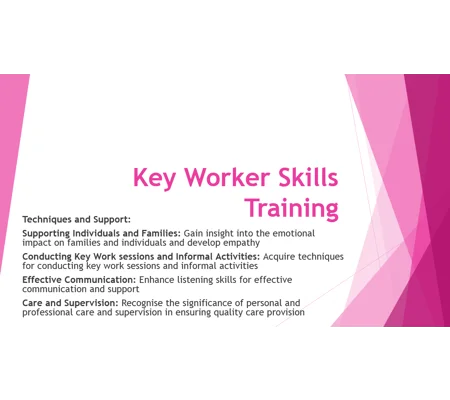
Key Worker Children's Residential Care Techniques & Support Training ResourcesKey Worker Skills (Techniques and Support). Suitable for Looked After Children Residential Care Enough resources for single sessions, single aspects or a one day course with workshops. All editable. 13 Files in total (Presentation (in section) , Handouts x 3, Case Studies x 20, Learning Activity documents x 4 and End of Session Multiple Choice Assessments x 4). Each learning activity file has 5 case studies (for those wishing to run workshops). Overall Aim: To equip participants with the knowledge, skills and understanding necessary to foster a supportive and empathetic environment in residential care settings, ensuring the emotional well-being of both families and workers while maintaining high standards of care provision Learning Objectives: Gain insight into the emotional impact on families and individuals and develop empathy. Acquire techniques for conducting key work sessions and informal activities. Enhance listening skills for effective communication and support. Recognise th...
Presentation Packs
Kidney Health Awareness Training ResourcesKidney Health Awareness - Health and Social Care Training Resources Presentation, Handout and Multiple Choice End of Session Assessment (all editable) Aims and Objectives (editable) Overall Aim: To enhance understanding of kidney health as a vital component of overall well-being, providing insights into kidney anatomy, common conditions, preventive measures and the importance of regular check-ups and appropriate treatment. Learning Objectives: Gain an awareness of the anatomy and functions of the kidneys Learn basic information about common kidney conditions along with their causes and symptoms. Acquire knowledge about preventive measures to safeguard kidney health, including hydration practices, maintaining a healthy diet and controlling blood pressure and diabetes. Presentation (26 Slides) Aims and Objectives Introduction Anatomy and Function Common Kidney Conditions Preventative Measures Regular Check-Ups Risk Factors Treatment KEY POINTS RECAP References and Further Reading Word...
Presentation Packs
Kidney Stones Awareness Training ResourcesKidney Stones Awareness Health and Social Care Training Resources Presentation, Handout and Multiple Choice End of Session Assessment (all editable). Aims and Objectives Overall Aim: To enhance understanding about kidney stones, focusing on their formation, types, symptoms, diagnosis, treatment and preventive measures, to empower healthcare professionals in recognising, supporting and advising individuals at risk or affected by kidney stones. Learning Objectives: Identify the Factors Contributing to Kidney Stone Formation: Understand the key substances in urine, such as calcium, oxalate and phosphorus, that contribute to kidney stone development, along with recognising factors like dehydration and familial predispositions. Differentiate Between Types of Kidney Stones and Their Associated Conditions: Differentiate between calcium, uric acid, struvite and cystine stones, recognising their distinct characteristics and associations with conditions like gout or hereditary disorders. Comp...