Learning Disability
The Learning Disability Resources category provides a wide range of training materials designed for any setting that supports people with a learning disability.
Presentation Packs
Learning Disabilities Observational Skills Level 1 Training ResourcesEditable Level 1 resource introducing observational skills for staff who may have contact with people with learning disabilities. Includes a 24 slide presentation, handout, knowledge check questions and trainer aide answer key. Ideal for induction, CPD and CQC aligned awareness training.
Presentation Packs
Learning Disabilities Observational Skills Level 2 Training ResourcesLearning Disabilities - Observational Skills Level 2 Front-Line Support Workers / Care Assistants Observational skills are fundamental in care work they help staff notice changes in behaviour, wellbeing, distress, health needs, triggers and unmet needs. These skills are often part of: Induction training, including the Care Certificate for health and social care support staff. Core capability frameworks for supporting people with learning disabilities. Even roles such as Healthcare Support Worker or Support Worker list observational skills as essential for day-to-day work. Although all care staff should be competent observers to some degree, the level and detail of training vary by role: Front-line care staff / support workers: need practical training in observation, recording behaviour (e.g., ABC charts), identifying triggers, knowing when to escalate concerns. This pack is a Level 2: Front-Line Support Workers / Care Assistants pack (to support practical training). Examples: suppor...
Presentation Packs
Learning Disabilities Sleep In and Waking Night Support Awareness Training ResourcesLearning Disabilities - Sleep In and Waking Night Support Awareness Presentation, Handout, Knowledge Check Questions, Trainer Aide Answer Key. All files editable. Overall Aim: To equip staff in residential and supported living settings with the knowledge, skills and confidence to provide safe, person-centred and dignified sleep-in and waking night support for individuals with learning disabilities. Learning Objectives: Understand sleep-in and waking night support protocols. Recognise the needs of people with learning disabilities during night support. Learn staff roles and responsibilities. Promote safety, dignity and person-centred care. Presentation (55 Slides) Aim and Objectives Overview of Learning Disabilities Understanding the People We Support Examples Common Challenges (Relevant to Night Support) Inclusive Approach Reflection/Discussion Question How Learning Disabilities Can Affect Sleep and Night-Time Support Possible Causes of Sleep Difficulties Impact on the Person What T...
Presentation Packs
Learning Disability Awareness Training ResourcesLearning Disability Awareness Suitable for Tier 1 training (Skills and Knowledge Framework). PowerPoint Presentations and Word Document Handouts . Presentation 1 Learning Disabilities Awareness Session 1 (64 slides) - slide titles: Purpose of training and target audience Aims and objectives Differentiate Between Learning Disability and Learning Difficulty How learning disabilities, autism spectrum disorder (ASD) and attention deficit hyperactivity disorder overlap What is a learning disability? Learning disability and specific other conditions Learning disability types Brain Development before or during birth National Institute for Health and Care Excellence (NICE) and WHO ICD 10 Categories (simple) Conditions associated with a learning disability Downs Syndrome Williams Syndrome Autism Autistic Spectrum Disorder (ASD) Asperger's Syndrome Fragile X Syndrome Global Development Delay (GDD) Cerebral Palsy Challenging Behaviour SYNGAP1 Learning Difficulty Dyslexia Dyscalculia Dysgraphia...
Presentation Packs
Lesch Nyhan Syndrome Awareness Training ResourcesLesch Nhyan Syndrome Awareness Presentation and Handout. Presentation (23 Slides) Introduction The First Cases Research by Lesch and Nhyan Typical of the Syndrome Background Information Intellectual Disability Resistance to Treatment Dental Literature Review Physical Restraint and Studies Self-Injury Behaviour Behaviour Repititions Forms of Physical Self Injury Emotional and Aggressive Behaviours Treatment Summary References Word Document Handout HSC Training Link Training Resources for Health and Social Care Supplying training resources for the health and social care sector since 2004. Resources purchased are emailed to you via Zip Folder attachment. All packs are written in a generic style and can easily be adapted to suit your own specific training delivery. Resources are Microsoft Office based. Secure payments via PayPal Merchant Commerce Platform. You do not need a PayPal account to use this payment gateway. Debit and credit card payments accepted.
Presentation Packs
Ligatures Awareness Training ResourcesLigature Awareness - Health and Social Care Training Resources Presentation, Handouts, Learning Activity Suggestions, End of Session Assessments (all editable). Contains all underpinning knowledge. and is presented in SECTIONS. Overall Aim: To raise awareness and provide comprehensive knowledge about ligature risks and prevention strategies in UK care settings, fostering a safer environment. Learning Objectives: Identify Ligature Risks: By the end of this session, participants will be able to recognise potential ligature risks in care settings, considering both common and less obvious items. Conduct Effective Risk Assessments: Participants will learn how to conduct thorough ligature risk assessments, including the evaluation of risk factors and the identification of high-risk areas. Implement Preventive Measures: After the session, learners will have the knowledge to implement ligature prevention strategies, including securing ligature points, staff training and patient/family engag...
Microteach
Microteach - Mild Learning Disabilities Promoting Self Advocacy and EmpowermentMicroteach - Mild Learning Disabilities Promoting Self Advocacy and Empowerment Audience: Support workers, educators, carers or peers working with individuals with mild learning disabilities (MLDs) Word Document containing everything needed for a 10 minute session. Learning Objectives: 1. Define what a mild learning disability is in the UK context. 2. Recognise ways to promote self-advocacy. 3. Identify one strategy to empower someone with a mild learning disability. Word Document 1️ Starter Activity "What does empowerment mean to you?" (1 minute) 2️ Mini Input Understanding Mild Learning Disabilities (Speaker Notes, 2 minutes) 3️ Core Topic Underpinning Knowledge (Speaker Notes, 2 minutes) 4️ Interactive Scenario (Case Study) What Would You Do? (3 minutes) 5️ Final Tips & Takeaway Underpinning Knowledge (Speaker Notes, 1 minute) 4 Page Word Document Need resources for a Microteach session not listed on my website? CONTACT ME. HSC Training Link Training Resources for Health and Soci...
Microteach
Microteach - Supporting Access to Community Services & Leisure Mild Learning DisabilitiesMicroteach - Supporting Access to Community Services and Leisure for People with Mild Learning Disabilities Target Group: Level 2/3 Health & Social Care learners, support workers volunteers. Word Document containing everything needed for a 10 minute session. Aims To raise awareness of how to support individuals with mild learning disabilities in accessing community services and leisure activities. Learning Outcomes (by end of session, learners will be able to ) 1. Describe what a mild learning disability is. 2. Identify at least 2 barriers to accessing community services. 3. Suggest 2+ practical ways to support access to leisure activities. Word Document 1. Introduction (1 minute) 2. Brief Input: What Are Mild Learning Disabilities? (2 minutes) 3. Barriers to Accessing Services & Leisure (2 minutes) 4. How to Support Effectively (3 minutes) 5. Quick Activity (1 minute) 6. Recap & Questions (1 minute) 6 Page Word Document Need resources for a Microteach session not listed on my websi...
Microteach
Microteach - Supporting Access to Primary Secondary Health Services Mild Learning DisabilitiesMicroteach - Supporting Access to Primary and Secondary Health Services for People with Mild Learning Disabilities Audience: Health and social care professionals or support staff who work directly or indirectly with people who have mild learning disabilities. This may include: Primary Audience: 1. Healthcare Assistants (HCAs) 2. General Practice Staff (receptionists, nurses, GPs-in-training) 3. Community Support Workers 4. Care Home or Supported Living Staff 5. Social Care Workers or Personal Assistants 6. Students in Health & Social Care (NVQ Level 2 or 3 or Access to HE) Secondary Audience: 1. Allied Health Professionals (e.g. physiotherapists, occupational therapists) 2. Non-clinical staff in health settings (e.g. admin staff, transport services) 3. New employees during induction or CPD sessions 4. Volunteers in healthcare or social care settings Overall aim: To raise awareness and improve understanding of how to support people with mild learning disabilities in accessing primary...
Presentation Packs
PACE Introduction to PACE Playfulness Acceptance Curiosity Empathy All Settings Training ResourcesIntroduction to PACE (Playfulness, Acceptance, Curiosity, Empathy) Suitable for All Settings Training Resources. Enough resources for single sessions, single aspects or a one/two day course. All editable. 51 Files in total (Presentation (in section) ,Handouts x 14, Case Studies x 12, Learning Activities x 16 and End of Session Multiple Choice Assessments x 4). Overall Aim: Introduce participants to the PACE Framework, exploring its pillars (Playfulness, Acceptance, Curiosity and Empathy) and delving into their applications in caregiving. Learning Objectives: Understand the core principles of the PACE Framework and its significance in enhancing relationships. Recognise the pivotal role of relational attunement in effective caregiving and relationship-building. Explore the practical applications of each PACE pillar in the context of caregiving. Examine the historical development of the PACE Framework by Dan Hughes and its evolution. Presentation (67 slides) Aims and Objectives Introdu...

Presentation Packs
PICA - Causes and Risk Factors Training ResourcesPICA - Causes and Risk Factors - Health and Social Care Training Resources Learning Objectives: Understand the role of biological factors in the development of PICA. Identify psychological factors that contribute to the occurrence of PICA behavior. Recognize environmental factors that may influence the onset and maintenance of PICA. Explain the relationship between co-occurring conditions or disorders and PICA. Understand the impact of developmental considerations on the manifestation of PICA behavior. Recognize the importance of a comprehensive assessment to determine the underlying causes and risk factors of PICA. Demonstrate knowledge of different theories and models that explain the causes of PICA. Apply a multidimensional approach to understanding the complex interplay of causes and risk factors in PICA. Identify strategies to mitigate and address biological, psychological, and environmental factors associated with PICA. Understand the need for individualized care plans that co...

Presentation Packs
PICA - Health Risks and Complications Training ResourcesPICA - Health Risks and Complications Health and Social Care Training Resources Learning Objectives: Understand the physical consequences and health risks associated with ingesting non-food substances in PICA behaviour Identify the signs and symptoms of poisoning that may result from the ingestion of toxic or hazardous substances Recognise the indicators of gastrointestinal obstruction caused by non-digestible items ingested in PICA Demonstrate knowledge of the potential complications and medical emergencies that can arise from non-food substance ingestion Understand the importance of prompt medical intervention in cases of poisoning or obstruction Identify appropriate first aid measures and emergency response protocols for individuals experiencing health complications due to PICA Demonstrate the ability to differentiate between minor and severe health consequences of ingesting non-food substances Recognise the role of healthcare professionals in assessing and treating the physical ...

Presentation Packs
PICA - Identifying Non Food Substances Training ResourcesPICA - Identifying Non Food Substances Health and Social Care Training Resources Learning Objectives: Identify common objects and substances ingested in PICA behaviour Recognise patterns and trends in the types of non-food substances individuals with PICA may ingest Understand the potential health risks and complications associated with ingesting specific non-food substances Recognise the importance of conducting thorough assessments to determine the specific non-food substances an individual with PICA may be prone to ingest Identify potential triggers or factors that contribute to PICA behaviour Understand the role of sensory factors in the choice of non-food substances ingested in PICA Demonstrate knowledge of the impact of environmental factors on the availability and accessibility of non-food substances Recognise the significance of cultural and social influences on the choice of non-food substances ingested in PICA Identify strategies to minimise or remove access to non-food su...
Presentation Packs
PICA - Introduction to PICA Training ResourcesIntroduction to PICA Health and Social Care Training Resources - this is a general introduction to PICA. Learning Objectives: By the end of the session, participants will be able to: 1. Define PICA and explain its characteristics and prevalence in various care settings. 2. Understand the impact of PICA on individuals, families and care providers. 3. Identify common myths and misconceptions associated with PICA and address them with accurate information. 4. Recognise the importance of raising awareness and understanding of PICA among care workers. 5. Appreciate the need for a non-judgmental and compassionate approach when supporting individuals with PICA. 6. Demonstrate an understanding of the potential challenges and complexities of managing PICA behaviour in care settings. 7. Understand the importance of collaboration and communication with healthcare professionals and multidisciplinary teams in addressing PICA effectively. PowerPoint Presentation (45 slides) Word Documents - Hando...
Presentation Packs
Positive Behaviour Support Awareness Level 2 Training ResourcesPositive Behaviour Support Awareness - Level 2 8 Files in total (Presentation, Handout, Quiz, Scenarios (with questions), True/False questions, Trainer Aide Notes for session, Trainer Aide Answers to Scenario Questions, Trainer Aide Answers to Quiz and True/False questions. All editable - includes aims and objectives or you can adapt. Overall Aim : To raise awareness and understanding of Positive Behaviour Support (PBS) and how it can improve the quality of life for people receiving care. Learning Objectives: Understand what Positive Behaviour Support is and why it is important in care settings. Recognise the key principles of PBS and how they support people with challenging behaviour. Identify simple ways to use PBS approaches in day-to-day care work. Presentation (22 slides) Aims and Objectives Welcome and Introduction What is Positive Behaviour Support? Why do People Show Challenging Behaviour? Key Principles of PBS Benefits of PBS Practical Examples in Care Work Your Role in PBS...
Presentation Packs
Positive Behaviour Support Lead Practitioner PBS Training ResourcesPositive Behaviour Support LEAD PRACTITIONER - Training Resources Enough resources for single sessions, single aspects or a two day course with workshops. All editable. These training resources are for LEAD Practioners or those training to be LEAD Practitioner. 37 Files in total (Presentation (in sections) , Handouts x 13, Learning Activity documents x 12 ( with a selection of case studies), 10 Trainer Aides (Model Answers etc.) and End of Session Multiple Choice Assessment. All editable - includes aims and objectives or you can adapt. Overall Aim : To provide staff with the knowledge and skills to implement Positive BehaviourSupport (PBS) in a person-centredmanner, fostering a culture of proactive care and support across all settings Learning Objectives: Understand the key principles and values of Positive Behaviour Support (PBS) Learn how to apply PBS strategies effectively in everyday care practice Explore the role of the Lead Practitioner in leading and embedding PBS within a te...
Presentation Packs
Safeguarding Designated Safeguarding Lead DSL) Training ResourcesSafeguarding - Designated Safeguarding Lead (DSL) - All Settings ADVANCED KNOWLEDGE - STRATEGIC - OPERATIONAL - ROLES AND RESPONSIBILITIES ALL SETTINGS Enough resources for single sessions, single aspects or a one day course with workshops. All editable. 15 Files in total (Presentation (in sections) , Handouts x 7, Learning Activity documents x 5 (includes case studies) and End of Session Assessment with Trainer Aide Answer key. Aims and Objectives: Overall Aim:To equip Designated Safeguarding Leads with the advanced knowledge, strategic insight and leadership skills required to manage safeguarding arrangements confidently and effectively across diverse care settings, ensuring robust protection for children, young people and adults at risk Learning Objectives: Statutory and regulatory safeguarding frameworks relevant to DSL practice and application to complex, real-world scenarios across care settings. Leadership role in creating and sustaining a proactive safeguarding culture, incl...
Presentation Packs
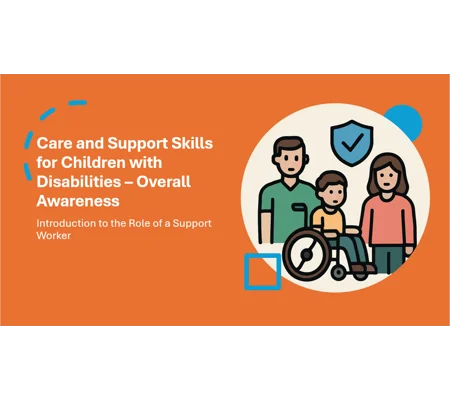
Support Worker - Disabilities - Care and Support Skills Training ResourcesSupport Worker - Children with Disabilities - Care and Support Skills Overview An Introduction to the skills needed and why. Presentation, 10 Handouts, End of Session Quiz (mix of Multiple choice, True/False, Short Answer Questions). Trainer Aide Answer Sheet. All files editable so you can tailor to match your audience (if needed). Aims and Objectives: Overall Aim: To raise awareness of the essential care and support skills needed when working with children with disabilities. Learning Objectives: Understand the different types of disabilities children may have and how they affect daily life. Learn basic communication techniques to support children with disabilities effectively. Recognisethe importance of safeguarding and confidentiality in care settings. Develop a basic understanding of how to support children with disabilities in their physical, social and educational development. Presentation (50 Slides) Aims and Objectives Introduction Definition of Disability Types of Disabiliti...