HSC Training Link

ALL PACKS
Oral Suctioning Training ResourcesOral Suctioning - Teaching/Training Resources PowerPoint Presentation and Word Documents (handout and multiple choice end of session assessment). All editable. Presentation is in sections. Presentation (46 Slides) Aims and Objectives Introduction SECTION - What is Oral Suctioning? Suctioning Health of the Lower Respiratory Tract Definition of Oral Suctioning When to Suction and When Not to Suction Potential Hazards and Complications Oral Suction Precautions Assessment SECTION - Preparation, The Equipment Preparation for Oral Suctioning Equipment Needed Equipment SECTION - The Procedure Suction Machine Pressure Selection Privacy and Informed Consent Prior to the Procedure Suction Tip Selection The Procedure SECTION - Types of Secretions Types of Secretions What to Look For Art Therapy SECTION - Frequency, Depth and Pressures Frequency of Suctioning Depth of Suctioning Pressures for Oral Suctioning SECTION - The Procedure - Recap of Key Points Key Points References and Further Reading...
Team Meeting / Toolbox Talks
Organisational Abuse - Care Team Talk Level 1Organisational Abuse - Care Team Talk Level 1 Audience: Care staff Level: Level 1 Awareness Duration: Approximately 15 minutes 15-Minute Care Team Talk - 10 Pages Short, practical and ready-to-use training resource designed to support regular staff learning, discussion and reflection within health and social care settings. Provides a simple, structured way for managers, team leaders and trainers to cover this important care topic (Emotional/Psychological Abuse) with staff without the need for a lengthy training session. Team Talk includes: 1. Trainer Guide - A clear, easy-to-follow guide showing the trainer how to deliver the session within approximately 15 minutes, including the purpose, learning outcomes and suggested timings. 2. Short Scenario - A realistic care-based scenario to help staff think about how the topic may arise in everyday practice. 3. Discussion Questions - Simple, practical questions to encourage staff to think about the topic, share their understanding and consi...
Team Meeting / Toolbox Talks
Organisational Abuse - Care Team Talk Level 2Organisational Abuse - Care Team Talk Level 2 Audience: Care staff Level: Level 2 Awareness Duration: Approximately 15 minutes 15-Minute Care Team Talk - 11 Pages Short, practical and ready-to-use training resource designed to support regular staff learning, discussion and reflection within health and social care settings. Provides a simple, structured way for managers, team leaders and trainers to cover this important care topic (Emotional/Psychological Abuse) with staff without the need for a lengthy training session. Team Talk includes: 1. Trainer Guide - A clear, easy-to-follow guide showing the trainer how to deliver the session within approximately 15 minutes, including the purpose, learning outcomes and suggested timings. 2. Short Scenario - A realistic care-based scenario to help staff think about how the topic may arise in everyday practice. 3. Discussion Questions - Simple, practical questions to encourage staff to think about the topic, share their understanding and consi...
Level 3
Organisational Abuse - Care Team Talk Level 3Organisational Abuse - Care Team Talk Level 3 Audience: Care staff Level: Level 3 Awareness Duration: Approximately 15 minutes 15-Minute Care Team Talk - 15 Pages Short, practical and ready-to-use training resource designed to support regular staff learning, discussion and reflection within health and social care settings. Provides a simple, structured way for managers, team leaders and trainers to cover this important care topic (Emotional/Psychological Abuse) with staff without the need for a lengthy training session. Team Talk includes: 1. Trainer Guide - A clear, easy-to-follow guide showing the trainer how to deliver the session within approximately 15 minutes, including the purpose, learning outcomes and suggested timings. 2. Short Scenario - A realistic care-based scenario to help staff think about how the topic may arise in everyday practice. 3. Discussion Questions - Simple, practical questions to encourage staff to think about the topic, share their understanding and consi...
ALL PACKS
Osteoporosis Awareness Training ResourcesPowerPoint and Handout Osteoporosis Awareness - 23 slides - slide titles: Aims and Objectives Introduction The Condition Who is at Risk Risk Factors for Women Risk Factors for Men Risk Factors for All Bone Could I Have Osteoporosis Reducing the Risk Diet Exercise Smoking Alcohol The Spine and Osteoporosis Osteoporosis and Activities Risk Assessment Finally .. References Word Document 5 page handout

Single Presentations
Overseas Staff New to Domiciliary Care - Roles & Responsibilities Training ResourcesOverseas Staff - New to Domiciliary Care - Roles & Responsibilities Overview PRESENTATION This presentation is written in simple terms so that newly recruited overseas staff gain an awareness of their role, responsibilities and the training they will receive. This is a Presentation only - no end of session assessment - and can be used as part of the induction process. You can edit the presentation should you wish to do so. Presentation (40 slides) Aims and Objectives Welcome to Your New Role Introduction to Domiciliary Care What is Domiciliary Care Your Role as a Care Worker Healthcare in the UK Your Daily Tasks and Duties How You Will Know The Help Each Clients Needs Health and Safety Moving and Handling Infection Control Hazards and Incidents Guidelines Working with Different People Professional Boundaries Importance of Confidentiality Safeguarding Recognising Signs of Abuse Communication Your Knowledge of the English language Challenging Behaviour Your Daily Visits to Clients Car...

ALL PACKS
Oxycodone Awareness Level 1 Training ResourcesOxycodone Awareness Level 1 Training Resources An editable training resource designed for all health and social care staff. It provides a simple introduction to what oxycodone is, why it is prescribed, how to recognise common side effects, and how to respond safely to concerns such as over-sedation or suspected overdose. Ideal for residential care, nursing homes, domiciliary care and supported living services, this ready-to-deliver pack helps staff improve medication awareness and promote safer person-centred care.
ALL PACKS
Oxygen Health and Safety in Residential Care Training ResourcesOxygen in Care Settings Awareness PowerPoint presentations and Word documents. The pack looks at different situations when oxygen is used, safety aspects, risk assessment, storage, transporting, emergency situations, etc. and is suitable for all staff and carers. Presentation 1 - Oxygen Therapy Awareness (32 slides) (with end of session written assessment and session hand-out) - Slide Titles: Aims and Objectives Introduction Aim of Oxygen Therapy Emergency Oxygen Therapy Therapeutic Oxygen Therapy Oxygen Therapy Variables Oxygen Therapy Administration Prescribing Oxygen Therapy Responsibilities Emergency Situations Long Term 02 Therapy (LTOT) Short Burst O2 Therapy PRN (As Required) Therapy Assessment for O2 Therapy Oxygen and Medication Records Discharge from Hospital Storage of Oxygen Transporting Oxygen Vehicles Transporting a Person Using Oxygen Transport via Car/Taxi Transport Warning Sticker End of Session Assessment References Presentation 2 Oxygen in a Care Setting Awareness...

ALL PACKS
PACE Exploring Shield of Shame & Two Hands of Parenting Training ResourcesPACE - Exploring Shield of Shame and Two Hands of Parenting This is the SECOND PACE pack - the first one is Introduction to PACE (Playfulness, Acceptance, Curiosity, Empathy) Suitable for All Settings Training Resources - use the search bar if you wish to buy the other pack. All editable documents. (Presentation (in section) ,Handouts x 2, Case Studies and Scranarios , Learning Activity and End of Session Multiple Choice Assessments x 2. Overall Aim: To equip participants with an understanding of Shield of Shame and Two Hands of Parenting concepts and how they relate to fostering healthy parent-child relationships through the principles of PACE (Playfulness, Acceptance, Curiosity and Empathy). Learning Objectives: Gain insight into the concept of Shield of Shame and its impact on parent-child relationships. Understand the Two Hands of Parenting model and its significance in nurturing positive parent-child dynamics. Explore how PACE principles (Playfulness, Acceptance, Curiosity and ...
ALL PACKS
PACE Introduction to PACE Playfulness Acceptance Curiosity Empathy All Settings Training ResourcesIntroduction to PACE (Playfulness, Acceptance, Curiosity, Empathy) Suitable for All Settings Training Resources. Enough resources for single sessions, single aspects or a one/two day course. All editable. 51 Files in total (Presentation (in section) ,Handouts x 14, Case Studies x 12, Learning Activities x 16 and End of Session Multiple Choice Assessments x 4). Overall Aim: Introduce participants to the PACE Framework, exploring its pillars (Playfulness, Acceptance, Curiosity and Empathy) and delving into their applications in caregiving. Learning Objectives: Understand the core principles of the PACE Framework and its significance in enhancing relationships. Recognise the pivotal role of relational attunement in effective caregiving and relationship-building. Explore the practical applications of each PACE pillar in the context of caregiving. Examine the historical development of the PACE Framework by Dan Hughes and its evolution. Presentation (67 slides) Aims and Objectives Introdu...
ALL PACKS
Parkinson's Disease Training ResourcesParkinson's Disease Awareness PowerPoint presentations and Word documents. Presentation 1 - Introduction to Parkinson s disease - Slide Titles: Introduction Who does it affect? What type of condition is it? What causes it? Primary symptoms Symptoms (Rigidity, Bradykinesia, Akinesia ) Progression of symptoms Parkinsonism Dementia How common is Parkinson's disease? Diagnosis Treatment Summary References Presentation 2 - Providing Care for someone with Parkinson s disease - Slide Titles: Aims and objectives Introduction Overview Shaking Rigidity Bradykinesia and Akinesia Postural instability (balance) General Care values Role of the care worker Care planning Summary References Presentation 3 - Treatments for Parkinson s disease - Slide Titles: Aims and objectives Introduction Main treatment Levodopa Delaying Levodopa Treatment overview The 6 main types of drugs Drugs replacing dopamine Drugs mimicking dopamine Drugs blocking acetylcholine Drugs preventing dopamine breakdown Amantadine...
ALL PACKS
Pathway Planning - Roles and Responsibilities Training ResourcesRoles and Responsibilities - Pathway Planning Local Authority Policies and The Role of Specific Services - Pathway Planning Presentation, Handout, Knowledge Check Questions, Trainer Aide Answer Key All files editable. Overall Aim: To develop staff understanding of their roles, responsibilities and contributions in supporting young people through effective, collaborative and person-centred pathway planning. Learning Objectives: Learners will be able to describe the key responsibilities of residential, social care and multi-agency staff involved in pathway planning. Learners will be able to explain how staff work together to ensure coordinated, consistent and young person centred support. Learners will be able to identify how their own role contributes to empowering young people and achieving positive outcomes within the pathway planning process. Presentation (53 Slides) Overall Aim Learning Objectives Why Roles and Responsibilities Matter in Pathway Planning Residential Care Workers ...
ALL PACKS
Pathway Planning - Communication, Participation and Empowerment Training ResourcesCommunication, Participation and Empowerment - Pathway Planning Presentation, Handout, Knowledge Check Questions, Trainer Aide Answer Key All files editable. Overall Aim: To equip staff with the skills, confidence and approaches needed to ensure young people are fully informed, actively involved and genuinely empowered throughout every stage of Pathway Planning. Learning Objectives: Learners will understand the importance of meaningful communication and active participation in supporting young people s engagement in their Pathway Plan. Learners will be able to apply strengths-based, person-centred and culturally competent approaches that promote inclusion and respect for individuality. Learners will recognise how to encourage the young person s voice in decision-making and facilitate effective advocacy through internal and external support networks. Presentation (39 Slides) Overall Aim Learning Objectives Introduction Why Communication and Participation Matter Features of Meaningful...
ALL PACKS
Pathway Planning - DfE Guidance Overview Training ResourcesDfE Guidance Overview - Pathway Planning Presentation, Handout, Knowledge Check Questions, Trainer Aide Answer Key All files editable. Overall Aim: To provide staff with an understanding of the core principles contained in the DfE (2011) guidance on planning transitions to adulthood, ensuring care leavers receive consistent, structured and person- centred support. Learning Objectives: Explain the purpose and key principles of the DfE guidance for supporting care leavers Identify the key areas that should be assessed and included in a Pathway Plan to support successful transitions. Learn about the key topics included in the guidance. Presentation (53 Slides) Overall Aim Learning Objectives What is Pathway Planning? DfE Guidance (2011): Planning Transition to Adulthood for Care Leavers DfE Guidance - Early and Individualised Planning Why It Matters DfE Guidance - Focus on Independence Skills Why It Matters DfE Guidance - Person Centred Pathway Plans Why It Matters DfE Guidance - Multi...
ALL PACKS
Pathway Planning - Key Components of a Pathway Plan Training ResourcesKey Components of a Pathway Plan - Pathway Planning Presentation, Handout, Knowledge Check Questions, Trainer Aide Answer Key All files editable. Overall Aim: To provide staff with a clear understanding of the essential components of a Pathway Plan and how each part supports effective, person-centred transition planning for care leavers. Learning Objectives: Learners will be able to identify the core sections of a statutory Pathway Plan and explain their purpose in supporting the young person s transition to adulthood. Learners will understand how information relating to health, education, accommodation, relationships, finances and independence skills is assessed and recorded within the Pathway Plan. Learners will recognise their role in contributing accurate, person-centred information to the Pathway Plan and ensuring the young person s voice is central to all planning. Presentation (36 Slides) Overall Aim Learning Objectives Introduction Assessing Needs and Aspirations Core Sectio...
ALL PACKS
Pathway Planning - Legislation Overview and DutiesLegislation Overview and Duties - Pathway Planning Presentation, Handout, Knowledge Check Questions, Trainer Aide Answer Key All files editable. Overall Aim: To develop an understanding of the key legislation and statutory duties that govern Pathway Planning for looked-after children and care leavers in England. Learning Objectives: Identify the main legal frameworks that outline responsibilities towards looked-after children and care leavers, including the Children Act 1989 and subsequent amendments. Explain the duties and requirements set out in the Care Leavers (England) Regulations 2010 and Children and Social Work Act 2017 in relation to Pathway Plans and Personal Adviser support. Describe how the Children s Homes (England) Regulations 2015 and associated Quality Standards promote education, leadership and independence in supporting young people s transition to adulthood. Presentation (36 Slides) Overall Aim Learning Objectives Introduction Children Act 1989 Duties towards Look...
ALL PACKS
Pathway Planning - Local Authority Policies and The Role of Specific Services Training ResourcesLocal Authority Policies and The Role of Specific Services - Pathway Planning Presentation, Handout, Knowledge Check Questions, Trainer Aide Answer Key All files editable. Overall Aim: To enable staff to understand how local authority policies and key services support care-experienced young people in planning and achieving a safe, gradual transition to independence. Learning Objectives: Learn about the purpose of local authority leaving care policies and how they guide pathway planning. Identify the roles of the Virtual School, Leaving Care Teams and Information, Advice and Guidance (IAG) services in supporting care leavers. Recognise how staff can work effectively with these services to empower young people and coordinate multi-agency support. Presentation (53 Slides) Overall Aim Learning Objectives Introduction Local Authority Policies Purpose of Local Authority Leaving Care Policies How They Guide Pathway Planning Why It Matters The Role of The Virtual School Key Practice Element...
ALL PACKS
Pathway Planning - Promoting Independence Skills Training ResourcesPromoting Independence Skills - Pathway Planning Presentation, Handout, Knowledge Check Questions, Trainer Aide Answer Key All files editable. Overall Aim: To provide staff with the knowledge and confidence to effectively promote, assess and support young people s independence skills as an essential part of statutory Pathway Planning Learning Objectives: Learners will be able to explain why independence skills are vital for preparing young people for adulthood and successful transitions. Learners will be able to identify key areas of independence development and how these are assessed and recorded within the Pathway Plan. Learners will recognise their role in supporting, teaching and reviewing independence skills in a person-centred, empowering and developmentally appropriate way. Presentation (36 Slides) Overall Aim Learning Objectives Introduction Why Independence Skills Matter Why Independence Skills Are Especially Important for Care-Experienced Young People Links to Pathway Plan...
ALL PACKS
Pathway Planning - Purpose and Principles of Pathway Planning Training ResourcesPurpose and Principles of Pathway Planning Presentation, Handout, Knowledge Check Questions, Trainer Aide Answer Key All files editable. Overall Aim: To provide staff with a clear understanding of the purpose, principles and practice of Pathway Planning in supporting care-experienced young people to achieve a safe and successful transition to adulthood. Learning Objectives: Describe what Pathway Planning is and explain why it is essential for preparing young people in care for independence. Identify the core principles of participation, empowerment, inclusion and rights-based practice within the Pathway Planning process. Recognise the roles and responsibilities of corporate parents and residential staff in promoting gradual, supported independence for young people. Presentation (40 Slides) Overall Aim Learning Objectives What is Pathway Planning? Why Does Pathway Planning Matter? Aims of Pathway Planning Principles of Pathway Planning Principle of Participation Principle of Particip...
ALL PACKS
Pathway Planning - Supporting Emotional Readiness and Resilience Training ResourcesSupporting Emotional Readiness and Resilience - Pathway Planning Presentation, Handout, Knowledge Check Questions, Trainer Aide Answer Key All files editable. Overall Aim: To equip staff with the understanding and practical skills needed to support care-experienced young people s emotional readiness, resilience and wellbeing as part of effective Pathway Planning. Learning Objectives: Learners will understand how attachment, trauma and past experiences influence a young person s emotional development and readiness for independence. Learners will be able to identify and apply strategies that support emotional literacy, coping skills, resilience and self-esteem in daily practice. Learners will recognise how their role as consistent, trusted adults helps young people manage anxiety, fear of change and the emotional challenges involved in transition planning. Presentation (27 Slides) Overall Aim Learning Objectives Introduction Why Attachment and Trauma Matter in Pathway Planning Attachm...

ALL PACKS
Peak Flow Testing Training ResourcesPeak Flow Testing - Underpinning Knowledge- A Guide for Nurses and Healthcare Staff Health and Social Care Training Resources All fully editable (should you wish to edit). Presentation in sections you can choose which sections to use. Aims and Objectives included if you want to use the presentation as it has been written. Comes with 8 Handouts plus a Multiple Choice End of Session Assessment. Aims and Objectives: Overall Aim: To equip healthcare professionals with the knowledge and skills necessary to perform accurate peak flow testing, enhancing asthma management and patient outcomes. Learning Objectives: Understand the clinical significance of peak flow testing in monitoring asthma control and detecting exacerbations. Learn the correct techniques for peak flow testing using manual and digital peak flow meters. Know how to interpret and document peak flow readings accurately to inform treatment decisions and patient education. Presentation (48 Slides) Aims and Objectives Introducti...
Single Presentations
PEG and PEJ Feeding Awareness & Procedures Training ResourcesSingle PowerPoint. YOU DO NOT NEED TO BUY THIS IF YOU ARE BUYING THE FULL ENTERAL ROUTE (MEDICATION AND FEED) PACK Presentation - PEG Feeding and PEJ Feeding Overview (97 slides) Slide Titles Aims and Objectives Introduction PEGs PEJs Malnutrition BMI Classifications- Malnutrition Screening Screening for Malnutrition Nutritional Support Enteral Feeding Indications Responsibilities Consent and Mental Capacity Record Keeping and Documentation Ethical and Legal Considerations Storage and Care of Feeds PEG Insertion Indications Contraindications Early Detection of Complications Management of PEG Feeding Placement of Tubes Methods of Feeding Pump Feeding Bolus Feeding Care of Equipment Care of PEG site Procedure if PEG comes out Procedure if PEG comes out (Untrained Staff) Checking PEG Tube Position - pH management and procedures Feeding Equipment Clinical procedure - Administering a Bolus Feed Clinical Procedure - Administering a Pump Feed Competence PEJs Indications for PEJ Insertion F...

Handouts
PEG Feeding and PEJ Feeding20 page handout. YOU DO NOT NEED TO BUY THIS IF YOU ARE BUYING THE FULL ENTERAL ROUTE (FEED AND MEDICATION) PACK PEG Feeding and PEJ Feeding Overview Introduction PEGs PEJs Malnutrition BMI Classifications- Malnutrition Screening Screening for Malnutrition Nutritional Support Enteral Feeding Indications Responsibilities Consent and Mental Capacity Record Keeping and Documentation Ethical and Legal Considerations Storage and Care of Feeds PEG Insertion Indications Contraindications Early Detection of Complications Management of PEG Feeding Placement of Tubes Methods of Feeding Pump Feeding Bolus Feeding Care of Equipment Care of PEG site Procedure if PEG comes out Procedure if PEG comes out (Untrained Staff) Checking PEG Tube Position - pH management and procedures Feeding Equipment Clinical procedure - Administering a Bolus Feed Clinical Procedure - Administering a Pump Feed Competence PEJs Indications for PEJ Insertion Feeding via PEJ Daily Care of PEJ Tubes Procedure if PEJ Comes...
Single Presentations
PEG Feeding Awareness & Procedures Training ResourcesSingle PowerPoint. YOU DO NOT NEED TO BUY THIS IF YOU ARE BUYING THE FULL ENTERAL ROUTE (FEED AND MEDICATION) PACK Presentation - PEG Feeding (without PEJs) (90 slides) This session looks solely at PEG feeding. THERE IS ANOTHER SINGLE PRESENTATION WITH AN EXTRA 9 SLIDES THAT INCLUDES PEJ Feeding. Aims and Objectives Introduction Percutaneous Endoscopic Gastrostomy (PEG) Percutaneous Endoscopic Jejunostomy (PEJ) Malnutrition BMI Classifications Malnutrition Screening Screening for Malnutrition Nutritional Support Enteral Feeding Indications for Enteral Feeding Responsibilities Consent and Mental Capacity Record Keeping and Documentation Ethical and Legal Considerations Infection Prevention and Control Storage and Care of Feeds Initial Process PEG Insertion Indications for PEG Feeding Tube Contraindications Early detection of Complications Management of PEG Feeding Placement of Tubes Method of Feeding Pump Feeding Bolus Feeding Care of Equipment Care of PEG site Care of PEG site - Cle...
Handouts
PEG Feeding Procedures18 page handout. YOU DO NOT NEED TO BUY THIS IF YOU ARE BUYING THE FULL ENTERAL ROUTE (FEED AND MEDICATION) PACK PEG Feeding (without PEJs) This handout looks solely at PEG feeding. THERE IS ANOTHER SINGLE HANDOUT WITH AN EXTRA 2 PAGES THAT INCLUDES PEJ Feeding. Introduction Percutaneous Endoscopic Gastrostomy (PEG) Percutaneous Endoscopic Jejunostomy (PEJ) Malnutrition BMI Classifications Malnutrition Screening Screening for Malnutrition Nutritional Support Enteral Feeding Indications for Enteral Feeding Responsibilities Consent and Mental Capacity Record Keeping and Documentation Ethical and Legal Considerations Infection Prevention and Control Storage and Care of Feeds Initial Process PEG Insertion Indications for PEG Feeding Tube Contraindications Early detection of Complications Management of PEG Feeding Placement of Tubes Method of Feeding Pump Feeding Bolus Feeding Care of Equipment Care of PEG site Care of PEG site - Cleaning Procedure if PEG Comes Out Procedure if PEG Comes...
ALL PACKS
Penthrox (Methoxyflurane) Awareness and Use Level 3 Training ResourcesPenthrox (Methoxyflurane) Awareness and Use - Level 3 Written for Ambulance/Emergency Responders but all underpinning knowledge relevant for pre-hospital staff administering Penthrox. All files are edtable so you can adapt/tweak for speak audiences. Includes Presentation, Handout, True/False Assessment Questions, True/False Assessment Questions Answers, Assessment Knowledge Check, Assessment Knowledge Check Answers, Trainer Led Interactive Questions for the session. Presentation includes clinical scenarios. Learning Objectives Understand what Penthrox is and how it works Know when and how to administer Penthrox safely Recognise contraindications and side effects Understand storage, legal and documentation responsibilities Presentation (77 slides) Learning Objectives Welcome Section - Introduction to Penthrox What is Penthrox (Methoxyflurane)? Brief History and MHRA Approval of Penthrox (Methoxyflurane) Indications for Use in Pre-Hospital Care Primary Indications Additional Use and I...
ALL PACKS
Percussion Therapy Training ResourcesRespiratory Care Percussion Therapy Principles Techniques Clinical Applications Health and Social Care Training Resources All fully editable (should you wish to edit). Presentation in sections you can choose which sections to use. Aims and Objectives included if you want to use the presentation as it has been written. Comes with a Handout plus 2 Multiple Choice End of Session Assessments (One for each learning objective) and TWO Practical Assessment Sheets - one simulated and one for assessing competence on a patient. Aims and Objectives: Overall Aim: Mastering Percussion Techniques for Effective Airway Clearance in Respiratory Care Learning Objectives: Understand the mechanisms of action behind percussion techniques and their role in mobilising mucus within the lungs for improved airway clearance. Identify appropriate indications and contraindications for percussion therapy in individuals with various respiratory conditions to ensure safe and effective treatment. Demonstrate profic...
Handouts
Performing Blood Glucose TestingClinical Skills - Performing Blood Glucose Testing: Importance, Procedures and Policies for Healthcare Staff 6 page handout. The Importance of Blood Glucose Testing What is Blood Glucose Testing? Types of Blood Glucose Tests Components of Blood Glucose Meters Procedures for Conducting Blood Glucose Testing Interpreting Blood Glucose Readings Documentation Policies and Procedures for Blood Glucose Testing Infection Control Patient Education Frequency of Monitoring Data Management Practical Considerations Challenges and Limitations HSC Training Link Training Resources for Health and Social Care Supplying training resources for the health and social care sector since 2004. Resources purchased are emailed to you via Zip Folder attachment. All packs are written in a generic style and can easily be adapted to suit your own specific training delivery. Resources are Microsoft Office based. Secure payments via PayPal Merchant Commerce Platform. You do not need a PayPal account to use this pa...
Handouts
Peripheral Artery Disease (PAD) Awareness2 Page Handout (Word Document). Peripheral Artery Disease (PAD) Awareness Introduction Causes and Risk Factors Symptoms Diagnosis Treatment and Management References Editable Document HSC Training Link Training Resources for Health and Social Care
ALL PACKS
Person Centred Approaches Domiciliary Care Level 1 Training ResourcesPerson Centred Approaches Domiciliary Care Level 1 Training Resources Presentation, Handout, Knowledge Check Questions and Trainer Aide Answer Key. All files editable. Overall Aim: To develop staff awareness and understanding of person-centred approaches and how these can be applied in domiciliary care to support people's individual needs, choices, rights, dignity and wellbeing. Learning outcomes: Describe what person-centred care means. Identify the key principles of person-centred approaches. Recognise the importance of treating each person as an individual. Identify ways to promote choice, dignity, rights and independence. Presentation 37 Slides - Slide Titles: Overall Aim and Learning Outcomes Introduction What Do We Mean by Person-Centred? The Person Before the Care Needs The Key Principles of Person-Centred Approaches Knowing the Person Choice and Control Dignity and Respect in Everyday Care Promoting Independence Communication: Listening to the Person Supporting Individual Ne...
ALL PACKS
Person Centred Approaches Residential Care Level 1 Training ResourcesPerson Centred Approaches Residential Care Level 1 Training Resources Presentation, Handout, Knowledge Check Questions and Trainer Aide Answer Key. All files editable. Overall Aim: To develop staff awareness and understanding of person- centred approaches and how these can be applied in everyday residential care to support people's individual needs, choices, rights, dignity and wellbeing. By the end of the session, learners will be able to: Describe what person-centred care means. Identify the key principles of person-centred approaches. Recognise the importance of treating each person as an individual. Identify ways to promote choice, dignity, rights and independence. Recognise examples of person-centred practice in residential care. Presentation 37 Slides - Slide Titles: Overall Aim and Learning Outcomes Introduction What Do We Mean by Person-Centred? The Person Before the Care Needs The Key Principles of Person-Centred Approaches Knowing the Person Choice and Control Dignity and ...

Microteach
Person Centred Care - Microteach SessionMicroteach 'Person Centred Care' in Health and Social Care Word Document containing everything needed for a 10 minute session. 1. Introduction (1 minute) 2. Definition and Importance (2 minutes) 3. Key Principles of Person-Centred Care (3 minutes) 4. Practical Applications (3 minutes) 5. Case Study/Scenario (1 minute) 6. Conclusion and Q&A (1 minute) 3 Page Word Document Need resources for a Microteach session not listed on my website? CONTACT ME. HSC Training Link Training Resources for Health and Social Care Supplying training resources for the health and social care sector since 2004. Resources purchased are emailed to you via Zip Folder attachment. All packs are written in a generic style and can easily be adapted to suit your own specific training delivery. Resources are Word and PowerPoint based. Secure payments via PayPal Merchant Commerce Platform. You do not need a PayPal account to use this payment gateway. Debit and credit card payments accepted.
ALL PACKS
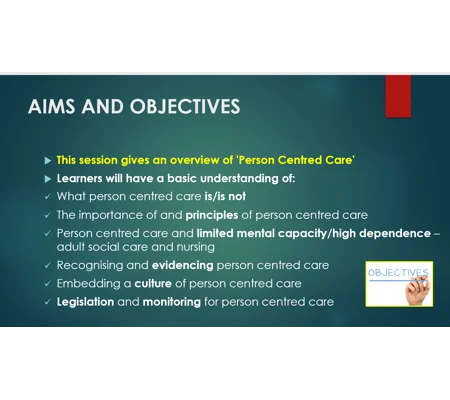
Person Centred Care Awareness Training ResourcesPerson Centred Care Awareness Presentation Person Centred Care Awareness (43 Slides) - Slide Titles: Aims and Objectives Introduction Collaboration What is Person Centred Care? The Importance of Person Centred Care What Person Centred care is Not Principles of Person Centred Care Highly Dependent People Dementia or Limited Capacity Care Act 2014 Residential Care Planning for an Older Person Person Centred Care in Nursing NHS Constitution Research on Person Centred care Examples of Person Centred Care Recognising and Evidencing Person Centred Care Best Practice Embedding a Culture of Person Centred Care Legislation CQC Regulation 9 Health and Social Care Act Outcomes CQC Inspections Summary and Conclusion References Word Document Handout HSC Training Link Teaching, Training and Development Resources for the Health and Social Care Sector, RQF, QCF (was NVQ) Diploma Level 2 3 4 underpinning knowledge.
Learning Activities
Person Centred Care Residential Care Learning ActivityCase Study-Based Learning Activity: Person Centred Care in Residential Care (Word Document). Editable document (should you need to adapt). Objective: To enhance the understanding and implementation of person-centred care among residential care staff, ensuring residents receive care that is respectful of and responsive to their individual preferences, needs and values. This structured activity aims to provide a concise yet impactful understanding of person-centred care. Through case studies, discussions and reflections, staff will gain practical insights and strategies to enhance the quality of care they provide. Ready made learning activity with full instructions and case study scenario examples x 5 - time needed: 1 - 2 hours (depending on how many groups). Materials Needed: Printed case studies Flip charts Markers and pens Instructions: Introduction (15 minutes) Explanation of the Learning Activity and Objectives (5 minutes) Group Work on Case Studies (30 minutes) Group Presentatio...
Miscellaneous
Person Centred Practice for Positive Outcomes Unit 505 LO1 Training ResourcesLevel 5 Management and Leadership Qualifications - Person Centred Practice for Positive outcomes Unit 505 LO1 - WORD DOCUMENT pack covering underpinning knowledge. All documents cover information for learning objective 1 LO1 PACK CONTENTS (ALL WORD DOCUMENTS): LO1 The Importance of Person Centred Outcome Based Practice in Adult Care LO1 Why Managers and Leaders Need an Understanding of the Theories and Values of Positive Practice LO1 Principles and Values of Person Centred Outcome Based Practice LO1.1 Theories and Values of Positive Practice in Adult Care LO1.1 Personalisation Dimension Approach Building Blocks Framework Common Core Principles LO1.1 How Outcome Based Practice and Person Centred Practice Interlink to Support Positive Change in Adult Care LO1.1 Ways active participation contributes to relationships wellbeing and the achievement of positive outcomes for individuals LO1.1 Ways of Working with Individuals to Ensure Their Choice and Control Over Decisions Affecting Them L...
Miscellaneous
Person Centred Practice for Positive Outcomes Unit 505 LO2 Training ResourcesLevel 5 Management and Leadership Qualifications - Person Centred Practice for Positive outcomes Unit 505 LO2 - WORD DOCUMENT pack covering underpinning knowledge. All documents cover information for learning objective LO2 PACK CONTENTS (ALL WORD DOCUMENTS): LO2 The Importance of Managing Resources to Facilitate Positive Outcomes for Individuals LO2 Managing resources to facilitate positive outcomes for individuals LO2.1 Facilitate an organisational culture which values positive outcomes and person centred practice LO2.1 Learners reflect on how they drive an organisational culture which values positive outcomes and person centred practice LO2.2 Developing implementing and evaluating plans to ensure team members have appropriate training development and support to promote person centred practice LO2.3 Manage others to work with individuals ensuring that they adapt their approaches to meet an individual s changing needs LO2.4 Manage resources to ensure that reviews of individuals pref...
Miscellaneous
Person Centred Practice for Positive Outcomes Unit 505 LO3 Training ResourcesLevel 5 Management and Leadership Qualifications - Person Centred Practice for Positive outcomes Unit 505 LO3 - WORD DOCUMENT pack covering underpinning knowledge. All documents cover information for learning objective LO3. PACK CONTENTS (ALL WORD DOCUMENTS): LO3 The importance of managers leading practice to achieve health and care outcomes LO3.1 Manage systems and processes which enable early identification and assessment of an individual s current and emerging health needs LO3.1 Recognising and Recording Individuals Current and Emerging Health and Care Needs in Adult Care Settings LO3.1 Understanding the importance of early identification and assessment LO3.1 Maintaining health and care records in line with requirements LO3.1 Advanced care planning and end of life wishes LO3.2 Implement and evaluate protocols for safe healthcare practice which actively promote positive outcomes LO3.2 Implementing Safe Healthcare Protocols in Adult Care LO3.3 Foster active participation of individ...
Miscellaneous
Person Centred Practice for Positive Outcomes Unit 505 LO4 Training ResourcesLevel 5 Management and Leadership Qualifications - Person Centred Practice for Positive outcomes Unit 505 LO4 - WORD DOCUMENT pack covering underpinning knowledge. All documents cover information for learning objective LO4. PACK CONTENTS (ALL WORD DOCUMENTS): LO4 Champion equality diversity and inclusion to achieve positive outcomes LO4.1 Investigate the legal context underpinning equality diversity and inclusion relating to adult care services LO4.2 Evaluate policies systems processes and practices that promote equality diversity and inclusion LO4.3 Support others to challenge discrimination and exclusion in ways that are likely to achieve change and promote positive outcomes HSC Training Link Training Resources for Health and Social Care Supplying training resources for the health and social care sector since 2004. Resources purchased are emailed to you via Zip Folder attachment or via Microsoft 365 link (your choice). All packs are written in a generic style and can easily be ada...
Miscellaneous
Person Centred Practice for Positive Outcomes Unit 505 LO5 Training ResourcesLevel 5 Management and Leadership Qualifications - Person Centred Practice for Positive outcomes Unit 505 LO5 - WORD DOCUMENT pack covering underpinning knowledge. All documents cover underpinning knowledge for learning objective LO5. PACK CONTENTS (ALL WORD DOCUMENTS): LO5. Lead continuous improvement in carrying out health and care procedures where required LO5.1 Monitor review and evaluate the implementation of person centred practices and the achievement of positive outcomes for individuals LO5.2 Use evidence-based research to identify best practice in outcome based and person centred approaches LO5.3 Act on lessons learned from incidents that occur LO5.4 Review the extent to which systems processes and practice facilitate positive outcomes LO5.5 Plan and lead the implementation of improvements HSC Training Link Training Resources for Health and Social Care Supplying training resources for the health and social care sector since 2004. Resources purchased are emailed to you via Z...
Miscellaneous
Person Centred Practice for Positive Outcomes Unit 505 LO6 Training ResourcesLevel 5 Management and Leadership Qualifications - Person Centred Practice for Positive outcomes Unit 505 LO6 - WORD DOCUMENT pack covering underpinning knowledge. All documents cover information for learning objective LO6. PACK CONTENTS (ALL WORD DOCUMENTS): LO6 Develop community relationships to provide integrated services LO6.1 Understand the importance of community involvement and promote own service within the wider community LO6.1 Community Involvement and Activities for Service Users Supporting Positive Outcomes LO6.1 How working with other community services sports the development of health and care provision HSC Training Link Training Resources for Health and Social Care Supplying training resources for the health and social care sector since 2004. Resources purchased are emailed to you via Zip Folder attachment or via Microsoft 365 link (your choice). All packs are written in a generic style and can easily be adapted to suit your own specific training delivery. Secure paym...
Miscellaneous
Person Centred Practice for Positive Outcomes Unit 505 LO7 Training ResourcesLevel 5 Management and Leadership Qualifications - Person Centred Practice for Positive outcomes Unit 505 LO7 - WORD DOCUMENT pack covering underpinning knowledge. All documents cover underpinning knowledge for learning objective LO5. PACK CONTENTS (ALL WORD DOCUMENTS): LO7 The importance of managing concerns and complaints in adult care LO7.1 Systems and processes to manage concerns and complaints and how these link to risk management and safeguarding LO7.2 Embedding Regulatory Requirements Codes of Practice and Guidance for Managing Concerns and Complaints within Organisational Systems and Processes LO7.3 Why those who use services may be reluctant to raise concerns or complaints LO7.4 Promoting a culture where attitudes and approaches ensure concerns and complaints directly influence service improvement LO7.5 Supporting team members to understand systems and processes relating to concerns and complaints LO7.6 Ensuring information and support is in place to enable those using serv...
ALL PACKS
Personal Care - Roles and Responsibilities Training ResourcesPersonal Care Awareness for Care Staff and Support Workers PowerPoint presentation, PDF handout and generic personal end of session assessment. Presentation - 53 Slides Slide titles Aims and Objectives Introduction Person Centred Care Roles and Responsibilities Duty of Care What is Personal Care? What is Nursing Care? What are Clinical Tasks and Can Care Staff Undertake Them? Relevant Legislation Health and Social Care Act 2008 (Regulated Activities) Regulations 2014: Regulation 12 Competence Professional Practice Guidelines Mandatory Requirements for Staffing Mandatory Requirements - Care Plan and Risk Assessment Mandatory Requirements - Consent and Mental Capacity If a person refuses an intervention Personal Care Personal Care - Dental Care Personal Care - Foot Care Personal Care - Hand Nail Care Personal Care - Sanitary and Continence Protection Personal Care - Shaving Personal Care Washing, Dressing and Toileting Clinical Tasks In General Clinical Tasks Categories of Tasks and A...
ALL PACKS
Personal Emergency Evacuation Plans PEEPS Training ResourcesPersonal Emergency Evacuation Plans (PEEPS) (Fire & Emergency) PowerPoint presentation (laid out in sections, easy to follow and understand) and Word documents (printable from the CD). Includes printable hand-outs and example questionnaire and standard PEEP plan template and printable information booklet (Word documents). Presentation - PEEPS Personal Emergency Evacuation Plans (93 Slides) Slide Titles: Aims and Objectives Introduction Legislation Underpinning PEEPS Initiating a PEEP Planning for Evacuation What is a PEEP? Principles of Preparation Principles of Implementation Communication and Training INDIVIDUAL PEEP PLANS FOR EMPLOYEES AND REGULAR VISITORS Individual PEEP Plans Things to Consider Standard PEEP Plans Unknown or Uncontrolled Visitors Individual PEEPs Preparation Writing an Individual PEEP Individual PEEPS Assisted Evacuation Review and Updating of PEEPS Practicing Evacuation Building Features Doors Open Risers and Stair Enclosures Stair Enclosure Fire Compartmentat...
Handouts
Personal Space and Modesty Awareness Level 2 Training ResourcesPersonal Space and Modesty Awareness Handout - Level 2 5 page handout (Word Document) Contains: What personal space means How to respect personal space in care settings Maintaining dignity Maintaining dignity in challenging situations Principles and strategies to uphold dignity in challenging situations Word Document HSC Training Link Training Resources for Health and Social Care Supplying training resources for the health and social care sector since 2004. Resources purchased are emailed to you via Zip Folder attachment. All packs are written in a generic style and can easily be adapted to suit your own specific training delivery. Resources are Microsoft Office based. Secure payments via PayPal Merchant Commerce Platform. You do not need a PayPal account to use this payment gateway as Debit and credit card payments accepted. Contact me if you require bespoke training resources with your learning objectives and your target audience. HSC Training Link Training Resources for Health an...
Microteach
Personalisation - Microteach SessionMicroteach 'Person Centred Care' in Health and Social Care Word Document containing everything needed for a 10 minute session. 1. Introduction (1 minute) 2. Definition and Importance (2 minutes) 3. Key Principles of Person-Centred Care (3 minutes) 4. Practical Applications (3 minutes) 5. Case Study/Scenario (1 minute) 6. Conclusion and Q&A (1 minute) 3 Page Word Document Need resources for a Microteach session not listed on my website? CONTACT ME. HSC Training Link Training Resources for Health and Social Care Microteach 'Person Centred Care' in Health and Social Care Word Document containing everything needed for a 10 minute session. 1. Introduction (1 minute) 2. Definition and Importance (2 minutes) 3. Key Principles of Person-Centred Care (3 minutes) 4. Practical Applications (3 minutes) 5. Case Study/Scenario (1 minute) 6. Conclusion and Q&A (1 minute) 3 Page Word Document Need resources for a Microteach session not listed on my website? CONTACT ME. HSC Training Link Training Re...
Microteach
Person-Centred Care Audits in Domiciliary Care Microteach Training ResourcesMicroteach - 'Person-Centred Care Audits in Domiciliary Care' Word Document containing everything needed for a 10 minute session. Aim: To understand how to audit care plans for person-centred practices and evaluate service user involvement and outcomes in domiciliary care. Learning Objectives: Identify person-centred practices and recognise examples in care plans. Explain how to evaluate service user involvement and outcomes. Word Document 1. Introduction (2 minutes) 2. Auditing Care Plans for Person-Centred Practices (4 minutes) 3. Evaluating Service User Involvement and Outcomes (3 minutes) 4. Summary and Reflection (1 minute) 5. Handout and Conclusion 3 Page Word Document Need resources for a Microteach session not listed on my website? CONTACT ME. HSC Training Link Training Resources for Health and Social Care Supplying training resources for the health and social care sector since 2004. Resources purchased are emailed to you via Zip Folder attachment. All packs are written in a...
ALL PACKS
PFA Mental Health First Aid Training ResourcesPsychological First Aid (PFA) This pack focuses on the approved World Health Organisation procedures for overall emergency response and is suitable for a full day of training. Presentation 1 Complete Overview of PFA (70 Slides) Slide Titles: Aims and Objectives Introduction (Background Information including UK Government campaign to train people in basic mental health first aid skills) Every Mind Matters Campaign Public Health England Research Better Health Every Mind Matters Aims of Mental Health First Aid What is Mental Health First Aid? How do Crises Affect People Generally? (Plus Learning Activity 1 and 2) PFA - Sphere (2011), IASC (2007) PFA Hobfoll, et al. (2007) PFA Misconceptions IASC Mental Health and Psychosocial Support (MHPSS) Pyramid Who is PFA for? (Plus Learning Activity 3) People who need more Immediate Advanced Support Normal Reactions to Abnormal Events (Emotional, Mental Physical Social) When is PFA Provided? Where is PFA Provided? PFA Action Principles LOOK (Pay...
ALL PACKS
PFA Personality Disorders Training ResourcesMental Health Personality Disorders Awareness PowerPoint Presentation and Word Documents Presentation Personality Disorders Awareness (53 Slides) Aims and Objectives: Know what a personality disorder is and the symptoms Understand personality disorder categories (cluster groups) Know the effects of specific personality disorders Understand causes, risk factors and complications of personality disorders Gain an overview of treatments for personality disorders Understand the meaning of a crisis situation and help available Know when compulsory hospital detention is appropriate Slide Titles: Aims and Objectives Introduction Every Mind Matters Public Health England What is a Personality Disorder? Symptoms Personality Disorder Clusters Paranoid Personality Disorder Schizoid Personality Disorder Schizotypal Personality Disorder Antisocial Personality Disorder Borderline Personality Disorder Histrionic Personality Disorder Narcissistic Personality Disorder Avoidant Personality Disorder Dep...
Team Meeting / Toolbox Talks
Physical Abuse - Care Team Talk Level 1Physical Abuse - Care Team Talk Level 1 Audience: Care staff Level: Level 1 Awareness Duration: Approximately 15 minutes 15-Minute Care Team Talk - 11 Pages Short, practical and ready-to-use training resource designed to support regular staff learning, discussion and reflection within health and social care settings. Provides a simple, structured way for managers, team leaders and trainers to cover this important care topic ("Safeguarding Adults - Everyone s Responsibility") with staff without the need for a lengthy training session. Team Talk includes: 1. Trainer Guide - A clear, easy-to-follow guide showing the trainer how to deliver the session within approximately 15 minutes, including the purpose, learning outcomes and suggested timings. 2. Short Scenario - A realistic care-based scenario to help staff think about how the topic may arise in everyday practice. 3. Discussion Questions - Simple, practical questions to encourage staff to think about the topic, share their understan...
Team Meeting / Toolbox Talks
Physical Abuse - Care Team Talk Level 2Physical Abuse - Care Team Talk Level 2 Audience: Care staff Level: Level 1 Awareness Duration: Approximately 15 minutes 15-Minute Care Team Talk - 11 Pages Short, practical and ready-to-use training resource designed to support regular staff learning, discussion and reflection within health and social care settings. Provides a simple, structured way for managers, team leaders and trainers to cover this important care topic ("Safeguarding Adults - Everyone s Responsibility") with staff without the need for a lengthy training session. Team Talk includes: 1. Trainer Guide - A clear, easy-to-follow guide showing the trainer how to deliver the session within approximately 15 minutes, including the purpose, learning outcomes and suggested timings. 2. Short Scenario - A realistic care-based scenario to help staff think about how the topic may arise in everyday practice. 3. Discussion Questions - Simple, practical questions to encourage staff to think about the topic, share their understan...