Displaying results : children
Presentation Packs
Pathway Planning - Roles and Responsibilities Training ResourcesRoles and Responsibilities - Pathway Planning Local Authority Policies and The Role of Specific Services - Pathway Planning Presentation, Handout, Knowledge Check Questions, Trainer Aide Answer Key All files editable. Overall Aim: To develop staff understanding of their roles, responsibilities and contributions in supporting young people through effective, collaborative and person-centred pathway planning. Learning Objectives: Learners will be able to describe the key responsibilities of residential, social care and multi-agency staff involved in pathway planning. Learners will be able to explain how staff work together to ensure coordinated, consistent and young person centred support. Learners will be able to identify how their own role contributes to empowering young people and achieving positive outcomes within the pathway planning process. Presentation (53 Slides) Overall Aim Learning Objectives Why Roles and Responsibilities Matter in Pathway Planning Residential Care Workers ...
Presentation Packs
Pathway Planning - Supporting Emotional Readiness and Resilience Training ResourcesSupporting Emotional Readiness and Resilience - Pathway Planning Presentation, Handout, Knowledge Check Questions, Trainer Aide Answer Key All files editable. Overall Aim: To equip staff with the understanding and practical skills needed to support care-experienced young people s emotional readiness, resilience and wellbeing as part of effective Pathway Planning. Learning Objectives: Learners will understand how attachment, trauma and past experiences influence a young person s emotional development and readiness for independence. Learners will be able to identify and apply strategies that support emotional literacy, coping skills, resilience and self-esteem in daily practice. Learners will recognise how their role as consistent, trusted adults helps young people manage anxiety, fear of change and the emotional challenges involved in transition planning. Presentation (27 Slides) Overall Aim Learning Objectives Introduction Why Attachment and Trauma Matter in Pathway Planning Attachm...
Presentation Packs
Behaviour Support Plans Training ResourcesBehaviour Support Plans Awareness Presentation, Handout and End of Session Quiz Assessment (mix of multiple choice, true/false, short answer questions), Trainer Aide Answer Key. All files editable. Suitable for any care setting (adults and children). Aims and Objectives: Overall Aim: To equip staff with the knowledge and skills to understand, implement and consistently apply individual Behaviour Support Plans that promote positive outcomes Learning Objectives: Understand the purpose and components of a Behaviour Support Plan (BSP). Recognise the roles of professionals involved in developing BSPs. Learn how to consistently implement strategies such as reward systems and structured choices. Explore real-world scenarios and best practices. Presentation (31 Slides) Aims and Objectives Welcome What Is a Behaviour Support Plan (BSP)? Key Features and Purpose Who Are They For Why It Matters Common Misconceptions About Behaviour Who Develops a Behaviour Support Plan (BSP)? Psychologists and...
Presentation Packs
Adult Residential Care Safeguarding Level 1 Training ResourcesEditable Level 1 safeguarding resource for adult residential care. Includes a full presentation, handout, case studies, quiz, assessment and model answers. Ideal for trainers, teachers and care providers delivering safeguarding induction or refresher training.
Presentation Packs
Learning Disabilities Observational Skills Level 1 Training ResourcesEditable Level 1 resource introducing observational skills for staff who may have contact with people with learning disabilities. Includes a 24 slide presentation, handout, knowledge check questions and trainer aide answer key. Ideal for induction, CPD and CQC aligned awareness training.

Presentation Packs
Care Act 2014 Overview Training ResourcesA complete overview of the Care Act 2014 and details current changes to the original implementation. One very large presentation, set out in sections, with some speaker notes on some of the slides. There is also a smaller presentation (37 slides) which is a summary of the changes regarding care, support, assessment and costs from the perspective of a service user/carer. Example Case Studies are included as Word Documents. useful also for selecting specific slides for your on training sessions. Presentation 1 - Care Act 2014 Awareness (77 slides) Slide Titles: Introduction Previous Legislation Who is an Adult? Who is a Carer? Who is an Individual? Underpinning Principles Wellbeing Wellbeing (Discharge of Obligations) Prevention Integration with the NHS Provision of Information Section 5 Section 6 and 7 Section 8 Care and Support Section 79 Delegation Section 14 Charging Section 9 Adult Assessment Section 10 Carers Assessment Section 13 Eligibility Criteria Eligibility Criteria Adult...
Presentation Packs
Child Development Training ResourcesChild development theories and theorists(Gesell, Feud, Erikson, Skinner, Piaget, Vygotsky) , Attachment Theory (Bowlby),Operant and Classical Conditioning, Cognitive Theory (Piaget). Pus various handouts on cognitive development in children. Presentation 1 - Child Development Theorists & Their Theories (23 slides) - Slide Titles: Sigmund Freud Erik Erikson B.F.Skinner Lev Vygotsky Jean Piaget Presentation 2 - Attachment Theory (Bowlby) (12 slides) - Slide Titles: Psychological theories Attachment theory Bonding Maternal deprivation Criticisms (Schaffer & Emerson (1964)) Social releasers Internal working models Criticisms (Michael Rutter(1981) References Presentation 3 - Operant and Classical Conditioning (14 slides) - Slide Titles: Key theorists Classical and operant conditioning Classical conditioning (3 slides) Operant conditioning Law of habit formation Law of conditioning Reinforcers (3 slides) Schedules of reinforcement Evaluation of these theories References Presentation 4 - C...
Presentation Packs
Safer Working Practices in Children's Homes Workshop Training ResourcesSafer Working Practices in Children's Homes Workshop Training Resources A comprehensive, ready to deliver training pack designed for regulated children s homes, fostering services, and residential childcare providers who need robust, practical, and defensible safer working practice training. This resource gives you everything required to deliver a full 1 2 day workshop, or to select individual components for shorter, targeted training sessions. Every element is fully editable, professionally structured, and built around real world scenarios that strengthen staff judgement, boundaries, and safeguarding practice. A complete, editable training resource for Safer Working Practices in Children s Homes. Includes a 100 slide main presentation, 58 slide scenario activities presentation, learner handout, end of session knowledge check, trainer answer key, and three detailed trainer aides. Suitable for a full 1 2 day workshop or flexible modular delivery. Designed to strengthen boundaries, re...
Presentation Packs
Diabetes Awareness Training ResourcesDiabetes Understanding, Awareness and Acute and Long Term Complications The pack is a thorough overview of the condition and things that care staff should be aware of and look out for. It also explains what can happen if diabetes is not managed correctly (acute and long term complications. Each session comes with a handout and an end of session assessment to check learners understanding. Presentation 1 Diabetes Awareness (34 Slides) Slide Titles: Aims and Objectives Introduction Glucose Levels Untreated Diabetes Symptoms Diagnosing Diabetes Treatment Glaucoma Types of Diabetes Type 1 Insulin-Dependent Diabetes Mellitis Type 2 Non-Insulin-Dependent Diabetes Mellitis Secondary Diabetes Gestational Diabetes Treatment of Diabetes Prevalence General Information Children and Young People Adults and the Elderly Diagnosis Complications Hyperglycaemia Diabetic Ketoacidosis (DKA) Hypoglycaemia Risks Linked to Diabetes Managing Diabetes A Diabetes Care Plan Summary References Presentation 2 Lo...

Presentation Packs
Grooming Awareness Training ResourcesSafeguarding - Grooming Awareness - Training Resources Presentation (in Sections), 8 Handouts, End of Session Multiple Choice Assessment Overall Aim: The aim of this session is to educate the audience about the signs and dangers of grooming, empowering them to recognise and respond to potential cases of exploitation and abuse. Learning Objectives: Understand the definition of grooming and its various stages. Identify common signs and indicators of grooming in vulnerable individuals, especially children. Creating a safe and supportive environment for open communication about grooming concerns. Reporting suspected grooming or child sexual abuse Presentation (76 slides) Aims and Objectives Introduction What is Grooming? Stages of Grooming Section - TARGETING Section - BUILDING TRUST Section - ESTABLISHING A RELATIONSHIP Section - ISOLATING THE VICTIM Section - SECRECY AND MANIPULATION Section - EXPLOITATION Section - RECOGNISING THE SIGNS OF GROOMING Section - PREVENTION & INTERVENTION...
Presentation Packs
Development Co-Ordination Disorder Awareness Training ResourcesPowerPoint presentation and Word Documents (handout, multiple choice end of session assessment and answer sheet) Development Co-Ordination Disorder (Dyspraxia) Awareness - 37 slides - slide titles: Aims and Objectives Introduction An Impairment of Movement Skills Symptoms Causes of DCD DCD v Dyspraxia Symptoms in Infancy Symptoms in Older Children Other Problems Related Conditions ADHD, Dyslexia, Autism Diagnosis Motor ABC Assessment Diagnosis - Other Things Treatment Professionals Involved Paediatric Occupational Therapist Paediatric Physiotherapist Paediatrician and Psychologists Task-Orientated Approach Process-Orientated Approach Treating Other Related Conditions Progressive Support References Word Documents 8 page handout 2 page multiple choice end of session assessment End of Session Answer Sheet PDF Presentation saved as a PDF
Single Presentations
Data Protection Act 2018 Training ResourcesSingle PowerPoint. Presentation - Data Protection Act 2018 (54 slides) - Slide Titles Introduction Links to Previous Legislation Current Legislation Health Records Legislation and Common Law What is Data? What is a Relevant Filing System? Personal Data Sensitive Personal Data Processing Data Subject Rights of Data Subjects Other Information Children - Data Subject Rights Incapacitated Adults - Data Subject Rights Lacking Mental Capacity Information Held by County Councils When a Request Has Been Made When a Request Has Been Refused How Should Data Requests Be Provided? Concerns and Complaints Information Commissioner Data Controller Data Processor Key Principles (1 - 6) Position Under the GDPR (Principles) Old Principle 8 Contravening the Act Fees Why the Change? References
Learning Activities
Ethical Dilemmas and Decision Making Children's Homes Learning ActivityLearning Activity: Group Discussions on Ethical Dilemmas and Decision-Making Editable document (should you need to adapt). Objective: To facilitate critical thinking and ethical decision-making skills among participants by engaging in group discussions on challenging scenarios related to safeguarding children in children's homes. Materials Needed: Ethical dilemma scenarios (examples included) Flip chart or whiteboard Markers Instructions: Introduction (5 minutes) Scenario Presentation (10 minutes) Group Discussion (30 minutes) Group Presentation (15 minutes) Reflection and Summary (10 minutes) Conclusion (5 minutes) Tips and Example Scenarios included. HSC Training Link Training Resources for Health and Social Care Supplying training resources for the health and social care sector since 2004. Resources purchased are emailed to you via Zip Folder attachment or via Microsoft 365 link (your choice). All packs are written in a generic style and can easily be adapted to suit your own spe...
Presentation Packs
Cerebral Palsy Awareness Training ResourcesPowerPoint presentation, Handout and End of Session Assessment. Suitable for any setting requiring an awareness of Cerebral Palsy. Presentation - Cerebral Palsy Awareness (42 slides) - slide titles: Target Audience Aims and Objectives Introduction What is Cerebral Palsy? Other Definitions Causes of Cerebral Palsy Risk Factors Impacts of Cerebral Palsy Types of Cerebral Palsy and Symptoms Overall Outcome Factors affecting Life Expectancy Complications Behavioural Difficulties Mental Health and Neurodevelopment Disorders Pain (adults and children) Summary References Word Documents Handout End of Session Assessment

Handouts
Social Pedagogy - Case Studies: Social Pedagogy in Action14 Page Handout (Word Document). Social Pedagogy - Case Studies: Social Pedagogy in Action. 10 Case Studies detailing how the principles of social pedagogy are used to assist in specific types of care settings. Settings used for the Case Studies: Residential Care for Children Foster Care School Setting Special Educational Needs School Youth Offenders Rehabilitation Program Community Youth Centre Child and Adolescent Mental Health Services (CAMHS) Respite Care for Adults with Disabilities Elderly Care Home Refugee Integration Program All documents editable should you need to edit. HSC Training Link Training Resources for Health and Social Care Supplying training resources for the health and social care sector since 2004. Resources purchased are emailed to you via Zip Folder attachment. All packs are written in a generic style and can easily be adapted to suit your own specific training delivery. Resources are Microsoft Office based. Secure payments via PayPal Merchant Commerce Platfo...
Presentation Packs
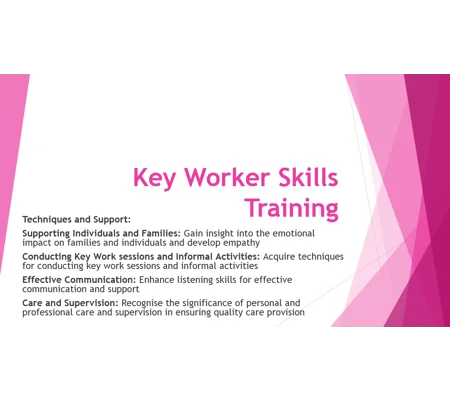
Key Worker Children's Residential Care Techniques & Support Training ResourcesKey Worker Skills (Techniques and Support). Suitable for Looked After Children Residential Care Enough resources for single sessions, single aspects or a one day course with workshops. All editable. 13 Files in total (Presentation (in section) , Handouts x 3, Case Studies x 20, Learning Activity documents x 4 and End of Session Multiple Choice Assessments x 4). Each learning activity file has 5 case studies (for those wishing to run workshops). Overall Aim: To equip participants with the knowledge, skills and understanding necessary to foster a supportive and empathetic environment in residential care settings, ensuring the emotional well-being of both families and workers while maintaining high standards of care provision Learning Objectives: Gain insight into the emotional impact on families and individuals and develop empathy. Acquire techniques for conducting key work sessions and informal activities. Enhance listening skills for effective communication and support. Recognise th...
Presentation Packs
Advocacy Awareness Training ResourcesEditable training resource covering the principles of advocacy, types of advocacy, when advocacy is required and how staff can support people in a rights based, person led way. Includes two full presentations, activities, case studies and assessments.
Presentation Packs
Domiciliary Care Safeguarding Awareness Level 4 Training ResourcesDomiciliary Care - Safeguarding Awareness Level 4 Presentation, 10 x Handouts,7 x Case Study Based Learning Activities (Group and Individual), 9 Discussion Question Post Activity Handouts Presentation is in Sections All files editable. Aims and Objectives: Overall Aim:To equip supervisors and line managers in domiciliary care with the knowledge and skills to effectively implement, monitor and uphold safeguarding practices, ensuring the protection and well-being of service users. Learning Objectives: Understand their leadership responsibilities in safeguarding, including legal and regulatory requirements. Implement and monitor safeguarding policies, ensuring best practice is followed within their teams. Respond effectively to safeguarding concerns, including risk assessments, escalation and multi-agency collaboration. Presentation (102 Slides) Introduction Section - Legal and Regulatory Frameworks Introduction Care Act 2014 (Adults) Children Act 1989 and 2004 Mental Capacity Act 2005...
Presentation Packs
Blood Pressure & Pulse Awareness Training ResourcesBlood Pressure and Pulse Awareness Presentation 1 The Pulse - Points, Readings and Procedures (34 slides) - Slide Titles: Aims and Objectives Introduction The Heart The Pulse Pulse Rates Irregular Pulse Weak Pulse Rapid Pulse Slow Pulse Pulse Points Carotid Pulse Abdominal Pulse Arm Pulses Leg Pulses Radial Pulse Manual Pulse Readings Procedure for Taking Manual Pulse Electronic Pulse Readings Pulse Oximeter Procedure for Taking Electronic Readings Summary References Presentation 2 - Blood Pressure (27 slides) - Slide Titles Blood pressure Definition Systolic and Diastolic Pressure Measuring Blood Pressure Blood Pressure Readings High Blood Pressure High Blood Pressure Causes High Blood Pressure and The Heart High Blood Pressure Occurrences Blood Pressure Variances How is Blood Pressure Measured? Manual Readings Blood Pressure Recording Normal Blood Pressure Range High and Low Blood Pressure Adults and Children Factors Affecting Readings Lying and Standing Blood Pressure Postural Hy...
Presentation Packs
Lactose Intolerance Awareness All Settings Training ResourcesLactose Intolerance Awareness All Settings Training Resources Presentation, Handout, Knowledge Check Questions, Trainer Aide Answer Key All files editable. For staff supporting adults, children and young people in settings such as care homes, hospitals, supported living, domiciliary care, nurseries and children's residential services . Presentation (57 Slides) - Slide Titles Overall Aim and Learning Outcomes Introduction to Lactose Intolerance Why You Need to Know About Lactose Intolerance The Role of Care Staff How Common is Lactose Intolerance? What Does This Mean for Care Staff? Understanding Lactose - It's Role in the Diet How Does The Body Digest Lactose? Recognising the Symptoms of Lactose Intolerance - Common Symptoms What Might Staff Notice? What Should Staff Do? Why Does Severity Vary? What Does This Mean in Care Settings? Causes and Risk Factors: Primary Vs Secondary Lactose Intolerance Causes and Risk Factors: Genetic, Age and Medical Influences What Should Staff Remember...

Presentation Packs
Safe Staffing and Recruitment Training ResourcesSafer Staffing Safer Recruitment - all Care Settings (children and adults) PowerPoint presentations and Word documents. This training pack looks at the process of safe staffing - from recruitment to induction to ongoing employment. It also looks at the safety aspects of requesting agency staff to cover vacant shifts. There are 2 presentations. The first is an in depth session of the entire staff staffing process. The second looks at the DBS scheme. Presentation - Safer Staffing Awareness (68 Slides) - Slide Titles: Aims and Objectives Introduction Legislation Recruitment process Safeguarding responsibilities Bichard DBS checks Finding the right candidate Recruitment process- methods/tests Selection panel Core documents Person specifications Conducting an interview Offering employment and DBS checks Pre appointment checks Professional registration and qualification checks Employment history and reference checks Work health assessments Ex offenders DBS checks and identity checks Check...
Presentation Packs
Respiratory Rates - Measuring, Interpreting & Documenting Clinical Training ResourcesMeasuring Interpreting & Documenting Respiratory Rates (Clinical) Underpinning Knowledge & Procedure Health and Social Care Training Resources All fully editable (should you wish to edit). Presentation in sections you can choose which sections to use. Aims and Objectives included if you want to use the presentation as it has been written. Comes with 6 Handouts plus a Multiple Choice End of Session Assessment. Aims and Objectives: Overall Aim: To equip UK healthcare staff with the knowledge and skills necessary to accurately measure and interpret respiratory rates, ensuring effective patient assessment and care. Learning Objectives: Understand the clinical significance of respiratory rates and their role in diagnosing and monitoring various health conditions. Learn the correct techniques for measuring respiratory rates and identify factors that can influence these measurements. Know how to accurately document and interpret respiratory rate findings in accordance with UK healthcare po...
Presentation Packs
Autism Awareness Training ResourcesA mixed generic pack. Suitable for trainers,training agencies, settings and for inclusion on part time and full time courses.Please scroll down the description to see all included. Presentation 1 Introduction to Autism (24 slides) Slide Titles: Aims and Objectives Introduction What is Autism? Asperger Syndrome How a Person with Autism Feels The Characteristics of Autism Social Interaction Social Communication Imagination Love of Routines Sensory Difficulties The Causes of Autism Diagnosis and Interventions References Presentation 2 Focus on Autism (21 slides) Slide Titles: Introduction Kanner Syndrome Further Studies Wing & Gould (1979) Asperger Syndrome Autism Prevalence Rate Prevalence Rates (Census,2001) Diagnosing Autism (Children) Diagnosing Autism (Adults) References Presentation 3 - Autism and Child Development/Education (41 slides) Slide Titles: Introduction Key points How Children Develop Development Autism and Development The Characteristics of Autism Social Interaction So...
Presentation Packs
Pulse - Measuring, Interpreting, Documenting Training ResourcesMeasuring Interpreting & Documenting Pulse Rates (Clinical) Underpinning Knowledge & Procedure Health and Social Care Training Resources All fully editable (should you wish to edit). Presentation in sections you can choose which sections to use. Aims and Objectives included if you want to use the presentation as it has been written. Comes with 7 Handouts plus a Multiple Choice End of Session Assessment. Aims and Objectives: Overall Aim: To equip healthcare professionals with the knowledge and skills to accurately measure and interpret pulse rates, enhancing patient assessment and care. Learning Objectives: Understand the clinical significance of pulse rates and their role in monitoring cardiovascular health and diagnosing medical conditions. Learn the correct techniques for measuring pulse rates manually and with digital devices in various healthcare settings. Know how to accurately document and interpret pulse rate findings, recognising normal ranges and identifying abnormalities. ...