Displaying results : dignity
Presentation Packs
Dignity Awareness Training ResourcesDignity Awareness Presentation 1 - Factors Affecting Dignity 22 slides Slide Titles: Aims and Objectives Introduction Respect Communication Social Inclusion Autonomy Privacy Hygiene and Appearance Mealtimes Complaints Whistleblowing Summary References Presentation 2 - Care Practice Factors that Threaten Dignity (24 Slides) Slide Titles: Aims and Objectives Introduction Factors affecting Dignity Learning Activity Practical Threats Organisational Threats Food and Drink Organisational Threats Autonomy Organisational Threats Care Planning Hygiene/Appearance Threats Mealtime Threats Complaint Threats Whistleblowing Threats Summary References Presentation 3 - Dignity Challenges (20 Slides) Slide Titles: Aims and Objectives Introduction What is Dignity? Dignity in Care Key Documents Essence of Care - Dignity & Respect Learning Activity Work Factors Personal Factors Dignity Challenges Learning Activity Dignity Champions Summary References Presentation 4 - Workshop (10 Slides) Word Documents...

Care Certificate Support
Care Certificate Standard 7 - Privacy and Dignity Training ResourcesCare Certificate Standard 7 - Privacy and Dignity (177 Slides in Sections) To support delivery of the Care Certificate. Includes Interactive Discussion Questions, Scenarios and Quizzes 11 Word Documents are also included (detailed below). (All files editable) If you only want the presentation - this is available in the 'Single Presentations' category of my website). Aims and Objectives: Overall Aim: The aim of this training is to ensure that care workers understand and consistently apply the principles of privacy and dignity, enabling them to provide respectful, person-centred care that protects individuals rights and wellbeing. Learning Objectives: Define privacy and dignity in health and social care. Understand why privacy and dignity matter in practice. Apply methods to maintain dignity and respect in everyday care. Recognise challenges and barriers. Reflect on personal attitudes and behaviours. Meet requirements of Care Certificate Standard 7. Presentation (177 Slides) Aims and ...

Presentation Packs
Privacy and Dignity Domiciliary Care Level 1 Training ResourcesPrivacy and Dignity Domiciliary Care Level 1 Training Resources Presentation, Handout, Knowledge Check Questions and Trainer Aide Answer Key. All files editable. Overall aim: To help domiciliary care staff understand why privacy and dignity are important and how to respect a person s privacy, personal space and confidentiality when providing care in their own home. Learning outcomes: Understand what privacy and dignity mean. Know how to respect people s privacy. Know why confidentiality is important. Know how to respect personal space. Know what to do if privacy or dignity is not respected Presentation (31 Slides) - Slide Titles: Aim and Objectives Introduction What Do We Mean by Privacy and Dignity? Respecting Privacy in Everyday Care Respecting Personal Space Protecting Dignity During Personal Care Respecting Choices and Preferences What Is Confidentiality? When Can Information Be Shared? Keeping Information Safe Everyday Examples: Good or Not Good? What If Privacy or Dignity Is N...

Presentation Packs
Privacy and Dignity Residential Care Level 1 Training ResourcesPrivacy and Dignity Residential Care Level 1 Training Resources Presentation, Handout, Knowledge Check Questions and Trainer Aide Answer Key. All files editable. Overall aim: To help residential care staff understand why privacy and dignity are important and how to protect people s personal information, privacy and personal space when providing care. Learning outcomes: Understand what privacy and dignity mean. Know how to respect people s privacy. Know why confidentiality is important. Know how to respect personal space. Know what to do if privacy or dignity is not respected Presentation (31 Slides) - Slide Titles: Aim and Objectives Introduction What Do We Mean by Privacy and Dignity? Respecting Privacy in Everyday Care Respecting Personal Space Protecting Dignity During Personal Care Respecting Choices and Preferences What Is Confidentiality? When Can Information Be Shared? Keeping Information Safe Everyday Examples: Good or Not Good? What If Privacy or Dignity Is Not Respected? P...

Scenario Bank
Dignity Level 1 (50 Scenarios) Care Worker ScenariosDignity Level 1 (50 Scenarios) Care Worker Scenarios Editable Word document (20 pages) This practical training resource provides a collection of 50 realistic dignity related scenarios designed to help care workers apply Level 1 principles when promoting dignity and respect in everyday care practice. Each scenario encourages discussion, reflection and confident decision making when faced with situations where empathy, discretion and person centred values are essential. The document provides trainer guidance, scenario prompts and model responses that support understanding of key responsibilities maintaining privacy, supporting choice, respecting individuality, communicating sensitively and upholding dignity in all aspects of care. Ideal for induction, refresher training and CPD, this pack helps staff recognise how dignity underpins quality care, respond appropriately to challenges, and reinforce compassionate, professional practice. Format: Microsoft Word (fully editable) Delivery: Re...
Scenario Bank
Dignity Level 2 (50 Scenarios) Care Worker ScenariosDignity Level 2 (50 Scenarios) Care Worker Scenarios Editable Word document (21 pages) This practical training resource provides a collection of 50 realistic dignity related scenarios designed to help care workers apply Level 2 principles when promoting dignity and respect in everyday care practice. Each scenario encourages discussion, reflection and confident decision making when faced with situations where empathy, discretion and person centred values are essential. The document provides trainer guidance, scenario prompts and model responses that support understanding of key responsibilities maintaining privacy, supporting choice, respecting individuality, communicating sensitively and upholding dignity in all aspects of care. Ideal for induction, refresher training and CPD, this pack helps staff recognise how dignity underpins quality care, respond appropriately to challenges, and reinforce compassionate, professional practice. Format: Microsoft Word (fully editable) Delivery: Re...
Scenario Bank
Dignity Level 3 (50 Scenarios) Care Worker ScenariosDignity Level 3 (50 Scenarios) Care Worker Scenarios Editable Word document (22 pages) This practical training resource provides a collection of 50 realistic dignity related scenarios designed to help care workers apply Level 3 principles when promoting dignity and respect in everyday care practice. Each scenario encourages discussion, reflection and confident decision making when faced with situations where empathy, discretion and person centred values are essential. The document provides trainer guidance, scenario prompts and model responses that support understanding of key responsibilities maintaining privacy, supporting choice, respecting individuality, communicating sensitively and upholding dignity in all aspects of care. Ideal for induction, refresher training and CPD, this pack helps staff recognise how dignity underpins quality care, respond appropriately to challenges, and reinforce compassionate, professional practice. Format: Microsoft Word (fully editable) Delivery: Re...

Handouts
Personal Space and Modesty Awareness Level 2 Training ResourcesPersonal Space and Modesty Awareness Handout - Level 2 5 page handout (Word Document) Contains: What personal space means How to respect personal space in care settings Maintaining dignity Maintaining dignity in challenging situations Principles and strategies to uphold dignity in challenging situations Word Document HSC Training Link Training Resources for Health and Social Care Supplying training resources for the health and social care sector since 2004. Resources purchased are emailed to you via Zip Folder attachment. All packs are written in a generic style and can easily be adapted to suit your own specific training delivery. Resources are Microsoft Office based. Secure payments via PayPal Merchant Commerce Platform. You do not need a PayPal account to use this payment gateway as Debit and credit card payments accepted. Contact me if you require bespoke training resources with your learning objectives and your target audience. HSC Training Link Training Resources for Health an...
Presentation Packs
Personal Care Support Domiciliary Care Training ResourcesDomiciliary Care - Personal Care Support Awareness This pack introduces 'personal care support' for learners and staff new to the role of care work. It details what personal care support is and key aspects to be considered for each dividual receiving care. Presentation, handout, end of session multiple choice assessment. learning activity and learning activity answers. All files editable. Overall Aim: To provide an introduction to personal care support, ensuring staff understand the importance of maintaining dignity, hygiene and comfort for individuals receiving domiciliary care. Learning Objectives: Understand the key aspects of personal care support, including hygiene, dressing and toileting. Recognise the importance of dignity, respect and promoting independence when providing personal care. Identify best practices for maintaining hygiene and preventing infection during personal care tasks. Presentation (18 slides) Aims and Objectives Introduction Understanding Personal Care Help...
Presentation Packs
Person Centred Approaches Residential Care Level 1 Training ResourcesPerson Centred Approaches Residential Care Level 1 Training Resources Presentation, Handout, Knowledge Check Questions and Trainer Aide Answer Key. All files editable. Overall Aim: To develop staff awareness and understanding of person- centred approaches and how these can be applied in everyday residential care to support people's individual needs, choices, rights, dignity and wellbeing. By the end of the session, learners will be able to: Describe what person-centred care means. Identify the key principles of person-centred approaches. Recognise the importance of treating each person as an individual. Identify ways to promote choice, dignity, rights and independence. Recognise examples of person-centred practice in residential care. Presentation 37 Slides - Slide Titles: Overall Aim and Learning Outcomes Introduction What Do We Mean by Person-Centred? The Person Before the Care Needs The Key Principles of Person-Centred Approaches Knowing the Person Choice and Control Dignity and ...
Presentation Packs
EOLC What is it? Residential Care Level 1 Training ResourcesEOLC What is it? Residential Care Level 1 Training Resources Presentation, Handout, Knowledge Check Questions, Trainer Aide Answer Key. All files editable. Overall Learning Aim: Learning outcomes: Presentation (33 Slides) - Slide Titles: Aim and Objectives Introduction What Is End-of-Life Care? Supporting Comfort Dignity and Respect at The End of Life Communication at The End of Life Supporting Families and Those Important to The Person Following The Person's Wishes Recognising When Someone May Be Uncomfortable Keeping The Person Safe and Comfortable Working As Part Of The Care Team Emotional Support and Compassion Looking After Yourself What Should I Do If I Am Concerned? After Death Basic Awareness Remembering What Matters Key Messages References and Further Information Word Documents Handout Knowledge Check Questions Trainer Aide Answer key HSC Training Link Training Resources for Health and Social Care Supplying training resources to the health and social care sector since 2004....
Presentation Packs
EOLC What is it? Domiciliary Care Level 1 Training ResourcesEOLC What is it? Domiciliary Care Level 1 Training Resources Presentation, Handout, Knowledge Check Questions, Trainer Aide Answer Key. All files editable. Overall Learning Aim: To develop an awareness of end-of-life care and how domiciliary care staff can support people approaching the end of life with dignity, compassion and respect. Learning outcomes: Know what end-of-life care means. Recognise when someone may be nearing the end of life. Know how to support someone with dignity and respect. Know how to provide comfort and reassurance. Know when to ask for help or report concerns Presentation (33 Slides) - Slide Titles: Aim and Objectives Introduction What Is End-of-Life Care? When Might Someone Be Approaching The End of Life? Supporting Comfort Dignity and Respect at The End of Life Communication at The End of Life Supporting Families and Those Important to The Person Following The Person's Wishes Recognising When Someone May Be Uncomfortable Keeping The Person Safe and Comforta...
Presentation Packs
Person Centred Approaches Domiciliary Care Level 1 Training ResourcesPerson Centred Approaches Domiciliary Care Level 1 Training Resources Presentation, Handout, Knowledge Check Questions and Trainer Aide Answer Key. All files editable. Overall Aim: To develop staff awareness and understanding of person-centred approaches and how these can be applied in domiciliary care to support people's individual needs, choices, rights, dignity and wellbeing. Learning outcomes: Describe what person-centred care means. Identify the key principles of person-centred approaches. Recognise the importance of treating each person as an individual. Identify ways to promote choice, dignity, rights and independence. Presentation 37 Slides - Slide Titles: Overall Aim and Learning Outcomes Introduction What Do We Mean by Person-Centred? The Person Before the Care Needs The Key Principles of Person-Centred Approaches Knowing the Person Choice and Control Dignity and Respect in Everyday Care Promoting Independence Communication: Listening to the Person Supporting Individual Ne...
Presentation Packs
Carer Qualities Domiciliary Care Training ResourcesQualities of a Good Carer - Health and Social Care Domiciliary Care Settings for the Elderly Training Resources Presentation (78 slides, in sections) plus 9 page handout (editable should you need to edit). This looks not just at the qualities but gives examples to guide care staff. Aims and Objectives: Overall Aim: To enhance caregiver effectiveness in domiciliary care by understanding and implementing key qualities and best practices. Learning Objectives: Identify essential qualities for effective care giving in domiciliary care. Explore best practices for promoting the well-being and dignity of clients. Understand the importance of collaboration, adaptability and continuous learning in providing quality care Presentation Aims and Objectives Introduction SECTION - Empathy SECTION - Patience SECTION - Communication Skills SECTION - Flexibility SECTION - Dependability SECTION - Respect for Privacy and Dignity SECTION - Problem Solving Skills SECTION - Physical and Emotional Stamina S...
Presentation Packs
Dementia & Continence Training ResourcesDementia and Continence This training pack looks at continence issues for people with dementia. It looks at why continence can be a problem, the steps to be taken by managers and staff to manage continence issues in the care setting and at home (domiciliary care), physical aspects that should be addressed and when to get professional involvement. Suitable for care settings, care staff, trainers and training agencies, full and part-time courses. Presentation - Dementia and Continence (43 Slides) - Slide Titles: Introduction Statistics Supportive Continence Care Setting the Scene for Incontinence Cognitive Impairments of Dementia, Sensory/Physical Impairments Incontinence Dignity Challenging Behaviour (relating to continence) Other Issues Why People with Dementia have Continence Problems Pain Bladder Control Problems Eliminating Physical Causes Aspects of Incontinence Understanding Behaviour (relating to continence) Assessing Continence Problems (Assessment, History, GP Assessment Env...

Single Presentations
5 Priorities of Care Training ResourcesSINGLE Powerpoint Presentation - 5 Priorities of Care Awareness (22 Slides) - Slide Titles: Aims and Objectives Introduction SECTION - The 5 Priorities of Care Priority 1: Respecting and Upholding Dignity Priority 2: Promoting Individual Rights Priority 3: Supporting Wellbeing and Independence Priority 4: Providing Safe and Effective Care Priority 5: Fostering Person-Centred Practice The Importance of Communication in Care SECTION - Implementing the 5 Priorities in Daily Practice Introduction Respecting and Upholding Dignity Promoting Individual Rights Supporting Wellbeing and Independence Providing Safe and Effective Care Fostering Person-Centred Practice General Tips Across Settings Challenges and Solutions in Prioritising Care SECTION - Summary of Key Points Key Points References and Further Reading HSC Training Link Training Resources for Health and Social Care Supplying training resources for the health and social care sector since 2004. Resources purchased are emailed to you v...
Presentation Packs
Dementia Washing and Bathing Training ResourcesDementia - Personal Care - Washing and Bathing Presentation - Washing and Bathing Awareness (37 slides) Slide Titles: Aims and Objectives Introduction General Problems Incontinence Skin Inspection Before Washing or Bathing Care Plan Familiarity Preparation Health and Safety Distractions Mirrors Before Bathing Accessible Information Toileting Prior to Bathing Chronic Conditions Simple Instructions Comfort Dignity Clothing Conversation/Song Empowerment Fear of Water Hand Held Sprays Humour and Dignity The Head After Bathing Never Leave Unattended Drying Body Lotions Alternatives to Bathing References Word Documents Presentation Handout (5 pages) End of Session Assessment
Presentation Packs
Suprapubic Catheterisation Clinical Awareness Training ResourcesSuprapubic Catheterisation Clinical Awareness Training Resources Female Urinary Catheterisation Clinical Awareness & Procedures Training Resources Presentation, Handout, Knowledge Check Questions, Trainer Aide Answer Key, All files editable - use what you need. Overall Aim of the Session To equip nurses and clinical staff with the knowledge to safely manage, monitor and respond to the care needs and potential complications associated with suprapubic catheters . Learning Objectives: 1 What SPCs are and their clinical indications. 2. Safe handling and maintenance techniques. 3 Signs of infection or complications early. 4 Escalation routes and documentation. 5 Dignity and comfort. Presentation (84 Slides) - Slide Titles: Overall Aim and Learning Objectives Section - What SPCs are and their Clinical Indications What is a Suprapubic Catheter? Why a Suprapubic Catheter is Used Basic Anatomy Settings - Suprapubic Catheterisation Ward or Clinical Settings Operating Theatres Section - Safe H...
Presentation Packs
Learning Disabilities Moderate - Supporting Personal Care and Hygiene Training ResourcesLearning Disabilities (Moderate) - Supporting Personal Care and Hygiene Level 2 A Guide for Care Workers and Support Workers A Learning Disability-Focused Approach for Health and Social Care staff Presentation in sections, 11 Handouts, End of Session Assessment (mix of multiple choice, True/False and short answer Questions), Trainer Aide Answer Key. All files editable. Aims and Objectives: Overall Aim: To equip carers with the knowledge and skills needed to support individuals with moderate learning disabilities in maintaining personal care and hygiene with dignity, respect and independence. Learning Objectives: Understand the personal care and hygiene needs of individuals with moderate learning disabilities Develop respectful, person-centred support strategies Promote independence, dignity and choice Ensure safety, hygiene and safeguarding best practices Presentation (74 Slides) Aims and Objectives Welcome Section - Moderate Learning Disabilities What Are Moderate Learning Disabili...
Presentation Packs
Postural Care Awareness Training ResourcesPostural Care Awareness - suitable for all settings and all staff. Presentation (in Sections), Handout, Knowledge Check Questions, Trainer Aide Answer Key. All files editable. Aims and Objectives: Overall Aim: To raise awareness of the importance of postural care and equip participants with the knowledge to recognise risks and support best practice. Learning Objectives: Understand what postural care is and why it matters for comfort, dignity and health. Recognise the risks associated with poor posture and body shape changes. Identify key methods, equipment and approaches used in 24-hour postural care. Explore how to embed safe and consistent postural care into daily routines and teamwork. Presentation (102 Slides) Aims and Objectives Welcome Introduction Section - Introduction to Postural care Introduction to Postural Care Definition and Principles Why Postural Care Matters Preventing and Managing Body Shape Changes Maintaining Comfort and Dignity Poor Postural Care Some Statistics ...
Presentation Packs
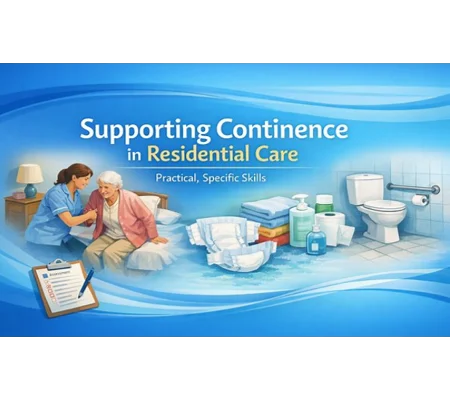
Supporting Continence Residential Care Training ResourcesSupporting Continence in Residential Care Awareness Presentation, Handout, Knowledge Check Questions, Trainer Aide Answer Key All files editable Overall Aim: To strengthen staff confidence and competence in supporting residents continence needs through practical, respectful and person centred care. Learning Objectives: Explain what continence means and why it matters in residential care Recognise factors that affect continence and early signs of change Apply practical techniques for safe, dignified toileting support Communicate effectively between floor and senior staff about continence care Maintain accurate records and uphold professional accountability Presentation (31 Slides) Overall Aim and Learning Objectives Introduction to Continence Support Understanding Continence and Incontinence Recognising Individual Needs and Preferences Assessment and Early Intervention Practical Skills for Daily Care Promoting Comfort, Privacy and Dignity Communication Between Floor and Senior Staff ...

Presentation Packs
End of Life Care Role of the Carer Training ResourcesEnd of Life Care - Role of the Carer Health and Social Care Training Resources Aim : The Role of Carers in the End-of-Life Journey Learning Objectives: 1. Understand the pivotal role of carers in the end-of-life journey, including family members, healthcare professionals and volunteers. 2. Explain the responsibilities and duties of carers. 3. Recognise the emotional and psychological impact of care giving and its importance in the well-being of both the patient and the carer. 4. Identify effective communication strategies and approaches to establish trust and rapport with the patient and their families. PowerPoint Presentation (66 slides) Word Documents - Handout, End of Session Multiple Choice Assessment, , Slide Titles: SEE IMAGES
Presentation Packs
Suprapubic Catheterisation Awareness Level 2 Training ResourcesSuprapubic Catheterisation Awareness Level 2 Training Resources All files editable, so you can tailor as required. Presentation, Handout, Knowledge Check Questions, Trainer Aide Answer key. Overall Aim: To help care and support staff understand what a suprapubic catheter is, how to support individuals safely and when to seek clinical help. Learning Objectives 1. What a suprapubic catheter is and why it may be used. 2.Basic hygiene and comfort needs for someone with a suprapubic catheter. 3.Signs of infection or complications and when to report concerns. 4.Safe, respectful communication and privacy when supporting catheter care. 5.Own role, boundaries and when to escalate to clinical staff. Presentation (33 slides) - Slide Titles: Aim and Objectives What is a Suprapubic Catheter? Why a Suprapubic Catheter is Used Basic Anatomy and Positioning Daily Care and Hygiene Daily Care and Hygiene Key Points Recognising Problems Recognising Problems Key Points Reporting and Escalation Reportin...
Presentation Packs
Carer Qualities Residential Care Training ResourcesQualities of a Good Carer - Health and Social Care Residential Care Settings for the Elderly Training Resources Presentation (87 slides, in sections) plus 11 page handout (editable should you need to edit). This looks not just at the qualities but gives examples to guide care staff. Aims and Objectives: Overall Aim: To enhance caregiver effectiveness in elderly residential care by understanding and implementing key qualities and best practices. Learning Objectives: Identify essential qualities for effective care giving in elderly residential settings. Explore best practices for promoting the well-being and dignity of elderly residents. Understand the importance of collaboration, adaptability and continuous learning in providing quality care Presentation Aims and Objectives Introduction SECTION - Empathy SECTION - Patience SECTION - Communication Skills SECTION - Flexibility SECTION - Dependability SECTION - Respect for Privacy and Dignity SECTION - Problem Solving Skills SECTION - P...