Displaying results : boundaries

Scenario Bank
Infection Prevention Level 2 (50 Scenarios) Care Worker ScenariosInfection Prevention Level 2 (50 Scenarios) Care Worker Scenarios Editable Word document (21 pages) This practical training resource provides a collection of 50 realistic infection prevention scenarios designed to help care workers apply Level 1 principles when maintaining safe and hygienic practice. Each scenario encourages discussion, reflection and confident decision making when faced with situations where infection control, clear communication, professional judgement and safe working procedures are essential. The document provides trainer guidance, scenario prompts and model responses that support understanding of key responsibilities following infection prevention measures, recognising risks, reporting concerns, supporting individuals appropriately and maintaining professional boundaries. Ideal for induction, refresher training and CPD, this pack helps staff recognise common infection risks, respond safely, prevent cross contamination, manage misunderstandings and reinforce saf...
Scenario Bank
Safeguarding Level 1 (50 Scenarios) Care Worker ScenariosCare Worker Scenarios Safeguarding Level 1 (50 Scenarios) Editable Word document (29 pages) This practical training resource provides a collection of 50 realistic safeguarding scenarios designed to help care workers apply Level 1 safeguarding principles in everyday practice. Each scenario encourages discussion, reflection and confident decision making when responding to potential signs of abuse or neglect. The document includes clear trainer guidance, scenario prompts and model responses that support understanding of key safeguarding responsibilities listening, reporting concerns and maintaining professional boundaries. Ideal for induction, refresher training and CPD, this pack helps staff recognise safeguarding issues, respond appropriately and reinforce safe, person centred care. HSC Training Link Training Resources for Health and Social Care Supplying training resources to the health and social care sector since 2004. Resources are emailed to you via ZIP folder attachment. All pa...
Scenario Bank
Mental Capacity Level 1 (50 Scenarios) Care Worker ScenariosMental Capacity Level 1 (50 Scenarios) Care Worker Scenarios Editable Word document (29 pages) This practical training resource provides a collection of 50 realistic mental capacity scenarios designed to help care workers apply Level 1 principles in everyday practice. Each scenario encourages discussion, reflection and confident decision making when responding to situations surrounding mental capacity. The document provides clear trainer guidance, scenario prompts and model responses that support understanding of key responsibilities recognising when a person may lack capacity, offering appropriate support, reporting concerns and maintaining professional boundaries. Ideal for induction, refresher training and CPD, this pack helps staff recognise when a person may lack capacity, offer appropriate support, follow the decision making process and reinforce safe, person centred practice. HSC Training Link Training Resources for Health and Social Care Supplying training resources to the h...
Scenario Bank
Incidents Level 3 (50 Scenarios) Care Worker ScenariosIncidents Level 3 (50 Scenarios) Care Worker Scenarios Editable Word document (21 pages) This practical training resource provides a collection of 50 realistic incident scenarios designed to help care workers apply Level 3 incident response principles in everyday practice. Each scenario encourages discussion, reflection and confident decision making when responding to situations where clear reporting, professional judgement and safe practice are required. The document provides trainer guidance, scenario prompts and model responses that support understanding of key responsibilities recognising incidents, recording accurately, reporting concerns promptly, maintaining professional boundaries and following organisational procedures. Ideal for induction, refresher training and CPD, this pack helps staff understand what constitutes an incident, respond appropriately, reduce risk and reinforce safe, person centred practice. Format: Microsoft Word (fully editable) Delivery: Resources emaile...
Scenario Bank
Medication Level 2 (50 Scenarios) Care Worker ScenariosMedication Level 2 (50 Scenarios) Care Worker Scenarios Editable Word document (25 pages) This practical training resource provides a collection of 50 realistic medication related scenarios designed to help care workers apply Level 2 principles when supporting safe medication practice. Each scenario encourages discussion, reflection and confident decision making when faced with situations where accuracy, clear communication, professional judgement and safe handling of medicines are essential. The document provides trainer guidance, scenario prompts and model responses that support understanding of key responsibilities following medication instructions, checking dosage and timing, recognising errors, reporting concerns, supporting individuals appropriately and maintaining professional boundaries. Ideal for induction, refresher training and CPD, this pack helps staff recognise common medication issues, respond safely, prevent errors, manage misunderstandings and reinforce safe, person...
Scenario Bank
Incidents Level 2 (50 Scenarios) Care Worker ScenariosIncidents Level 2 (50 Scenarios) Care Worker Scenarios Editable Word document (22 pages) This practical training resource provides a collection of 50 realistic incident scenarios designed to help care workers apply Level 2 incident response principles in everyday practice. Each scenario encourages discussion, reflection and confident decision making when responding to situations where clear reporting, professional judgement and safe practice are required. The document provides trainer guidance, scenario prompts and model responses that support understanding of key responsibilities recognising incidents, recording accurately, reporting concerns promptly, maintaining professional boundaries and following organisational procedures. Ideal for induction, refresher training and CPD, this pack helps staff understand what constitutes an incident, respond appropriately, reduce risk and reinforce safe, person centred practice. Format: Microsoft Word (fully editable) Delivery: Resources emaile...
Scenario Bank
Safeguarding Level 3 (50 Scenarios) Care Worker ScenariosCare Worker Scenarios Safeguarding Level 3 (50 Scenarios) Editable Word document (29 pages) This practical training resource provides a collection of 50 realistic safeguarding scenarios designed to help care workers apply Level 1 safeguarding principles in everyday practice. Each scenario encourages discussion, reflection and confident decision making when responding to potential signs of abuse or neglect. The document includes clear trainer guidance, scenario prompts and model responses that support understanding of key safeguarding responsibilities listening, reporting concerns and maintaining professional boundaries. Ideal for induction, refresher training and CPD, this pack helps staff recognise safeguarding issues, respond appropriately and reinforce safe, person centred care. HSC Training Link Training Resources for Health and Social Care Supplying training resources to the health and social care sector since 2004. Resources are emailed to you via ZIP folder attachment. All pa...

Presentation Packs
Health Related Fixations Supporting Children and Young People Training ResourcesSupporting Young People and Children with Health Related Fixations Health Related Anxiety or Somatic Symptom Fixation Awareness, Tools and Strategies for Support Workers Enough resources for full sessions, single aspects or a one day course with workshops. All editable. 14 Files in total (Presentation (in sections) , Handouts x 4, Learning Activity documents x 7 and End of Session Assessment with Trainer Aide Answer Key. Aims and Objectives: Overall Aim: To equip support workers with the knowledge and skills to respond effectively and compassionately to young people who hold inaccurate beliefs about their health, while promoting emotional well-being and psychological flexibility. Learning Objectives: Understand why children/young people may believe they have medical conditions they don't have Learn how to respond empathetically without reinforcing false beliefs Gain practical strategies to support emotional regulation and resilience Know when and how to involve clinical professional...
Presentation Packs
Trauma Informed Care Approaches All Care Settings Training ResourcesTrauma Informed Care Approaches. Suitable for any care setting. Enough resources for single sessions, single aspects or a one day course with workshops. All editable. 20 Files in total (Presentation (in section) , Handouts x 9, Learning Activity documents x 6 (many with a selection of case studies) and End of Session Multiple Choice Assessments x 4). Overall Aim : To equip professionals in the UK with the knowledge and skills necessary to implement trauma-informed practices in their respective settings, fostering a supportive and healing environment for individuals impacted by trauma Learning Objectives: Understand the principles and significance of trauma-informed care within the context of UK healthcare and social services. Identify different types of trauma and their potential impacts on individuals across the lifespan, including children and adults accessing mental health services. Apply practical strategies for implementing trauma-informed practices, including creating safe env...
Presentation Packs
Dementia Care Safeguarding Awareness Level 2 Training ResourcesDementia Care - Safeguarding Awareness Level 2 Presentation, 9 x Handouts, 9 x Case Studies/Learning Activities, End of Session Multiple Choice Assessment. Presentation is in sections - Presentation also includes Discussion/Reflection Questions. All files editable. Aims and Objectives: Overall Aim - To develop an understanding of safeguarding principles in dementia care, enabling staff to recognise, respond to and prevent abuse or neglect. Learning Objectives: Identify the signs and types of abuse and neglect in individuals with dementia. Understand the legal and organisational safeguarding responsibilities in dementia care. Demonstrate appropriate actions to take when concerns about safeguarding arise Presentation (129 Slides) Aims and Objectives Welcome and Introduction Importance of Safeguarding in Dementia Care SECTION - Understanding Dementia and Vulnerability What is Dementia? Common Types of Dementia Key Symptoms of Dementia Impact on Vulnerability to Abuse and Neglect How De...
Presentation Packs
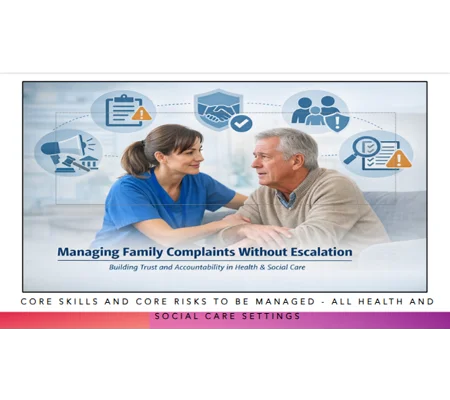
Managing Family Complaints Without Escalation Training ResourcesComplaints - Managing Family Complaints Without Escalation (All Settings) - Core Skkills and Core Risks to be Managed Residential Care, Domiciliary Care, Nursing Homes, Supported Living, Hospital Ward, GP Practice, Mental Health Service, Learning Disability Services, Hospice Care., Community Nursing. Presentation, Handout, Quick Knowledge Check Quiz, , Scenario Cased Learning Activity for all settings listed above, (Trainer Aide Answer Key. All files editable. Overall Aim: To strengthen staff confidence and professionalism when responding to family concerns by developing the communication, emotional awareness and decision making skills needed to resolve issues early, maintain trust and prevent escalation to formal complaints or regulatory scrutiny across all health and social care settings. Learning Objectives: Recognise the importance of early, calm and transparent communication in preventing complaint escalation. Apply active listening and emotional validation techniques to defuse...

Single Presentations
Overseas Staff New to Domiciliary Care - Roles & Responsibilities Training ResourcesOverseas Staff - New to Domiciliary Care - Roles & Responsibilities Overview PRESENTATION This presentation is written in simple terms so that newly recruited overseas staff gain an awareness of their role, responsibilities and the training they will receive. This is a Presentation only - no end of session assessment - and can be used as part of the induction process. You can edit the presentation should you wish to do so. Presentation (40 slides) Aims and Objectives Welcome to Your New Role Introduction to Domiciliary Care What is Domiciliary Care Your Role as a Care Worker Healthcare in the UK Your Daily Tasks and Duties How You Will Know The Help Each Clients Needs Health and Safety Moving and Handling Infection Control Hazards and Incidents Guidelines Working with Different People Professional Boundaries Importance of Confidentiality Safeguarding Recognising Signs of Abuse Communication Your Knowledge of the English language Challenging Behaviour Your Daily Visits to Clients Car...

Presentation Packs
Cultural Awareness & Cultural Humility Training ResourcesCultural Awareness & Cultural Humility Foundation Training Core Foundation Training (All Staff) Providing respectful, inclusive and person-centred care. All frontline care staff, Support workers, Healthcare assistants, Volunteers, New starters / induction. Aligns with UK legislation, CQC expectations, and person-centred care principles, suitable for mixed roles and new starters. Presentation, Handout, Scenarios Pack with Learning Activities, End of Session Knowledge Check Questions (mix of multiple choice and short answer questions), Trainer Aide Answer key. Scenario pack is written for face to face training but can easily be adapted for other delivery methods. All files editable. Overall Aim: To increase staff awareness of culture, unconscious bias and cultural humility so they can deliver respectful, inclusive and person-centred care in line with the Care Act 2014 and Equality Act 2010. Learning Objectives: By the end of this training, participants will be able to: Define culture ...
Miscellaneous
Independent Advocacy and Adult Care Unit 513 Introduction Training ResourcesUnit 513 Independent Advocacy and Adult Care training pack for Level 5 Management and Leadership. Word document resource supporting trainers and learners with clear guidance legal duties and required actions.
Presentation Packs
Role of the Nurse Delegation of Responsibilities Residential Care Training ResourcesThe Role of the Nurse - Delegation of Responsibilities in Residential Care Settings (Nurses and Care Workers) This is a general overview. Presentation, Word Document Handout and PDF Version of Presentation. Aims and Objectives: Aims: Understanding Delegation: To provide a clear understanding of the concept of delegation in the context of care home settings, emphasising its importance in effective care delivery. Promoting Collaboration: To promote collaborative efforts between care home nurses and care workers, highlighting how delegation enhances teamwork and resident-centered care. Ensuring Safe and Quality Care: To emphasise how appropriate delegation empowers care workers to assist with tasks while maintaining resident safety and the quality of care. Role Clarity and Communication: To establish clear role definitions between care home nurses and care workers, emphasising effective communication and accountability. Learning Objectives: Delegable Tasks: Learners will be able to ide...
Presentation Packs
Adult Residential Care Safeguarding Level 1 Training ResourcesEditable Level 1 safeguarding resource for adult residential care. Includes a full presentation, handout, case studies, quiz, assessment and model answers. Ideal for trainers, teachers and care providers delivering safeguarding induction or refresher training.
Presentation Packs
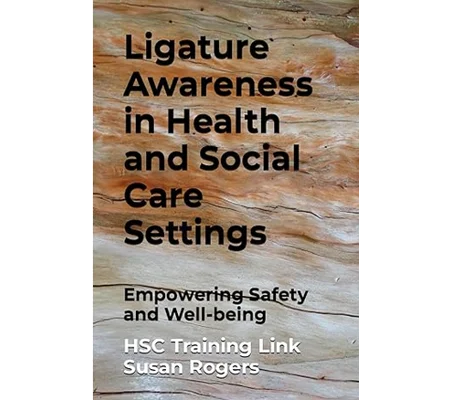
BOOK - Ligature AwarenessLigature Awareness in Health and Social Care Settings: Empowering Safety and Well-being Paperback - 11 October 2023 (91 pages). ISBN-13 : 979-8864097519 Synopsis: In "Ligature Awareness in Health and Social Care Settings," readers are invited into a meticulously researched and academically grounded exploration of a critical yet often overlooked facet of healthcare. This comprehensive textbook navigates the complex landscape of ligature prevention, setting out to empower care workers, supervisors, managers, and anyone operating within a care setting prone to self-harm or suicide via ligature points. The book's central aim is to provide a holistic understanding of ligature prevention that transcends the boundaries of specific care settings. It imparts knowledge and insights that are invaluable to a diverse audience, including healthcare professionals, mental health experts, social workers, security personnel, and anyone with a stake in creating safer and more compassionate care enviro...
Presentation Packs
Learning Disabilities Observational Skills Level 1 Training ResourcesEditable Level 1 resource introducing observational skills for staff who may have contact with people with learning disabilities. Includes a 24 slide presentation, handout, knowledge check questions and trainer aide answer key. Ideal for induction, CPD and CQC aligned awareness training.
Presentation Packs
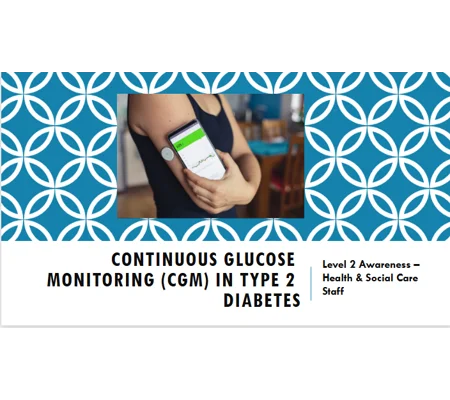
Continuous Glucose Monitoring in Type 2 Diabetes Level 2 Training ResourcesContinuous Glucose Monitoring (CGM) in Type 2 Diabetes Level 2 Training Resources This Level 2 Continuous Glucose Monitoring (CGM) in Type 2 Diabetes Awareness Training Pack is designed for health and social care staff who support adults living with type 2 diabetes, including people who use insulin and require support with glucose monitoring. It provides a clear, practical introduction to how CGM works, the difference between real-time and intermittently scanned systems, why CGM may be recommended for some people, and the importance of person-centred support. The pack also explores CGM in relation to learning disability and cognitive impairment, when finger-prick testing may still be required, recognising concerns, promoting independence and understanding the boundaries of the care worker's role. It includes an editable PowerPoint presentation, learner handout, case-study activity, 10-question knowledge check, separate Trainer Aide Answer Key. Presentation, Handout, Case Study Activ...
Presentation Packs
Learning Disabilities Sleep In and Waking Night Support Awareness Training ResourcesLearning Disabilities - Sleep In and Waking Night Support Awareness Presentation, Handout, Knowledge Check Questions, Trainer Aide Answer Key. All files editable. Overall Aim: To equip staff in residential and supported living settings with the knowledge, skills and confidence to provide safe, person-centred and dignified sleep-in and waking night support for individuals with learning disabilities. Learning Objectives: Understand sleep-in and waking night support protocols. Recognise the needs of people with learning disabilities during night support. Learn staff roles and responsibilities. Promote safety, dignity and person-centred care. Presentation (55 Slides) Aim and Objectives Overview of Learning Disabilities Understanding the People We Support Examples Common Challenges (Relevant to Night Support) Inclusive Approach Reflection/Discussion Question How Learning Disabilities Can Affect Sleep and Night-Time Support Possible Causes of Sleep Difficulties Impact on the Person What T...

Team Meeting / Toolbox Talks
End-of-Life and Palliative Care – 10 Toolbox Talks for Domiciliary Care Staff Pack DEnd-of-Life and Palliative Care 10 Toolbox Talks for Domiciliary Care Staff Pack C Word Document (43 Pages) - 10 Toolbox Talks Fully editable. This End-of-Life and Palliative Care Toolbox Talks Pack contains 10 ready-to-use Toolbox Talks designed specifically for trainers delivering short, practical learning sessions to Domiciliary Care Staff. The pack provides an easy way to deliver focused refresher training, team learning and practice-based discussions around supporting people who are living with serious or life-limiting illness or approaching the end of their life. Rather than providing a full-length training course, these Toolbox Talks are designed to support short, focused learning sessions of approximately 10 15 minutes, making them suitable for use during team meetings, staff meetings, supervision, refresher training or other opportunities for bite-sized learning. Who is this pack for? This resource is designed for trainers, training providers, care managers and organisation...
Presentation Packs
Agency Staff Working in Unfamiliar Care Homes Training ResourcesAgency Staff - Working in Unfamiliar Care Homes Safe Practice and Common Errors When Working in Unfamiliar Care Homes Presentation (with built in end of session assessment questions (all scenario based) and handout. All files editable. Overall aim: To promote safe, consistent and person-centred care by agency staff understand and reduce the risks that arise when working in unfamiliar residential and nursing care settings. Learning Objectives: By the end of this session, agency staff will be able to: Identify the most common safety risks when working in an unfamiliar care home. Demonstrate how to obtain and use a brief but effective handover. Recognise when to ask questions, escalate concerns and work within their scope of competence. Adapt their practice to residents individual needs, particularly those living with dementia. Presentation (54 Slides) Aims and Objectives Why This Training Matters Common Mistakes Not Getting a Proper Handover (or Not Asking For One) Assuming All Homes ...
Presentation Packs
Adult Residential Care Safeguarding Awareness Level 3 Training ResourcesAdult Residential Care - Safeguarding Awareness Level 3 Presentation, 3 x Handouts, Multiple Choice End of Session Assessment, Case Studies Learning Activity, Case Studies Learning Activity (Group and Individual). Presentation is in sections. All files editable. Aims and Objectives: Overall Aim: To provide learners with a comprehensive understanding of safeguarding in adult residential care, including legal frameworks, best practices and practical strategies for ensuring the safety and well-being of vulnerable residents in their care. Learning Objectives: Understand the key principles and legislation related to safeguarding in residential care. Identify and respond to signs of abuse, neglect and exploitation in vulnerable individuals. Demonstrate knowledge of the role of the care worker and the processes for reporting safeguarding concerns in residential care. Presentation (83 Slides) Introduction Importance of Safeguarding in the Context of Vulnerable Individuals SECTION - Understa...
Presentation Packs
Domiciliary Care Safeguarding Awareness Level 3 Training ResourcesDomiciliary Care - Safeguarding Awareness Level 3 Presentation, 3 x Handouts, Case Study Based Learning Activities (Group and Individual), End of Session Assessment. Presentation is in Sections All files editable. Aims and Objectives: Overall Aim: To provide learners with a comprehensive understanding of safeguarding in domiciliary care, including legal frameworks, best practices and practical strategies for ensuring the safety and well-being of vulnerable individuals in their care. Learning Objectives: Understand the key principles and legislation related to safeguarding in domiciliary care. Identify and respond to signs of abuse, neglect and exploitation in vulnerable individuals. Demonstrate knowledge of the role of the care worker and the processes for reporting safeguarding concerns in domiciliary care. Presentation (76 Slides) Introduction Importance of Safeguarding in the Context of Vulnerable Individuals SECTION - Understanding Safeguarding Key Principles Definition of Safeg...