
Special Offers
Presentation Packs
Prolapse Awareness & Management Care Settings Training ResourcesUnderstanding and Managing Prolapse in Care Settings Bespoke Training Resources for a 4 hour training day - all editable (should you need to edit). Presentations, Learning Activities and Handouts. Target Audience: Healthcare staff working in elderly care, domiciliary care, or clinical settings Learning Objectives: Define prolapse and understand its types. Identify risk factors and symptoms associated with prolapse. Gain knowledge on the impact of prolapse on patients' quality of life. Learn preventive measures and appropriate interventions. Understand care strategies for patients with prolapse, including communication and comfort techniques. Session 1: Introduction to Prolapse Objective: Provide a comprehensive understanding of what prolapse is and its different types. Activity: Group discussion on common prolapse cases seen in care settings and their implications. Presentation Aims and Objectives Introduction to Prolapse Prevalence Pelvic Organs (Pictorial) Common Symptoms Types of...

Presentation Packs
Bed Rails Awareness Training ResourcesThis training pack focuses on bed rails awareness and is suitable for all staff in health and social care settings. It is also suitable for trainers, training agencies and for use on full time and part time courses. Presentation Bed Rails Awareness - Topics Covered: Who uses bed rails? Terminology Grab Handles Risks - Background Riddor statistics The Law Riddor Regulation Client Safety Risks When things can go wrong Suitability of the bed rail Fitting of bed rails Equipment maintenance Equipment checks Risk Assessment generics Risk Assessment client groups Risk Assessment basics Risk Assessment - dignity Risk Assessment - others Risk Assessment some alternatives The Risk Assessment Record Keeping Training Safe fitting awareness Bumpers and mattress overlays Further Information Word Document 5 page handout
Presentation Packs
Kidney Stones Awareness Training ResourcesKidney Stones Awareness Health and Social Care Training Resources Presentation, Handout and Multiple Choice End of Session Assessment (all editable). Aims and Objectives Overall Aim: To enhance understanding about kidney stones, focusing on their formation, types, symptoms, diagnosis, treatment and preventive measures, to empower healthcare professionals in recognising, supporting and advising individuals at risk or affected by kidney stones. Learning Objectives: Identify the Factors Contributing to Kidney Stone Formation: Understand the key substances in urine, such as calcium, oxalate and phosphorus, that contribute to kidney stone development, along with recognising factors like dehydration and familial predispositions. Differentiate Between Types of Kidney Stones and Their Associated Conditions: Differentiate between calcium, uric acid, struvite and cystine stones, recognising their distinct characteristics and associations with conditions like gout or hereditary disorders. Comp...
Presentation Packs
Cultural Awareness Cultural Safety and Inclusive Practice Training ResourcesCultural Awareness Cultural Safety and Inclusive Practice Senior Staff Target audience: Senior Care Staff Team Leaders / Shift Leads Key Workers Nurses / Practitioners Staff involved in care planning, supervision and risk management Presentation, Handout, Advanced Scenarios Pack, Supervision Discussion Guide, End of Session Knowledge Check Questions (short answer questions), Trainer Aide Answer key. All files editable. Overall Aim: To develop staff confidence and competence in applying cultural humility, managing risk, making lawful decisions and leading inclusive practice to ensure culturally safe, person-centred care in complex situations. Learning Objectives: Apply cultural humility when managing complex care needs and decision-making. Identify cultural risks and implement reasonable adjustments. Challenge discriminatory practice appropriately. Support inclusive practice through leadership and supervision. Record, escalate and review cultural needs effectively. Balance safety, ca...

Presentation Packs
Psychosis Awareness Training ResourcesMental Health Psychosis Awareness PowerPoint Presentation and Word Documents Presentation Psychosis Awareness - Complete Overview (78 Slides) Aims and Objectives: This session gives a general awareness of Psychosis By the end of the session you will: Gain an understanding of what psychosis is Understand the complexities of identifying and labelling psychosis Know the main symptoms of psychosis Gain an awareness of treatments for psychosis Gain an awareness of causes of psychosis and psychotic symptoms Learn about the positive aspects of psychosis Understand the role of culture Slide Titles: Aims and Objectives Introduction What is Psychosis? Symptoms Hallucinations Drug Induced Hallucinations Hallucinations and Sleep Hallucinations and Illness Delusions Thought Disorder Acute Psychosis Treatment Therapies Overview Family Interventions (Family Meetings) Cognitive Behavioural Therapy (CBT) Talking Therapy (Psychological Therapy) Cognitive Behaviour Therapy (CBTp) Cognitive Remediation...

Presentation Packs
Lone Working Awareness Training ResourcesLone Worker Working Care Home & Domiciliary PowerPoint presentations and Word documents. This pack looks at generic and specific risks, training, emergencies, supervision, the actual risk assessment, recording it and developing safe systems. Presentation 1 - Lone Working Awareness (28 slides) Slide Titles: Introduction Who is a lone worker? Risk Assessment Development of Lone Worker Procedures Risks - Environment Risks Personal Safety Risks - Equipment Risks Medically fit Training Supervision Monitoring staff Emergencies Presentation 2 - Lone Working (Risk Assessment) (17 Slides) Slide Titles: Introduction 5 distinct stages Stages 1 and 2 Stages 3 and 4 Stage 5 Risk assessment principles Factors to consider Recording the risk assessment Developing safe systems Arrangements for managing risk Review of risk assessment References Word Documents (Handouts) Lone worker handout Lone working handout Lone working induction checklist Lone working risk assessment handout HSC Training Link Tea...
Presentation Packs
Challenging Behaviours Awareness Training ResourcesFor use in care settings, for care staff, trainers and training agencies and for use on full and part time courses including QCF (was NVQ). 'Challenging behaviour' is difficult or problem behaviour exhibited by children or adults with a learning disability - it is not however limited to people with a learning disability. This pack gives an awareness of challenging behaviour,why situations can arise and how situations might be prevented. Presentation 1 Introduction to Challenging Behaviours Slide Titles: Introduction What are these behaviours? Why a problem? How common is it? Why does it occur? Child Development Demands Reason - means of control Other Causes Promoting positive change Preventing challenging behaviours Promoting independence Early Intervention Summary References Presentation 2 Challenging Behaviours - Slide Titles: Introduction Statistics Carers Research Control Frustration Mental Health Problems Helping people with challenging behaviours Common problems Specialist Hel...
Presentation Packs
Ear Care Awareness Training ResourcesEar Care - Awareness and the Role of Residential Care Staff and Domiciliary Care Staff 2 Presentations, 2 Handouts, 1 End of Session Multiple Choice Assessment Presentation 1 - Ear Care Awareness Aims and Objectives Introduction Cleaning the Ears Ear Wax Noise Protection Water Protection Preventing Infections Avoiding Trauma Seeking Medical Attention Regular Check-Ups Healthy Lifestyle Ear Care Needs References and Further Information Presentation 2 - The Role of Care Staff Aims and Objectives Introduction Assessment and Monitoring Assistance with Cleaning Recognising Signs of Ear Problems Earwax Management Communication and Advocacy Promoting Preventive Measures Collaboration with Healthcare Professionals Documentation Training and Continuing Education Respecting Individual Needs Final Words References and Further Information Word Documents Ear Care Awareness Handout Role of Care Staff Handout End of Session Multiple Choice Assessment HSC Training Link Training Resources for Health...
Presentation Packs
Domestic Violence Awareness Training ResourcesSafeguarding - Domestic Violence Awareness Presentation 1 - An Introduction to Domestic Violence (22 slides) Slide Titles: The impact of domestic violence What domestic violence is Types of domestic violence How common it is Why it occurs Who it affects Presentation 2 - Help and Support Available (Professional Interventions, Help and Services Awareness) This session gives an overview of the help and services available to victims of domestic violence. Specific organisations involved Current government strategy Specialist services and processes Presentation 3 - Domestic Violence and Older People (focuses on women) 36 slides This session gives a summary of the literature concerning domestic violence and older people. The particular difficulties facing older women living with domestic violence Why older women are reluctant to disclose Implications and action required by health and social care services Why domestic violence can be confused with elder abuse Presentation 4 - Domestic Viole...
Presentation Packs
COPD Awareness Training ResourcesCOPD Awareness Presentation - COPD Awareness (with end of session written assessment and session hand-out) (29 Slides) Slide Titles: Aims and Objectives Introduction, Symptoms of COPD Causes of COPD Diagnosing COPD Detecting Breathing Problems Introduction Diagnosis Long Standing or Persistent Symptoms Existing Treatments Confirmed Diagnosis Keeping Well with COPD Awareness of the Disease Stopping Smoking Inhalers and Nebulisers Activity and Exercise Diet and Fluids Vaccinations Cold Weather Catching Colds Mental Well-Being Flare-Ups Summary References Word Documents Hand-out End of Session Written Assessment HSC Training Link Teaching, Training and Development Resources for the Health and Social Care Sector, BTEC Level 1 2 3, QCF (was NVQ) Diploma Level 2 3 4 underpinning knowledge.

Presentation Packs
Skin Integrity and Care Training ResourcesBariatric Care - Skin Integrity - A Complete Overview Health and Social Care Training Resources Presentation, Handouts and Multiple Choice End of Session Assessment (all editable). Presentation is sections, so you can use what you need, or edit to suit your own training session. Overall Aim: - To equip health and care professionals with knowledge and skills in managing skin integrity in bariatric patients. Learning Objectives: Understand the unique challenges and risk factors associated with skin breakdown in bariatric patients. Identify evidence-based strategies for maintaining and managing skin integrity. Presentation (56 Slides) Aims and Objectives Introduction Understanding the Unique Needs of Bariatric Patients SECTION - Skin Integrity - Physiological Changes Physiological Changes SECTION - Skin Integrity - Risk Factors Introduction Immobility, Excessive moisture Friction and Shear Forces, Skin Folds and Pressure Points Nutritional Factors Comorbidities, Medical Devices SECTION...
Presentation Packs
Depression and Anxiety Disorders and ALGEE (PFA) Training ResourcesPsychological First Aid (PFA) - Depression and Anxiety Disorders and ALGEE This is the second of a series of packs for Mental Health First Aid. This pack focuses on Depression and Anxiety Disorders Awareness Presentation Depression and Anxiety Disorders Complete Overview (63 Slides) Slide Titles Aims and Objectives Introduction (Background Information including UK Government campaign to train people in basic mental health first aid skills) Every Mind Matters Campaign Public Health England Research Better Health Every Mind Matters Common Types of Depression Major Depressive Disorder (MDD) Persistent Depressive Disorder (PDD) Bipolar Depression Postpartum Depression (PPD) Premenstrual Dysphoric Disorder (PMDD) Seasonal Affective Disorder (SAD) Atypical Depression Warning Signs of Severe Depression Risk Factors for Suicide Depression Gender Depression Age Depression in the Workplace Anxiety Disorders Risk Factors for Anxiety Disorders Generalised Anxiety Disorder (GAD) General Symptoms...
Presentation Packs
Brain Anatomy Awareness Training ResourcesAnatomy - Brain Presentations 1) Anatomy of the Brain (28 slides) Word Documents A learner information and activity workbook (11 pages) HSC Training Link Teaching, Training and Development Resources for the Health and Social Care Sector, RQF, QCF (was NVQ) Diploma Level 2 3 4 underpinning knowledge.
Presentation Packs
Mental Illness Awareness Training ResourcesMental Illness Awareness PowerPoint presentations and Word documents. A general introduction to mental illness suitable for giving learners an awareness. Presentation 1 An Introduction to Mental Illness (16 slides) Slide Titles: Key Points Consequences of Mental Illness, Care Needs Funding How Can the Risks be Reduced? Mental Health at Work Different Types of Mental Illness Affective Disorders Schizophrenia Organic States Personality Disorders Neuroses Psychoses Dementias Support Networks References Presentation 2 Introduction to Depression (24 slides) Slide Titles: Depression Introduction What does it feel like to be depressed? Symptoms of depression Why does it happen? Things that happen in out lives Circumstances Physical illness Personality Alcohol Gender Genes What about manic depression? Isn't depression just a form of weakness? When should someone seek help? Where to get further information References Presentation 3 - Depression and How to Help Yourself (31 slides) Slide Titl...

Presentation Packs
Candida Auris Awareness Training ResourcesThere are 3 presentations. The first is an awareness training session, the second and third are based on recommended guidance for prevention and control of C.Auris is primary care and community settings.Suitable for care settings, care staff, trainers and training agencies, full and part-time courses. Presentation - Candida Auris Awareness (26 Slides) - Slide Titles: Aims and Objectives Introduction What is C.Auris? Colonisation Difficulties identifying/containing C.Auris Statistics Resistance to treatment Treatment Strategies to prevent/treat colonisation Strategies with no evidence base Strategies with limited evidence base Screening policies Suggested screening sites Other screening sites Swabs Positive screening New positive screens Re-admission Summary References Presentation - Infection Prevention and Control (18 Slides) - Slide Titles: Aims and Objectives Introduction Transmission Good practice Bed space requirements Key Measures PPE Information for patients and visitors Othe...
Presentation Packs
Dementia Reminiscence Activities Training ResourcesDementia and Reminiscence as an Activity For clients with dementia, talking about the past is both social interaction and an activity. Care staff should utilise each one-to-one interaction with a client as an opportunity for social interaction activity. This training pack explains how to do this in normal everyday care situations. The pack also explains how this interaction can take place in group situations (rather than just the care worker and the client), how to create personal memory packs for clients. It is suitable as awareness training for all staff in care settings where there are clients with dementia. Useful also for trainers, training agencies and for use on full and part-time courses including QCF Diploma. Presentation 1 Communication during Everyday Activities (30 slides) Slide Titles: Introduction Reminiscence what is it? Everyday activities Using themes Themes examples Skills required Benefits to the client Benefits to the carer Benefits Rights of the client Communica...
Presentation Packs
Role of the Nurse Conducting Initial Assessments Residential Care Training ResourcesThe Role of the Nurse - Initial Assessments in Residential Care Settings. This is a general overview. Presentation, Word Document Handout and PDF Version of Presentation. Aims and Objectives: Aims: Comprehensive Assessment: To provide care home nurses with a comprehensive understanding of the assessment process for residents, emphasising the importance of thorough and holistic evaluations Effective Communication: To enhance nurses' communication skills, emphasising the importance of effective interactions with residents and collaboration with interdisciplinary teams during assessments Enhancing Care Plans: To empower care home nurses to gather relevant information during assessments, enabling them to develop and update well-informed and evidence-based care plans Learning Objectives: Components of Holistic Assessment: To identify the key components of a holistic assessment, including physical, psychological, social and environmental aspects. Collaborate with Interdisciplinary Teams: ...
Presentation Packs
Care Planning Awareness Training ResourcesSuitable for trainers, training agencies, care settings and for use on full time and part time courses. Presentation 1 - Introduction to Care Planning Presentation 2 - Process of Care Planning Presentation 3 - Collecting Information Presentation 4 - Care Planning Meetings Word Documents (Handouts) Handouts x 10 Case Study 2 x Speakers Notes

Presentation Packs
Record Keeping Awareness Training ResourcesRecord Keeping Awareness A mixed pack, part suitable for staff, part suitable for learners. Includes a Word document booklet handout (11 pages, printable from the CD) and end of session assessment (11 pages)and 5 handouts. Presentation 1 Record Keeping Awareness (49 slides) Slide Titles: Why Record Keeping is Important Types of Records Care Quality Commission Principles of Good Record Keeping Safeguarding and Record Keeping Writing Records Identification of the Client Identification of the Author Time and Date Black Ink When To Use Red Ink Dealing With Mistakes Correctly Ensuring Records Are Complete Emergency Situations Jargon and Abbreviations Format of Records Views and Comments of Others Making Assumptions Confidentiality, Data Protection & Access To Information Legal Aspects Negligence Duty of Care and Negligence Legal Proceedings Presentation 2 Working in the Social Care Sector Reports and Record Keeping Awareness (45 slides) Slide Titles: What is a Record? Types of Records Ho...
Presentation Packs
Dementia and Diabetes Training ResourcesDementia and Diabetes Presentation - Dementia & Diabetes (74 slides) - Slide Titles: Introduction Statistics Diabetes and the Risk of Dementia Department of Health 2012 Cognitive Impairment What is Diabetes? Types of Diabetes Type 1 Diabetes Type 2 Diabetes Diabetes and Dementia Dementia Types and Early Symptoms Progression of Dementia The Importance of Early Diagnosis Diet Medication Tablets and Side Effects Injectable medication Common Injection Names Insulin Injections Hypoglycaemia Treating Hypoglycaemia Consequences Reducing Risks of Hypoglycaemia Caring for People with Dementia and Diabetes Caring for People with Dementia Who Develop Diabetes Problems Care and Support Plans Keeping Me Safe Cognitive Ability Biography and Personality Physical Health Environment Nutrition Barriers to Healthy Eating (Dementia and Diabetes) Hyperglycaemia Diabetic Ketoacidosis (DKA) Diabetic Coma Competencies Required (Care Homes) References Word Documents 9 Hand-outs for the presentation Mini Cog...
Presentation Packs
Play Therapy Overview Training ResourcesPlay Therapy Overview - Health, Social Care and Education Training Resources PowerPoint Presentation and Word Documents (handout and multiple choice end of session assessment). All editable. Presentation is in sections. Presentation (59 Slides) Aims and Objectives Introduction SECTION - What is Play Therapy? Defintion Core Principles (7 slides) SECTION - History and Development Early Beginnings Emergence of Techniques Development of Play Therapy Models Professionalisation and Recognition Research and Evidence Base Diversity of Approaches SECTION - Types of Play Therapy Child-Centred Play Therapy (CCPT) Directive Play Therapy Filial Therapy Expressive Arts Therapy Sandplay Therapy Play-Based Cognitive Behavioural Therapy Gestalt Play Therapy Narrative Play Therapy SECTION - Techniques and Tools Used Techniques and Tools (4 slides) SECTION - Care Settings and Professionals Utilising Play Therapy Schools Hospitals and Clinics Social Services and Child Welfare Agencies Private Practice ...
Presentation Packs
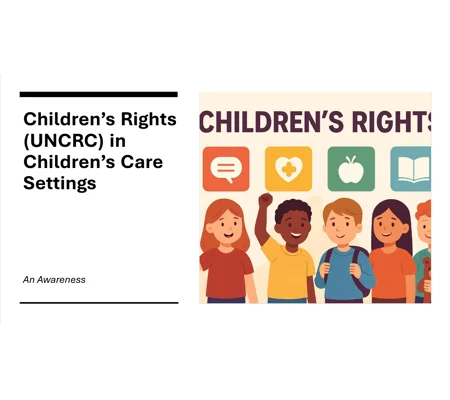
Children’s Rights Awareness Training ResourcesChildren s Rights (UNCRC) in Children s Care Settings Awareness Overview of the UNCRC and children's rights.. Written in easy to understand terms. Presentation, 3 Handouts, End of Session Quiz Assessment (mixture of multiple choice, True/False and Short Question Answers) and Trainer Aide (Answers) Editable, should you want to tailor it for your own audience. Aims and Objectives: Overall Aim: To raise awareness of children s rights as outlined in the UNCRC and how they apply in care settings. Learning Objectives: To understand what children's rights are and why they are important. To explore the key principles of the UNCRC. To recognise key articles of the UNCRC and their relevance to children s lives. To identify ways practitioners can support and promote children's rights in care settings. Presentation (38 Slides) Aims and Objectives Introduction to Children s Rights What are Rights? Why Rights Matter for Children What is the UNCRC? History and Importance How it Applies to the UK K...

Presentation Packs
Health and Safety for Office Staff Training ResourcesHealth and Safety in Office Environments Awareness - Promoting Safe Working Practices Suitable for all settings Enough resources for full sessions, single aspects or a workshop. 12 Files in total (Presentation (in sections) , Handouts x 3, Learning Activity documents x 6 (some case study based) and End of Session Assessment with Trainer Aide Answer Key. Presentation also includes interactive discussion questions. All files editable. Aims and Objectives: Overall Aim: To ensure all office-based staff in care and childcare settings understand and can apply key health and safety principles to maintain a safe and compliant working environment Learning Objectives: Identify common health and safety risks relevant to office-based roles in care and childcare environments. Apply safe working practices in line with legal and organisational health and safety requirements. Respond appropriately to incidents, hazards and near misses using correct reporting procedures. Presentation (101 Slides) Ai...

Presentation Packs
Cleaner Air Programme UKHSA Awareness and Healthcare Specific Training ResourcesHealthy Workplaces - UKHSA Cleaner Air Programme Awareness - and Healthcare Specific Suitable for trainers, training agencies and health and care settings. Presentation 1 - UKHSA Cleaner Air Programme Awareness (42 Slides) - Slide Titles: Aims/Objectives Introduction Health Impacts The UKHSA Cleaner Air Programme Indoor Air Contamination The Effects of Energy Efficiency Air Pollutants and Their Sources Typical Pollutants Found in Indoor Environments Air Quality in a Building Typical External Sources of Pollution Affecting Indoor Air Quality Typical Internal Sources of Pollution Affecting Indoor Air Quality Graduated Risk Air Pollution Impact on Health What Poor Indoor Air Quality Can Cause/Affect Indoor Carbon Dioxide Levels The Effect of Fragranced Products on Indoor Air Quality and Health Bioaerosols Indoor Bioaersols Bioaerosols and Health Bioaerosols and Pre-Existing Respiratory Conditions Improving Awareness and Understanding Raising Awareness with Healthcare Professionals The...