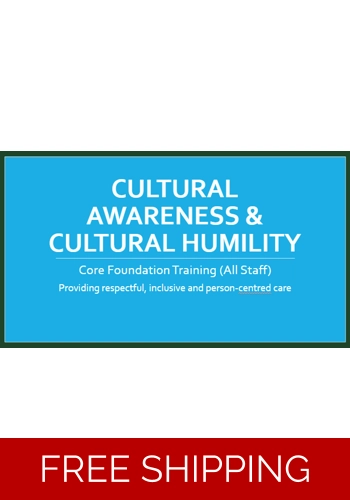
Cultural Awareness & Cultural Humility Foundation Training
Cultural Awareness & Cultural Humility Foundation Training
Core Foundation Training (All Staff)
Providing respectful, inclusive and person-centred care.
All frontline care staff, Support workers, Healthcare assistants, Volunteers, New starters / induction.
Aligns with UK legislation, CQC expectations, and person-centred care principles, suitable for mixed roles and new starters.
Presentation, Handout, Scenarios Pack with Learning Activities, End of Session Knowledge Check Questions (mix of multiple choice and short answer questions), Trainer Aide Answer key.
Scenario pack is written for face to face training but can easily be adapted for other delivery methods.
All files editable.
Overall Aim: To increase staff awareness of culture, unconscious bias and cultural humility so they can deliver respectful, inclusive and person-centred care in line with the Care Act 2014 and Equality Act 2010.
Learning Objectives:
By the end of this training, participants will be able to:
Define culture and identify key factors that influence a person’s beliefs, identity and care needs.
Recognise unconscious bias and stereotypes and describe how they can affect behaviour and decision-making in care settings.
Explain the difference between cultural competence and cultural humility and why ongoing reflection is essential in practice.
Apply the principles of dignity, respect and person-centred care in line with the Care Act 2014.
Identify protected characteristics under the Equality Act 2010 and understand staff responsibilities to prevent discrimination.
Demonstrate respectful communication approaches when supporting people from diverse cultural backgrounds.
Reflect on personal attitudes and behaviours to improve inclusive and culturally safe care.
Presentation (18 Slides)
Aims and Objectives
Introduction
Why This Training Matters
What Do We Mean By Culture?
Identity and Individual Differences
Unconscious Bias and Stereotypes
Reflecting on Our Own Bias
Cultural Competence vs. Cultural Humility
Respect, Dignity and Person Centred Care
Equality Act 2010: Protected Characteristics
Communication Across Cultures
Practical Examples in Care Settings
Professional Boundaries and Respect
Your Role and Responsibilities
Key Message and Takeaways
Further Learning and Support
Word Documents
Handout
Scenarios (with learning activities)
End of Session Knowledge Check Questions
Trainer Aide Answer key
HSC Training Link
Training Resources for Health and Social Care
Supplying training resources for the health and social care sector since 2004.
Resources purchased are emailed to you via Zip Folder attachment or via Microsoft 365 link (your choice).
All packs are written in a generic style and can easily be adapted to suit your own specific training delivery.
Secure payments via PayPal Merchant Commerce Platform.
You do not need a PayPal account to use this payment
gateway.
Debit and credit card payments accepted.