
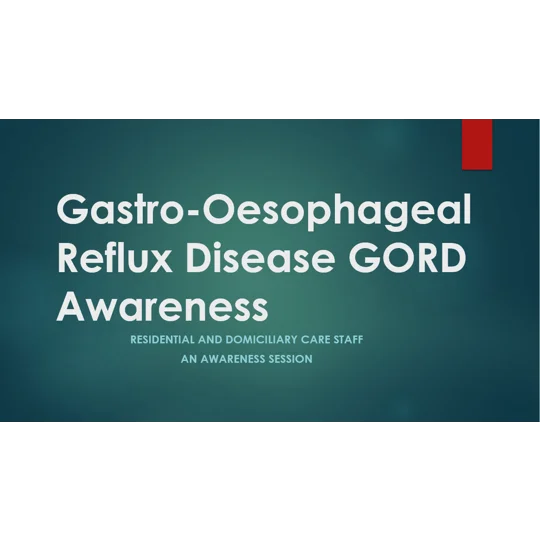
GORD (GERD) Awareness Training Resources
GORD Awareness - Residential and Domiciliary Care (Gastro-Oesophageal Reflux Disease) Presentation, Handout, End of Session Assessment (mix of Multiple Choice, True/False and Short Answer questions), Trainer Aide Answer Key. All files editable. Aims and Objectives Overall Aim: To raise awareness and understanding of GORD to support the recognition, reporting and day-to-day care of individuals living with the condition in adult residential and domiciliary settings. Learning Objectives: Recognise the common signs, symptoms and potential impact of GORD in adults receiving care. Understand the general factors that can contribute to or worsen GORD in care settings. Identify simple care strategies and when to report concerns to help manage GORD effectively. Presentation (53 Slides) Aims and Objectives Welcome Introduction to GORD Why Staff Need an Awareness of GORD Section - Causes and Risk Factors of GORD Common Causes of GORD Risk Factors Common in Adults in Care What is the LES? Releva...
GORD Awareness - Residential and Domiciliary Care (Gastro-Oesophageal Reflux Disease)
Presentation, Handout, End of Session Assessment (mix of Multiple Choice, True/False and Short Answer questions), Trainer Aide Answer Key.
All files editable.
To raise awareness and understanding of GORD to support the recognition, reporting and day-to-day care of individuals living with the condition in adult residential and domiciliary settings.
Recognise the common signs, symptoms and potential impact of GORD in adults receiving care.
Understand the general factors that can contribute to or worsen GORD in care settings.
Identify simple care strategies and when to report concerns to help manage GORD effectively.
Presentation (53 Slides)
Aims and Objectives
Welcome
Introduction to GORD
Why Staff Need an Awareness of GORD
Section - Causes and Risk Factors of GORD
Common Causes of GORD
Risk Factors Common in Adults in Care
What is the LES?
Relevance in Residential and Domiciliary Settings
Section - Signs and Symptoms to Watch For
Common Symptoms of GORD
Other Symptoms to Be Aware Of
Symptoms That May Affect Day-to-Day Care
Section - Impact of GORD on Residents/Clients
Effects on Nutrition and Hydration
Sleep Disturbances and Discomfort
Potential Complications of Untreated GORD
Section - Identifying GORD in Care Settings
Observing and Reporting Symptoms
Importance of Thorough Communication with Healthcare Professionals
Monitoring for Changes or Worsening Symptoms
Section - Supporting Residents/Clients with GORD
Dietary Considerations
Positioning Advice
Encouraging Adherence to Prescribed Treatments or Medications
Section - Medication Awareness
Common GORD Medications
Importance of Medication Timing and Administration
Monitoring for Side Effects and Interactions
Section - When to Escalate or Seek Medical Advice
Red Flags to Watch For
How and When to Communicate Concerns
Section - Practical Tips for Care Staff
Documentation Best Practices
Person-Centred Care Approaches for Residents with GORD
Promoting Comfort and Dignity
Section - Case Studies / Scenarios
Residential Care Scenario 1
Residential Care Scenario 2
Domiciliary Care Scenario 1
Domiciliary Care Scenario 2
Section - Summary and Key Takeaways
Recap of Important Points
Role of Care Workers in Improving Quality of Life
References and Resources
Word Documents
Handout
End of Session Assessment
Trainer Aide Answer Key
HSC Training Link
Training Resources for Health and Social Care
Supplying training resources for the health and social care sector since 2004.
Resources purchased are emailed to you via Zip Folder attachment.
All packs are written in a generic style and can easily be adapted to suit your own specific training delivery.
Resources are Word and PowerPoint based.
Secure payments via PayPal Merchant Commerce Platform.
You do not need a PayPal account to use this payment gateway.
Debit and credit card payments accepted.
| Title | GORD (GERD) Awareness Training Resources |
|---|---|
| Brand | HSC Training Link |
| Category | Presentation Packs |
| SKU | pmqWU1L |
| Condition | new |
| Country of Origin | United Kingdom |
| MPN | pmqWU1L |