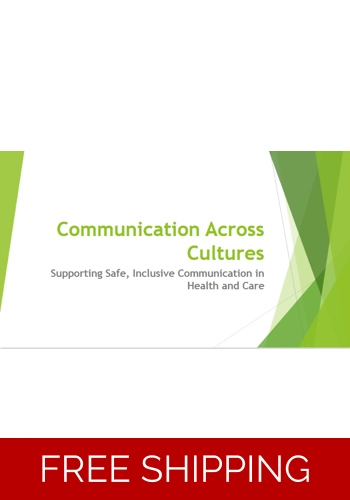
Cultural - Communication Across Cultures Awareness
Communication Across Cultures Awareness - Supporting Safe, Inclusive Communication in Health and Care
Target Audience:
✔ Frontline care staff
✔ Reception / admin staff in health settings
✔ Care coordinators
Presentation, Handout, Short Scenarios Activities, Short Scenarios Facilitators/Trainer Aide Answers, End of Session Knowledge Check Questions (multiple choice), Trainer Aide Answer Key.
All files editable.
Overall Aim: To strengthen staff confidence and competence in communicating effectively across cultures, ensuring communication is safe, inclusive, respectful and accessible for everyone using health and care services.
Learning Objectives:
Recognise how cultural differences can influence verbal and non- verbal communication in health and care settings.
Demonstrate ways to avoid assumptions and unconscious bias when communicating with people from diverse backgrounds.
Identify when and how to use interpreters and advocates appropriately and safely.
Apply practical strategies to support people with limited English and different levels of health literacy.
Understand their role in meeting Accessible Information Standard requirements and promoting equality and inclusion.
Presentation (45 Slides)
Aims and Objectives
Why This Training Matters
What Do We Mean By Culture?
Avoiding Assumptions and Stereotypes
Non Verbal Communication Differences
Eye Contact
Personal Space
Touch
Gestures
Facial Expressions
Silence and Pauses
Non-Verbal Communication Differences
Health Literacy and Accessible Information
Supporting People with Limited English
Risks If Communication Is Not Effective - Consent Errors
Risks If Communication Is Not Effective – Medication Mistakes
Risks If Communication Is Not Effective – Missed Appointments
Risks If Communication Is Not Effective – Safeguarding Issues
Good Practice When Supporting People with Limited English
Working With Interpreters
Why Not Family Members?
Why Not Family Members? Accuracy
Why Not Family Members? Confidentiality
Why Not Family Members? Power Dynamics
Why Not Family Members? Safeguarding Risks
Why Not Family Members? Key Message
Working with Interpreters
Advocates and Their Role
Difference Between Interpreter And Advocate
Role of An Interpreter
Role of An Advocate
Summary and Key Takeaways
References and Further Resources
Word Documents
Handout
Short Scenarios Activities
Short Scenarios Facilitators/Trainer Aide Answers
End of Session Knowledge Check Questions (multiple choice)
Trainer Aide Answer Key
HSC Training Link
Training Resources for Health and Social Care
Supplying training resources for the health and social care sector since 2004.
Resources purchased are emailed to you via Zip Folder attachment or via Microsoft 365 link (your choice).
All packs are written in a generic style and can easily be adapted to suit your own specific training delivery.
Secure payments via PayPal Merchant Commerce Platform.
You do not need a PayPal account to use this payment
gateway.
Debit and credit card payments accepted.